Tanzania
is teetering on the edge of a major political crisis after thousands of
citizens defied curfew orders and took to the streets on Election Day.
Polling
stations and electoral materials were destroyed and police stations invaded,
some torched in protest of what they termed sham vote marred by repression,
candidate exclusions and state intimidation.
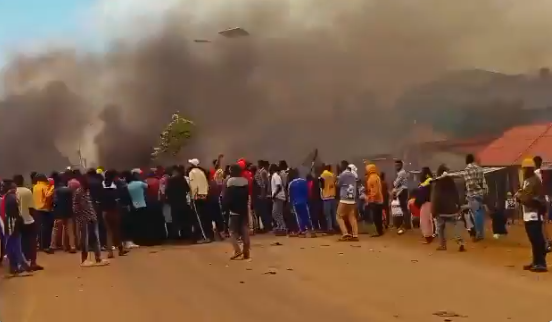
The
unprecedented protests erupted across Dar es Salaam, Arusha, Mwanza and Dodoma
on Wednesday into the night and extended to Thursday, despite the government
deploying the military and imposing a dusk-to-dawn curfew in Dar es Salaam.
The
defiance underscored widespread anger against the government of President Samia
Suluhu Hassan, whose reelection appears all but assured amid accusations that
the polls were neither free nor fair.
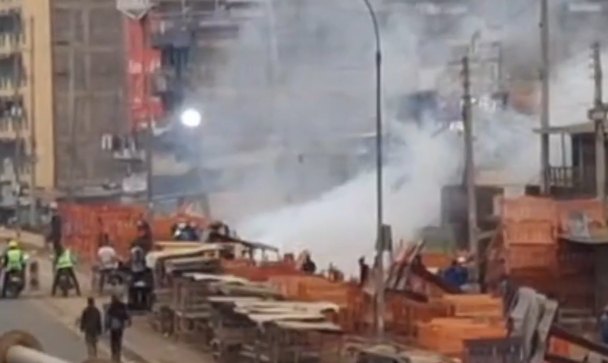
Residents
reported that security forces fired teargas and live bullets in several
neighbourhoods of Dar es Salaam, including Mbagala, Ubungo and Gongo la Mboto.
In
other instances, demonstrators marched alongside deployed soldiers, chanting
for ‘uhuru wa kweli’ — real freedom and “hatutaki CCM (Chama Cha Mapinduzi)” —
we don’t want CCM party.
Reuters
reported at least 10 people were killed.
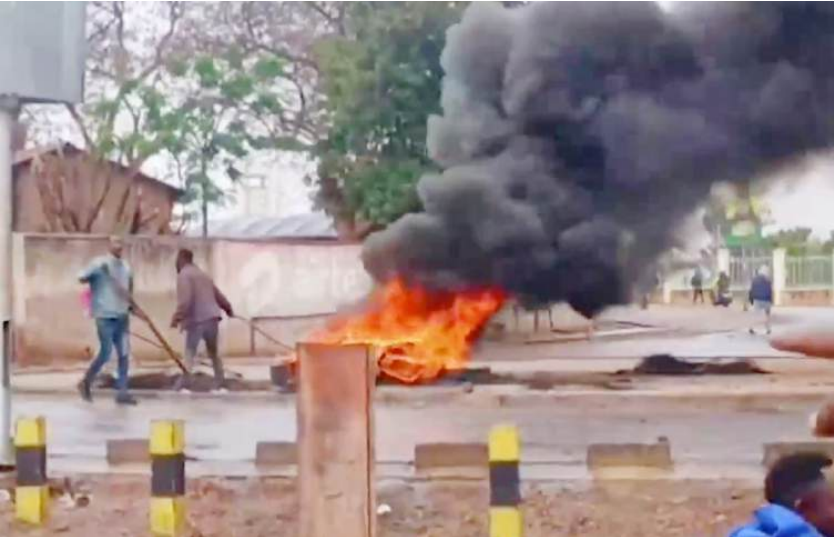
Protesters
also torched business establishments and vehicles in widespread
destruction.
Witnesses
reported gunfire in the night, with roads blocked and internet connectivity cut
off nationwide and was only restored on Thursday evening.
Netblocks
data showed internet was down since Wednesday, while the US Embassy in Tanzania
confirmed widespread internet blackout, making all communication difficult.
“There
are reports of countrywide demonstrations resulting in outbreaks of violence
and roadblocks. Some major roads, including the main road to Julius Nyerere
International Airport, are closed,” the embassy said in a consular alert to its
nationals.
The
alert on Thursday was the second, barely 24 hours after the embassy first
advised Americans in Tanzania to shelter indoors as protests erupted nationwide
during the start of the polls.
With
the internet shutdown, protesters were mobilising through Zello app, which
works as a walkie talkie.
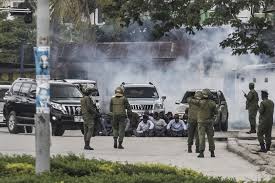
The
deployment of troops — a rare sight in Tanzanian politics — marked a turning
point for a country long seen as one of East Africa’s most peaceful and stable
states.
Soldiers
and police were stationed at key intersections and public offices as the
government sought to contain what officials described as “isolated acts of
lawlessness.”
However,
the images emerging on social media before the internet blackout told a
different story: Citizens marching beside the military, in scenes reminiscent
of Kenya’s Gen Z protests in June last year.
Government
spokesperson Gerson Msigwa in a
message shared through Instagram directed that state officials and those in the
private sector to work from home, other than for those whose responsibilities
require them to be on site.
“Citizens
who don’t have to leave their homes are urged to undertake their activities
from home,” Msigwa said.
The
demonstrations were sparked by the exclusion of key opposition candidates,
notably Tundu Lissu of the Chadema party, who was disqualified on technical
grounds. Lissu is still in jail, having been charged with treason.
Chadema
secretary general John Mnyika said the polls were not real elections, but “a
sham aimed at deceiving the world that elections are taking place in Tanzania”.
Mnyika
was leading a Chadema delegation in a meeting with African Union Election
Observation Mission to Tanzania led by former Botswana President Eric Masisi.
Civil
society groups and opposition leaders said the ruling party CCM has steadily
eroded democratic freedoms, silenced the media and weaponised the judiciary to
eliminate competition.
US
Senate Foreign Affairs Committee chairman Senator Jim Risch raised
concerns with the shrinking democratic space, saying that the clergy in Tanzania were being targeted for speaking
out against President Hassan’s "brutal regime".
Risch said the administration was abducting critics,
torturing detainees and jailing opponents to silence dissent ahead of
elections.
“This crackdown is not only an assault on Christians and
other citizens—it threatens Tanzania’s stability, undermines US security and
economic interests, and risks pushing the country further into China’s
embrace,” he added.
In
a joint statement on general election, Members of the European Parliament
(MEPs) on Thursday expressed their concern on the developments, urging
democratic partners to stand firm in defence of democracy and human rights.
“What
should have been a celebration of democracy, instead unfolded in an atmosphere
of repression, intimidation, and fear. These elections cannot be regarded as
free and fair. The fraud did not begin at the ballot box - it has been
unfolding for months,” the MEPs said in the joint statement.
They
were David McAllister (Germany), chairperson of the European Parliament’s
Committee on Foreign Affairs; Mounir Satouri (France) chairperson of the European
Parliament’s sub-committee on human rights and Merja Kyllönen (Finland),
chairperson of the European Parliament’s Delegation for relations with the
Pan-African Parliament.
The
EU legislators said that opposition leaders in Tanzania had been harassed and arrested,
their parties excluded and the civic space “systematically dismantled”.
“The
arrest and ongoing trial for high treason of opposition leader Tundu Lissu - a
man whose only ‘crime’ was to demand free and fair elections - exemplifies the
collapse of democratic values and judicial independence in Tanzania. Lissu must
be released immediately and unconditionally,” they said.
They
added that no election can be credible when the main opposition is silenced,
freedoms of assembly and expression are denied, and when independent media are
intimidated and censored.
“We
urge all democratic partners to stand firm in the defence of democracy and
human rights. Silence is not neutrality - it is complicity,” they said.
On
Thursday, the national broadcaster started broadcasting the announcement of the
presidential elections by the electoral commission.
Activist
Maria Tsehai, however, criticised the announcement, saying it’s a contempt to
Tanzanians as it was clear no elections were held.
The
protests have laid bare the deep frustration among Tanzanians — especially the
youth — who say their voices have been stifled for too long.








![[PHOTOS] Calm prevails in Kisumu, Homa Bay](https://cdn.radioafrica.digital/image/2026/06/dff8923b-c99a-4f40-a4be-cc996653e4e0.jpg)