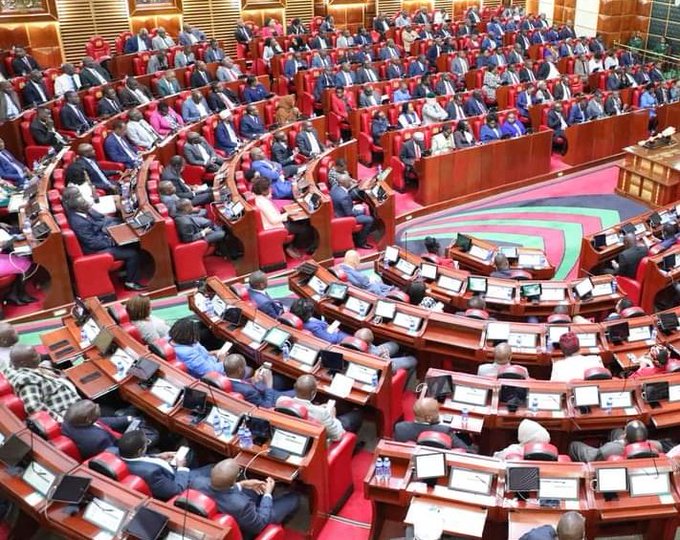
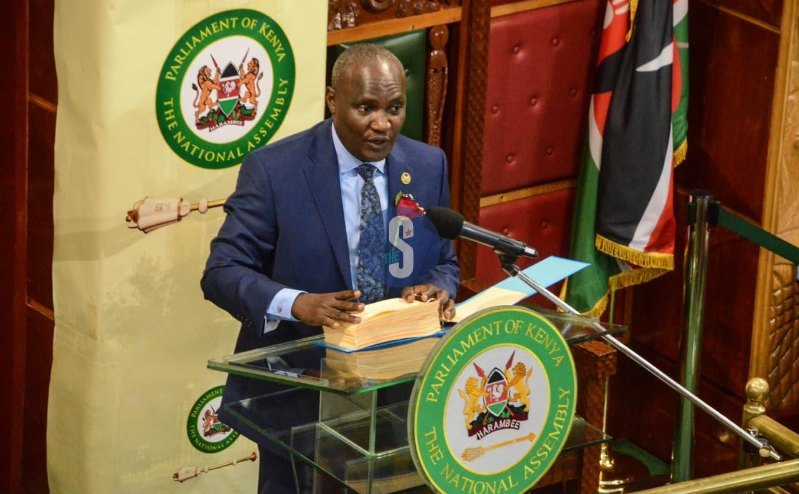
Lawmakers say the steps seek to safeguard competition and prevent emergence of a monopoly.
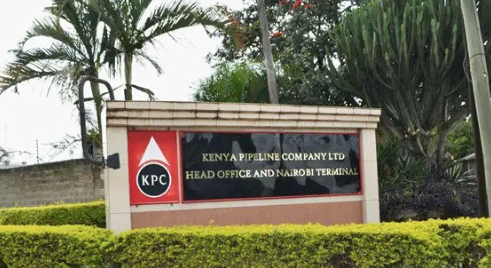
As such, MPs want the privatisation of Kenya Pipeline structured
to limit the mandate of the company to transporting and storing petroleum
products.
They also want a guarantee that the company shall not venture into importation or sale of petroleum products.
Exemptions would only be allowed where there is prior
approval from the Competition Authority of Kenya, the Energy and Petroleum
Regulatory Authority and the National Assembly.
MPs, in the approval given through policy resolutions on
Sessional Paper No 2 of 2025, acknowledge KPC as a strategic asset of critical
national and regional significance.
Even so, the House resolved that it is suitable for privatisation,
paving the way for the government to sell up to a 65 per cent stake through an
Initial Public Offering (IPO) at the Nairobi Securities Exchange.
The government will be required to retain at least a 35 per
cent shareholding in the privatised oil company, even as opposition teams
expressed jitters over the sale.
President William Ruto’s Cabinet approved the sale process in
July, holding that privatisation would "democratise ownership by
Kenyans".
It also reasoned that the sale to private investors would, in
the long run, unlock the company's full commercial potential by reducing
bureaucratic constraints.
But mindful of past controversies, MPs have concluded that
the privatisation be conducted within a complex web of safeguards.
MPs have also provided that the Privatisation Commission
must implement measures to ensure broad ownership by Kenyan citizens, with
specific provisions for the youth, women and persons with disabilities.
“The Privatisation Commission takes steps to safeguard
against excessive concentration of shares in a single entity or related
parties and shall set a maximum ownership limit for any one shareholder to
help preserve broad-based ownership, promote market competitiveness and
protect national and energy security interests,” the report says.
Furthermore, MPs have recommended that employees of KPC will
be included in an Employee Share Ownership Plan (ESOP). “The process has to be
aligned with national economic empowerment objectives as provided in the law.”
Lawmakers further want the commission to ensure the
company's valuation is contained in the prospectus and that a separate
"citizen-friendly" valuation report is publicised.
All liabilities, including pending lawsuits worth Sh5.75
billion and unresolved compensation claims, must be comprehensively assessed
and disclosed before the IPO.
MPs also want the sale to factor in the unresolved compensation
claims of Sh3.8 billion by residents of Makueni from the oil spill.
Parliament also wants a clear statement included in the
prospectus on how Kenya Petroleum Refineries Limited, a subsidiary of KPC, has
been financially evaluated and factored into the valuation.
MPs further want the Office of the Auditor-General to audit
the entire process to ensure value for money, and that the Privatisation
Commission must report each stage of the implementation to the National
Assembly for continuous oversight.
The proceeds from the sale, projected to be Sh100 billion,
are earmarked for development expenditure, settling pending bills or liability
management.
Despite the parliamentary approval, the privatisation plan
faces significant challenges.
The Treasury is currently battling a lawsuit in the High
Court that seeks to nullify the proposed sale.
The Consumer Federation of Kenya (Cofek) filed a petition
alleging a lack of transparency and genuine public participation.
Treasury has defended the process, stating it followed the
requisite legal procedures and is an "innovative mechanism" to raise
money for the government budget.
The ministry argues that a public offer is "the most
transparent and fair process of privatisation". The court case is ongoing,
and its outcome could determine the fate of the entire transaction.
INSTANT ANALYSIS
The conditional sale of the Kenya Pipeline Company
represents a crucial moment, balancing the government's quest for efficiency
and revenue against the imperative of protecting a strategic national asset.
The journey from parliamentary resolution to a successful IPO is likely to be
closely watched and hotly debated by investors, civil society, and the general
public.