EXPALINER: Inside government strategy to curb deaths by suicide
Government targets 10% reduction in suicide mortality
by FELISTERS ATYANG
Audio By Vocalize
Aga Khan University Founding Director, Brain and Mind Institute, Prof Zul Merali, Ministry of Health, Mental Health Division, Psychiatrist Dr Katherine Wanjiku & Science for Africa Foundation Programme Manager, Dr Byron Bitanihirwe, during a Youth suicide prevention forum at the university, where experts called for collective action to address the youth suicide rate in the country.
Suicide is a global public health crisis claiming more than 720,000 lives annually, according to recent research by the Science for Africa Foundation and the Brain and Mind Institute (BMI).
Among the youth aged 15–29, suicide ranks as the third leading cause of death worldwide. While the global suicide rate stands at 12.9 per 100,000 people, Africa records the highest regional burden at 18.9 per 100,000—home to 10 of the most affected countries.
Kenya is no exception; the country has witnessed a troubling rise in suicide deaths, particularly among young men. Recent estimates place male suicide rates at 14.2 per 100,000—nearly three times higher than female rates.
This gender difference reflects global trends, where men are more likely to die by suicide, while women report higher rates of attempts.
The shocking statistics move that has pushed the government to come up with a strategy to curb the vice.
THE STRATEGY
Until recently, Kenya’s legal framework criminalised suicide
attempts under Section 226 of the Penal Code.
This punitive approach not only
discouraged reporting but also deepened stigma. In a landmark ruling, the High
Court declared Section 226 unconstitutional on January 5 2025, paving the way for a more
compassionate and health-centred response.
“The government has taken significant steps, including the
decriminalisation of suicide in Kenya, which marked a turning point in
addressing this challenge,” said Dr Catherine Wanjiku, Psychiatrist at the
Ministry of Health, during the Youth Suicide Prevention Forum.
The forum, themed “Making Suicide Prevention Everyone’s
Business: Hope in Action”, brought together researchers, policymakers,
youth leaders, and survivors to explore solutions. Prof. Zul Merali, Founding
Director of BMI, emphasised the societal dimension of suicide:
“When young people are silenced by stigma or denied access
to affordable care, we all fail. This forum is about creating safe spaces,
amplifying youth voices, and building actionable pathways that save lives.”
Launched by the Ministry of Health, the Suicide
Prevention Strategy 2021–2026 aims to reduce suicide mortality by 10% by
2026.
It aligns with Sustainable Development Goal (SDG) 3.4.2, which targets a
reduction in premature deaths from non-communicable diseases, including mental
health conditions.
The strategy is built on five strategic pillars:
POLICY, LEGAL, AND FINANCING REFORM
Repeal of Section 226 and advocacy for a Pesticide
Control Policy to restrict access to lethal means.
Increased budgetary allocation for mental health services.
Establishment of intersectoral committees at national and
county levels to coordinate suicide prevention efforts.
COMMUNITY-BASED SERVICES
Integration of suicide prevention into primary healthcare
and community outreach.
Training of health workers, teachers, and religious leaders
to identify and support at-risk individuals.
Expansion of youth-friendly mental health services,
especially in schools and universities.
PUBLIC AWARENESS
AND STIGMA REDUCTION
National campaigns to promote mental health literacy and
normalise help-seeking.
Engagement with media, faith institutions, and youth
networks to shift public narratives.
Inclusion of lived experience voices to humanise the
issue and foster empathy.
SURVEILLANCE AND
DATA SYSTEMS
Establishment of a National Suicide Registry to track
suicide deaths and attempts.
Development of a National Surveillance System to
monitor suicide-related indicators in real time.
Strengthening of reporting mechanisms across counties and
health facilities to improve data accuracy.
RESEARCH AND
EVIDENCE-BASED INTERVENTIONS
Support for local studies on
suicide risk factors and prevention strategies.
Collaboration with academic
institutions and civil society to generate actionable insights.
Use of data to inform policy,
service delivery, and resource allocation.
SURVEILLANCE AND
REGISTRY: TURNING DATA INTO ACTION
One of the most transformative components of the strategy is
the creation of a centralised National Suicide Registry. This database
will capture accurate, timely information on suicide deaths and attempts,
helping policymakers identify trends and evaluate interventions.
The registry
is complemented by a National Surveillance System, which equips health
facilities with tools to record suicide death cases and suicide attempt cases, which encourages counties to appoint focal
persons for suicide prevention.
FROM POLICY TO PRACTICE
While the strategy provides a robust framework, its success
depends on multi-sectoral collaboration. The Ministry of Health has
called on stakeholders in education, labour, agriculture, and civil society to
join the fight against suicide.
Faith communities, youth organisations, and
media houses also play a critical role in shaping public attitudes and expanding
access to care.
The Youth Suicide Prevention Forum underscored this
collective responsibility. Personal testimonies from survivors highlighted the
power of peer support, timely intervention, and safe spaces.
These stories
brought urgency to the strategy’s implementation and reminded attendees that
behind every statistic is a life that could be saved.
“Suicide prevention is a profound moral and social
responsibility. It touches every part of society,” said Dr. Judy Omumbo, Head of
Programmes at the Science for Africa Foundation.
SUSTAINING MOMENTUM
Kenya’s Suicide Prevention Strategy is a bold step toward
reversing the tide of youth suicide.
The decriminalisation of suicide, rollout
of surveillance systems, and expansion of community-based services signal a
shift from punishment to prevention. However, challenges remain—underreporting,
stigma, and resource gaps continue to hinder progress.
To meet the 2026 target of a 10% reduction in suicide
mortality, the government must accelerate implementation, ensure sustained
funding, and deepen engagement with communities.
For young Kenyans navigating
mental health risks, the stakes are high. Suicide is not just a health
issue—it’s a societal crisis that demands empathy, evidence, and action.
This is premium content
Subscribe to Continue Reading
Help us continue bringing you unbiased news, in-depth investigations, and diverse perspectives. Your subscription keeps our mission alive and empowers us to provide high-quality, trustworthy journalism. Join us today to make a difference!

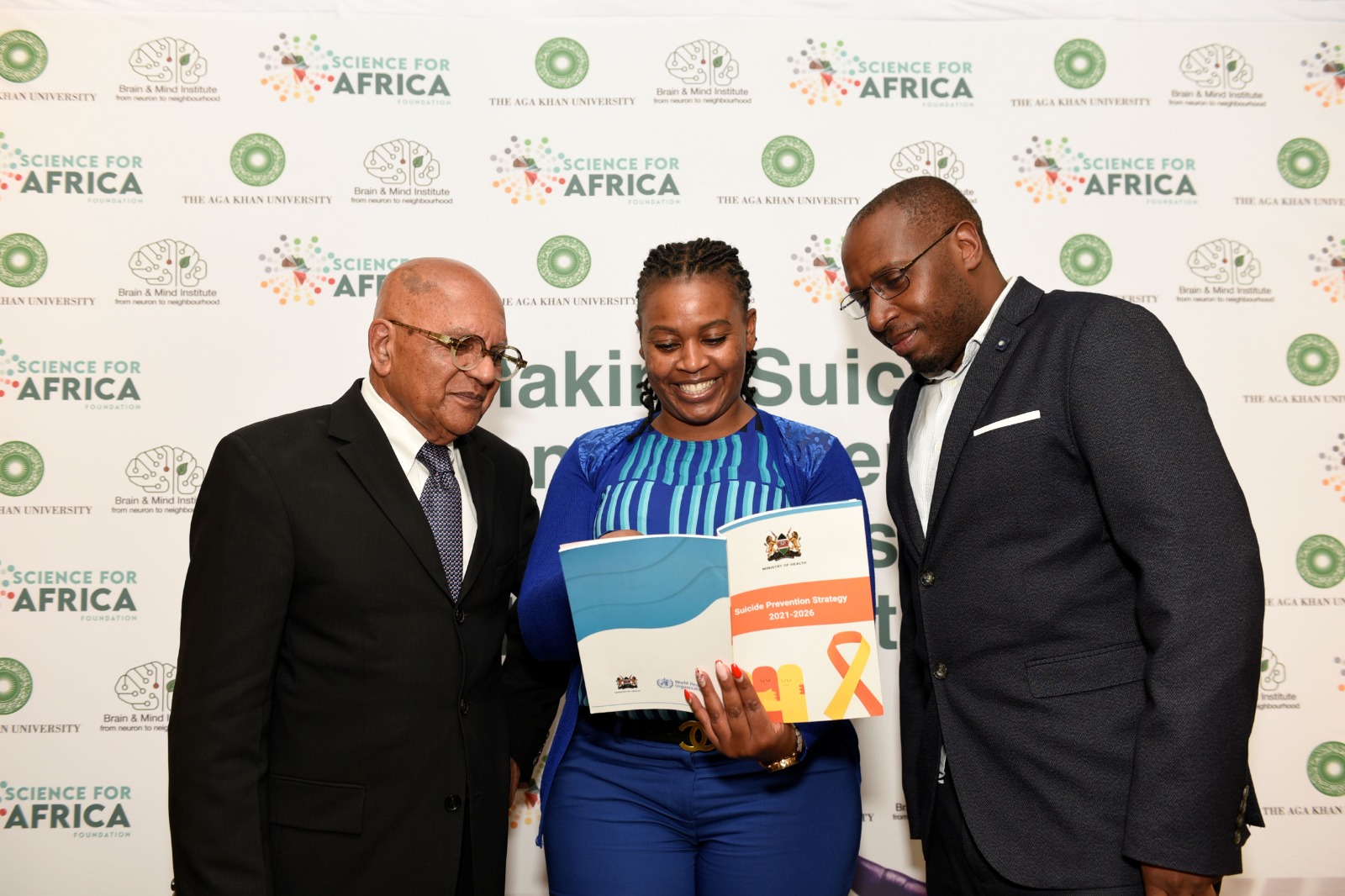 Aga Khan University Founding Director, Brain and Mind Institute, Prof Zul Merali, Ministry of Health, Mental Health Division, Psychiatrist Dr Katherine Wanjiku & Science for Africa Foundation Programme Manager, Dr Byron Bitanihirwe, during a Youth suicide prevention forum at the university, where experts called for collective action to address the youth suicide rate in the country.



![[PHOTOS] Raila Odinga Stadium construction enters home stretch](https://cdn.radioafrica.digital/image/2026/06/45f6990c-4882-4cd2-b83c-8fc730dcdce5.jpg)