When Kenyans fought for a new constitution, they did so with the
hope that this document would finally liberate the country from the cycle of
impunity, corruption and inequality that had defined governance for decades.
The promulgation of the 2010 Constitution was a moment of triumph, but 15 years
later, the hard truth is that Kenyans are yet to reap its full fruits.
The constitution
remains largely on paper, with key provisions undermined or ignored, while
leaders toy with dangerous ideas that threaten to roll back democratic gains.
One of the most glaring lessons for Kenya lies in the experience
of Nepal. The Asian nation, like Kenya, grappled with political instability,
poor governance and a people's quest for reforms.
Nepal's constitutional journey
was marked by hopes of creating a fair and democratic state. However, failure
to fully implement its constitutional provisions, coupled with political elites
prioritising personal and partisan gains over national interest, including the
ban on social media, led to cycles of unrest and instability. Kenya risks
treading the same path if we continue treating our own constitution as a
suggestion rather than the supreme law of the land.
Attempts by certain leaders to expand their terms from five years
to seven years are a dangerous precedent. Such moves are not innocent proposals
for "stability" as some claim; they are direct assaults on the
people's sovereignty. The five-year electoral cycle was deliberately designed
to keep leaders accountable and ensure that power truly rests with the people.
Extending political terms without the people's mandate would amount to
betraying the very foundation of democracy and steering the nation toward the
slippery slope that has plunged other countries into authoritarianism and
instability.
It took Kenyans decades of sacrifice, sweat and blood to win the
2010 Constitution. From the resistance movements of the 1990s, through
detention, torture and loss of life, ordinary Kenyans demanded a charter that
would protect their rights, curb excesses of power and entrench accountability.
Yet, 15 years since its promulgation, much of the constitution remains
unimplemented. The delay has not been accidental but systematic, deliberate and
engineered by a political class that views full implementation as a threat to
its entrenched interests.
Take Chapter 6 on Leadership and Integrity, for instance. This
chapter envisioned a Kenya where leaders would be held to the highest ethical
standards. Leaders facing corruption charges were never supposed to set foot in
public office. Appointments were supposed to be based on merit and integrity,
not tokenism and political loyalty. Yet, today, Chapter 6 has been reduced to a
dead letter. We see leaders with questionable records being rewarded with powerful
positions, while those who champion meritocracy are sidelined. The erosion of
this chapter has hollowed out the vision of an accountable and servant
leadership that Kenyans demanded.
Equally troubling is the violation of Chapter 4, the Bill of Rights.
The constitution promised a society where freedoms and rights would be
respected, protected and fulfilled. Yet, our security system continues to
operate under a culture of impunity, meting out violence against citizens,
especially young people who dare to question government excesses. Police
brutality, extrajudicial killings and unlawful detentions remain the order of
the day. Instead of serving the people, parts of the security sector are
entangled in state capture, shielding the powerful while victimising the
powerless. This is not what the constitution envisioned.
Meanwhile, Kenyans continue to shoulder a heavy burden of taxes in
an economy choked by the high cost of living. The promise of equitable
development, social justice and dignity for every Kenyan remains unfulfilled.
Despite paying dearly to fund government operations, citizens struggle daily
with unaffordable food, healthcare and education. The constitution was meant to
address inequality and uplift the quality of life for all, yet the majority
remains trapped in poverty while a small elite flourishes under the status quo.
The lesson from Nepal is clear: a constitution is only as strong
as the will to implement it. For Kenya, failure to make operational
constitutional provisions will breed frustration, disillusionment and
eventually, instability. Kenya cannot afford to walk that path. The threats to
our democracy, from term extension schemes, to disregard of integrity
standards to systemic violations of rights, must be confronted with urgency.
The solution lies not in amending or diluting the constitution,
but in fully implementing it. Every chapter, from leadership and integrity, to
the Bill of Rights, to devolution, must be put into practice in both letter and
spirit. Our leaders must be reminded that this is not their constitution; it is
the people's constitution.
As for Kenyans, we must remain steadfast. We cannot allow ourselves to be
lulled into complacency or distracted by short-term gains whilst our hard-won
freedoms are eroded. The cost of silence is far too high. As history and the
experience of Nepal remind us, the collapse of constitutional order never
begins with a bang. It starts with small compromises, ignored violations and
tolerated betrayals.
If we truly want to avoid going the Nepal way, then we must demand the full and
uncompromising implementation of the 2010 Constitution. Nothing less will
secure our democracy, protect our rights and deliver the Kenya that generations
fought for.

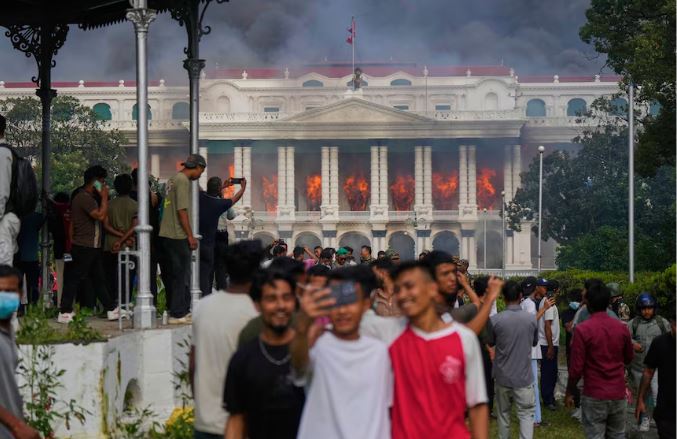


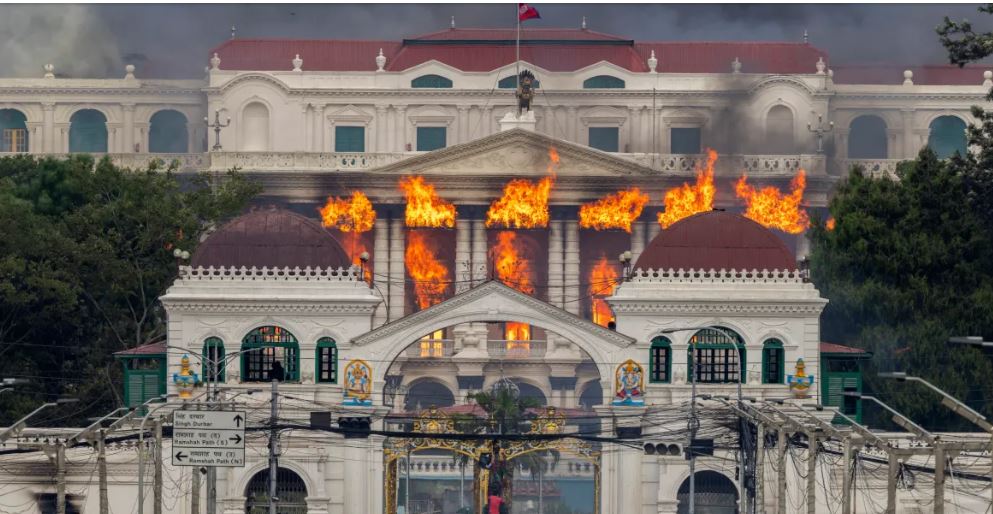 Fire engulfs the Singha Durbar palace, whose grounds house government and parliament buildings./SCREENGRAB

![[PHOTOS] Raila Odinga Stadium construction enters home stretch](https://cdn.radioafrica.digital/image/2026/06/45f6990c-4882-4cd2-b83c-8fc730dcdce5.jpg)