A damning audit report has laid
bare widespread mismanagement of
the National Government Constituency Development Fund, pointing
to possible loss of billions under
MPs’ watch.
The report implicates dozens of
constituencies in financial irregularities, unsupported expenditures and
blatant violations of procurement
and bursary disbursement laws.
The revelations come at a time
MPs are pushing to entrench the
fund in the constitution, even as
questions mount over their own
oversight of the billions allocated to
the kitty annually.
The audit, covering the 2023-24
financial year, exposes a litany of
failures, from missing bursary documents to outright disregard for legal
thresholds in spending.
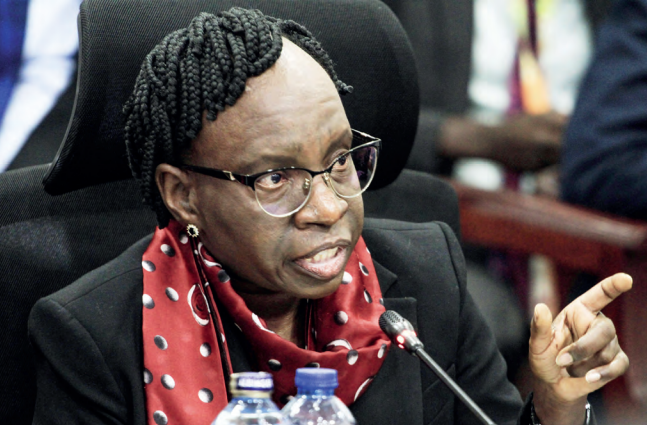
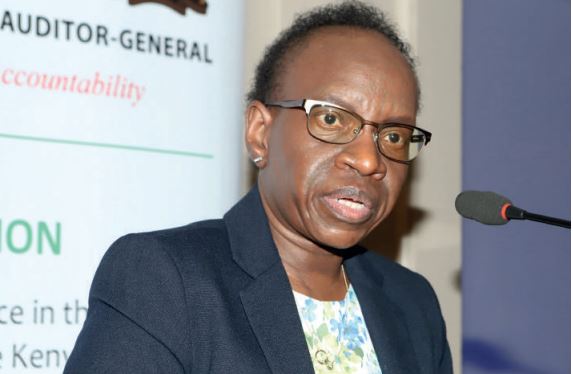
Auditor General Nancy Gathungu cited 86 constituencies after they
failed to provide supporting documents for bursary disbursements
amounting to Sh2.1 billion.
There were no acknowledgements of receipt from beneficiary
institutions, and details of students’
admission numbers, leaving auditors unable to verify whether the
funds reached the intended beneficiaries or not.
“Without vetting reports, beneficiary lists, or acknowledgement
receipts, there is no way to confirm
that these funds were used as intended,” Gathungu said.
In most cases, the list of applicants and approved schedules of
bursary beneficiaries were not provided for audit.
Sub-committee vetting minutes
did not indicate the number of applicants, successful and unsuccessful
applicants and the reasons thereof.
In some instances, the amount
allocated was less than the 25 per
cent threshold, and in some cases in
excess by up to 40 per cent.
“In some cases, beneficiaries on
full scholarship were not evidenced with selection criteria, and there
were students without evidence of
admission,” the Auditor General
said.
The fund also does not maintain
a database of schools and colleges
registered by the Ministry of Education, the report reads for some
cases.
In Kitui South, Sh52 million was
flagged after the audit found no lists
of applicants, no vetting minutes,
and no proof that schools ever received the money.
Worse, the amount allocated
fell short of the mandatory 25
per cent threshold, raising concerns that deserving students
were sidelined.
Similar gaps were found in Kitui West (Sh50.6 million), Kanduyi
(Sh62.5 million), Baringo Central
(Sh61.8 million), and Embakasi
South (Sh91 million).
No evidence existed of bursary
committees being formed, let alone
being operationalised, putting the
CDF committees where MPs serve
as patrons on the spot.
In Budalang’i, Sh56 million was
disbursed without involving the area
education officer or documenting how needy students were selected.
Other constituencies where bursary disbursements were not supported with relevant documents
include Chuka Igambang’ombe
(Sh20.7 million), Embakasi South
(Sh91 million), Emurua Dikirr
(Sh52 million), Gilgil (Sh56 million), Igembe North (Sh44.7 million), Isiolo South (Sh73 million)
and Kitui West (Sh50 million).
Similar concerns were flagged
in Kitutu Chache South (Sh60.8
million), Malindi (Sh65 million),
Maara (Sh48 million), Mandera
East (Sh39 million), and Mbeere
South (Sh56 million).
Narok West also failed to support
Sh45 million, Rongai (Sh65 million), Sabatia (Sh39 million), Samburu West (Sh31 million), South
Imenti (Sh83 million), and Tiaty
(Sh65 million).
The audit further reveals reckless
financial management, with several
constituencies overspending millions without approval.
Kitui Rural exceeded its budget by Sh417,758, while Kasarani spent
Sh21 million more on bursaries
than authorised.
In Makadara, bursary allocations
hit 40 per cent of the budget, violating the legal cap of 35 per cent,
while Embakasi West blew past the
limit by seven per cent, disbursing
Sh93.5 million without justification.
“In the circumstances, the bursary over-expenditure totalling
Sh21,541,991 was not approved
and therefore was irregular,” Gathungu said in the case of Kasarani.
In Embakasi South, there was no
evidence of formation and operationalisation of the education bursary, mock examinations and continuous assessment tests committee.
Further, acknowledgement notes
or receipts by the beneficiary institutions and the bursary cheque dispatch register were not provided for
audit in the accounts flagged.
Most of the transactions lacked
vetting reports, list of beneficiaries,
and amounts awarded.
Adverse cases where there was no
bursary subcommittee were reported in Gatundu South (Sh64 million),
Ikolomani (Sh44 million), Isiolo
South (Sh80 million), and Kabondo
(Sh50 million).
Some Sh60 million was flagged in
Kajiado East, Sh40 million in Kajiado North, Sh62 million in Kanduyi, Sh87 million in Kilome, Sh70
million in Kiminini, Sh59 million in
Kipkelion West, and Sh79 million in
Kisauni.
At least Sh86 million was not
backed in Kitui East, Sh48 million
in Turkana East, Sh73 million in
Runyenjes, Ruaraka (Sh42 million), Sh60 million in Lugari, Sh41
million in Kuresoi North, and Sh46
million in North Mugirango.
“There were no bursary policy
guidelines, public notice calls, lists
of applicants, bursary sub-committees vetting minutes and acknowledgement receipts,” the auditor said.
Meanwhile, Kajiado Central and
Matungulu had Sh12.6 million and
Sh3.5 million in bursary cheques,
respectively, that were never cashed,
while Kisauni left Sh1.1 million uncollected until the cheques expired,
thereby denying students critical
support.
Beyond bursaries, the audit uncovered Sh1.2 billion in unsupported expenditures, with Samburu East
leading at Sh156 million and Emurua Dikirr at Sh102 million.
Procurement violations were rampant, with 53 constituencies implicated in Sh672 million worth of
irregularities.
Isiolo North and Nakuru Town East awarded contracts
without competitive bidding, while
others hired unqualified suppliers or
inflated prices beyond market rates.
“Some constituencies had no procurement plans at all,” the report
notes, “while others backdated documents or paid contractors in cash,
which are clear red flags for fraud.”
A number of constituencies
awarded contracts to unqualified
firms, prices were inflated beyond
market rates, and documents were
backdated.
Perhaps most alarming were the
undisclosed bank accounts and unreturned project funds.
Konoin, Kaiti, and Turbo hid
multiple accounts, while 136 constituencies could not account for
Sh3.5 billion in project management
committee balances.
Turbo alone had 30 undisclosed
PMC accounts while Konoin had
eight held secretly, pointing to deliberate efforts to conceal expenditure.
Another Sh548 million meant for
completed projects was never returned to the main CDF accounts, a
direct violation of the law.
Despite a slight drop in adverse
audit opinions compared with the
previous years, 91 per cent of CDFs
still received qualified reports.
The auditor said the findings were
a signal of persistent weak internal
controls, non-compliance and mismanagement.
Statutory deductions like PAYE
and NSSF went unpaid, emergency
funds were diverted to non-urgent
projects, and staff hiring (in 47 constituencies) ignored ethnic diversity
laws.
Gathungu said the “various systemic issues affecting the NG-CDF
were observed across all the constituencies”.
Apart from lack of supporting
documents, value-for-money concerns in the use of public resources,
governance and compliance issues
were flagged.
Also flagged were unexplained
pending bills and lack of effective
internal controls, risk management
and governance failures.
The review exposed glaring inaccuracies in the financial statements
of 39 funds, with discrepancies totalling Sh610.2 million.
Even more alarming, 99 constituencies could not provide documentation to support expenditures
worth Sh1.27 billion, putting the
massive sums’ usage in doubt.
Samburu East topped this dubious list with Sh156.2 million in
unsupported spending, followed by
Emurua Dikirr at Sh102.6 million,
in blatant breach of public finance
management laws.
Further scrutiny revealed Sh1.33
billion in unreconciled financial
variances across 64 constituencies,
suggesting either accounting incompetence or potential fraud.
In another breach, 11 constituencies illegally reallocated Sh23.2 million to unauthorised expenditures
without approval.
Some 115 constituency funds
were found to be non-compliant
with laws and regulations, flouting
procurement rules, failing to remit
statutory deductions, and operating
without proper oversight.