Kenya’s
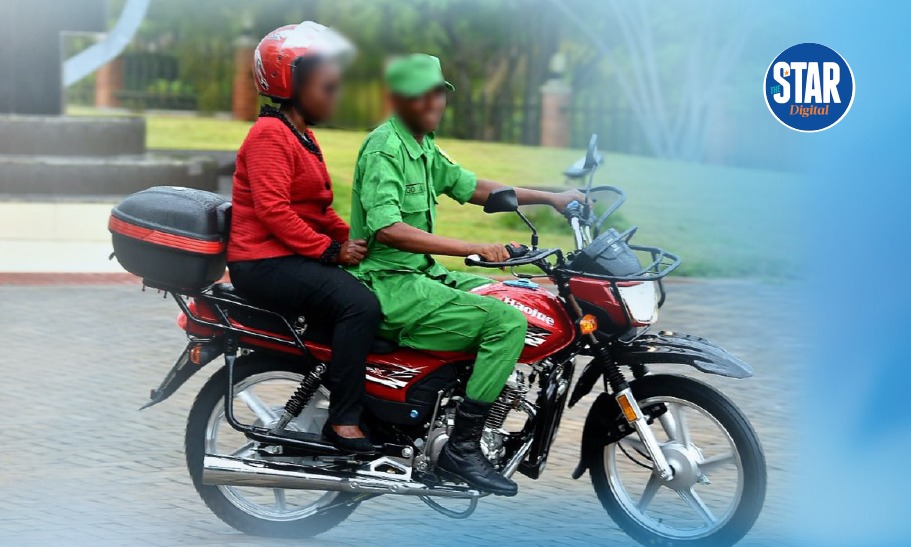
fast-growing Buy-Now-Pay-Later (BNPL) motorbike financing sector is facing a
costly new threat — borrowers who deliberately bury their financed motorcycles
to stage thefts, pocket insurance payouts, and walk away with new bikes.
Investigations by
lenders and insurers have uncovered a disturbing pattern, reported in the
fast-expanding Buy-Now-Pay-Later (BNPL) motorbike financing sector.
The scheme
exploits insurance replacement provisions, allowing fraudsters to reset their
payment obligations and start afresh with a new asset, which is now emerging as
a costly vice for lenders and insurers.
According to asset
financier Watu Credit, some borrowers intentionally hide or damage motorcycles,
often burying them before reporting them stolen, expecting a replacement
through insurance.
“Once they report
a bike as stolen, some know there’s a chance they could get a replacement.
We’ve uncovered cases where customers buried our assets in their backyard,”
said Watu Credit’s Kenya Country Manager Eric Massawe.
The company, which
has financed over half a million two- and three-wheelers since its launch in
Mombasa a decade ago, says it has put in place a layered recovery and claims
verification process to counter the trend.
Other than burying
the bikes the findings show that fraudsters have also adapted, using tactics
such as blocking tracking signals, dismantling parts, or moving the asset
across borders.
“We’ve seen both
genuine theft and self-theft — and the latter is growing,” Massawe said.
According to insurance
experts, the scams are driving up operational costs for lenders, inflating
insurance claims, and threatening higher premiums for honest riders.
While insurers
eventually reject confirmed fraudulent claims, the investigative process can
stretch for months, tying up capital and replacement inventory.
The Kenyan two and
three-wheeler market is one the largest in the entire African Continent while
the challenges to boost in the next decade are relevant.
Kenya’s boda boda
sector, comprising of an estimated three million motorcycles, has employed
millions of young men in both urban and rural areas.
However, the
industry has been blotted by rising criminal activity, reckless riding, and
fatal accidents.
The government has
long struggled to impose order, looking to Rwanda’s highly regulated motorcycle
taxi sector as a model.
Collectively, the
sector generates over Sh660 billion annually, accounting for at least 4.4
per cent of Kenya’s GDP and supporting millions of households, small
businesses, and local economies.
Massawe says GPS
tracking recovers about 50 per cent of reported theft cases, while suspected
fraud incidents are flagged for further investigation in collaboration with
police and insurers.
The fraudulent
claims come amid broader challenges in the BNPL mobility sector, including
rising defaults linked to economic pressures.
The motorcycles have
been a darling for many in the Kenyan market since its can be very adaptive to
unpaved roads, which are still the majority in the country, and in the huge
traffic jam of the few metropolitan areas.
For this reason,
the new motorcycles market is over 10 times bigger than the car market.
As the pro capita
income is growing up, the two-wheeler market is having benefit from a growing
consumer demand and this will continue for the entire decade.
However, the sales
of new vehicles are deeply influenced by government policy and the restrictions
applied to the import of pre-owned vehicles.
The last two years
economic crisis, with deep inflation growth, was fully reflected in the
motorcycle industry, very price sensitive, and we assisted a a sharp sales fall
in both 2023 and 2024.
However, Massawe
said credit performance has dipped in recent years due to fuel price spikes,
inflation, and shifting market dynamics, but stressed that Watu’s flexible
repayment and “win-back” campaigns have kept repossessions relatively low.
To mitigate
operational disruptions for genuine customers, Watu offers maintenance
subsidies under its 70-30 scheme — where riders pay 30 per cent of repair costs
and the company covers the rest — and provides temporary replacement bikes
during insurance claims.
Industry-wide, the
issue underscores the regulatory gaps that have historically existed for
non-deposit-taking asset financiers.
However, recent
amendments to Kenya’s business laws have created a new category for such
lenders under the Capital Markets Authority, paving the way for more structured
oversight.
“This new
framework is good for businesses, customers, and the government,” Massawe said,
noting that Watu aims to expand electric motorbike financing to curb fuel cost
volatility and environmental concerns.
The company has
already financed more than 1,000 electric bikes in 2025, up from 460 last year,
though combustion-engine bikes still dominate at over 90 per cent of the
market.
Beyond
motorcycles, Watu has also expanded into smartphone financing. Since launching
in late 2022, the company has issued 128 million devices in Kenya, with most
customers opting for entry-level and mid-range Samsung models.
“High-end models
like the Galaxy S20 or S24 account for only 1–2 per cent of our customer base,”
Massawe said. “Many clients are upgrading from feature phones or low-cost
Chinese brands to more reliable devices they can use as tools of trade.”
The BNPL motorbike
industry has until recently operated in a regulatory grey zone, with unclear
oversight between hire-purchase, microfinance, and digital credit regulations.
This ambiguity, industry insiders say, has slowed coordinated enforcement against
organised fraud rings.
Recent amendments
to Kenya’s business laws have introduced a new category for non-deposit-taking
asset financiers under the Capital Markets Authority, a move expected to
tighten compliance and give regulators more tools to address such schemes. But
the framework for licensing, reporting, and enforcement is still pending.







![[PHOTOS] Elderly brave cold to vote in Ol Kalou](https://cdn.radioafrica.digital/image/2026/07/d2345b9e-578f-45ff-9bb0-d7819671c165.webp)

![[PHOTOS] Ol Kalou residents turn out in large numbers to vote](https://cdn.radioafrica.digital/image/2026/07/fe42d51c-7f79-466e-94e8-59561f77bbe7.webp)