The
crisis has been triggered by President William Ruto’s aggressive
revenue-raising measures, including the Pay As You Earn, housing levy and
deductions to the newly established Social Health Authority.
The
result has been a massive raid on workers’ payslips, leaving many with
dangerously depleted earnings.
A
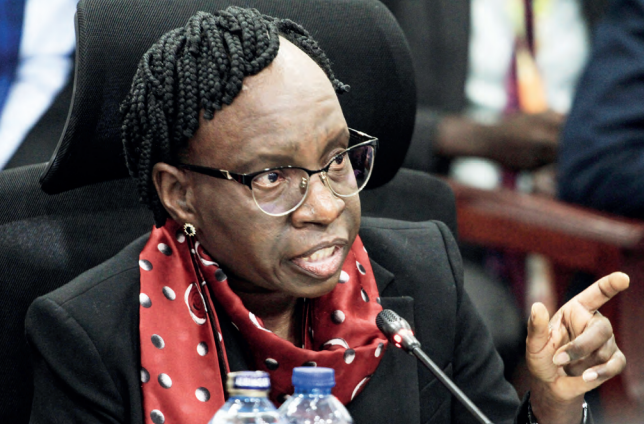
fresh review by the Star of new audit reports by Auditor
General Nancy Gathungu lays bare the scale of the problem in state
corporations: no fewer than 3,800 employees took home less than one-third of
their salary in 2024.
But
this is just the tip of the iceberg.
Earlier
reports revealed an even graver situation across the broader government,
particularly in the security and interior sectors.
At
least 47,300 workers had deductions that exceeded legal limits—with police
officers the hardest hit.
More
than 36,600 members of the National Police Service had overcommitted their
payslips.
Thousands
of others were affected at the Interior ministry, Kenya Prisons Service, Immigration
Department, Treasury and the Social Protection docket.
The
Employment Act of 2007 is clear: no employer is allowed to deduct more than
two-thirds of an employee’s salary at any one time.
But
that provision is now widely flouted.
“The
affected staff members may cause pecuniary embarrassment to the reputation of
the company,” Auditor General Gathungu warned, citing numerous agencies for
breaching the law.
Human
resource experts say an employee with overcommitted payslip may not be
productive as their focus could be on side hustles.
In
her latest audit, Gathungu paints a dire picture of parastatals drowning in
payroll crises due to rising statutory deductions and loan obligations.
At
the Kenya Post Office Savings Bank (Postbank), 361 out of 481 staff—equivalent
to 66 per cent—took home less than a third of their pay.
Shockingly,
16 of them received less than Sh1, 000 per month.
The
Tea Board of Kenya had one of the worst cases, where several staff took home
nothing and five others earned below the legal threshold.
Other
affected institutions include Kenya Power, with more than 1,100 workers in
violation, the Judiciary (551 staff), National Health Insurance Fund, now the
Social Health Insurance Fund (625 staff), Agriculture Finance Corporation
(248), Energy and Petroleum Regulatory Authority (185), National Industrial
Training Authority (114), National Land Commission (71).
Others
are the Kenya Meat Commission (79), Kenya Medical Research Institute (65),
Agriculture and Food Authority (88), Kenya Institute of Mass Communication
(19), Controller of Budget (20), Salaries and Remuneration Commission (21),
Kenya School of Government (27) and National Environmental Management Authority
(35).
The
situation is exacerbated by mandatory contributions rolled out in 2024—1.5 per
cent to the housing levy and 2.75 per cent to Shif.
In
March 2025, new National Social Security Fund rates were also implemented,
further squeezing workers’ net pay.
At
Geothermal Development Company, management admitted the deductions were a
result of mandatory statutory levies.
Public
Service Commission, the watchdog over government compliance, also breached the
law – 69 of its staff were found to have exceeded the legal deduction limits.
Without
urgent intervention, the crisis could deepen.
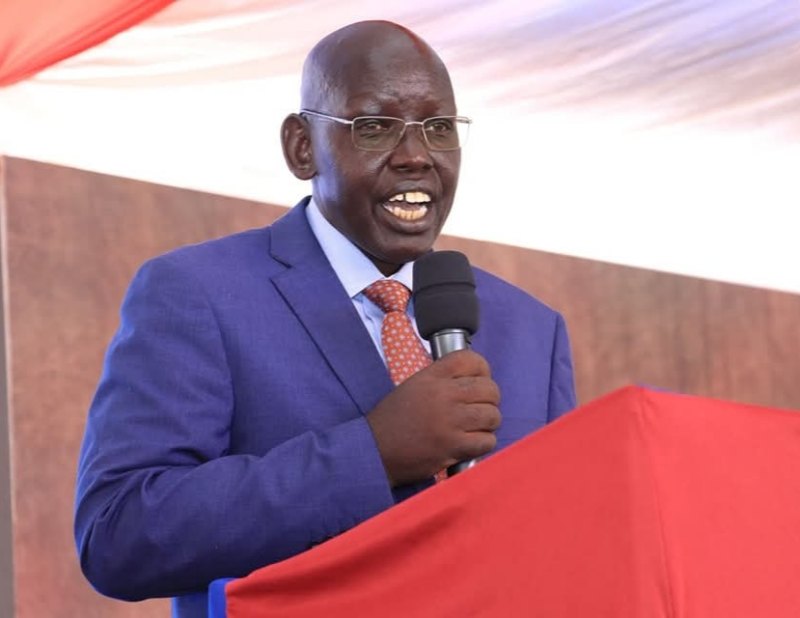
“The
challenge is that at one million workers, the wage bill is already high. This
means we have to think about how to increase revenue collection,” Public
Service Cabinet Secretary Geoffrey Ruku said recently.
He
added that without increased revenue, fair compensation for public officials
remains out of reach.
Insiders
in some of the affected agencies described widespread frustration, with many
resorting to informal lenders.
“Most
of us are borrowing from shylocks to survive. We have people with negative
pay,” an officer from one of the worst hit institutions said in confidence.
Economists
warn that the only sustainable way out is to either increase salaries or
restructure the deductions.
Kitui
Central MP Makali Mulu, himself an economist, told the Star: “Pay must be indexed to
inflation. It should be higher than the inflation rate.”
A
reform push by MPs through the Public Accounts Committee last November, in
collaboration with the National Treasury, has so far yielded little.
Some
lawmakers are now calling for a policy rethink, arguing the state cannot
dictate how employees spend their salaries, especially in a credit-driven
economy.
The
revelations come at a politically sensitive time for President Ruto’s
administration, already facing public fury over punitive tax policies and
economic hardship.
Embakasi
Central MP Benjamin Gathiru blamed government waste.
“When
workers take home less than Sh1,000, we are not talking about austerity but
economic cruelty,” the MP, a close ally of former Deputy President Rigathi
Gachagua, said.
The
PSC has recommended staff audits in struggling parastatals, but without
accompanying revenue growth, experts warn the next logical step could be
layoffs.
What’s
clear is that a systemic liquidity crisis is at hand—fuelled by a combination
of poor pay, high taxation and mounting statutory deductions that have eroded
the dignity of public service.
INSTANT
ANALYSIS:
The
parastatal crisis is no longer just a payroll issue but a litmus test for the
social contract between government and workers. President William Ruto’s
administration has pushed for higher taxes to reduce the public debt, but
protests have forced reversals, such as the withdrawn Finance Bill of 2024.