Former Prime Minister Raila Odinga’s ODM party is battling internal unrest
as sharp divisions emerge over a potential political alliance with President
William Ruto in the 2027 General Election.
Although some of Raila’s loyalists initially
pushed for a sixth stab at the presidency, recent developments suggest the ODM
leader could be warming up to a 2027 power-sharing deal with Ruto—an
arrangement that is now rocking the party to its core.
Once hailed for its ironclad unity, ODM is now
gripped by suspicion, rebellion and a growing ideological rift.
Top party officials and grassroots mobilisers have turned on each other,
openly questioning Raila’s political direction and accusing him of betraying
the party’s founding ideals.
Insiders say ODM is split down the middle. One camp is pushing for formal cooperation with Ruto, citing the promise of
national unity and development, while the other views the move as a betrayal of
the opposition’s legacy and a dangerous political gamble.
“The Ruto administration is deeply unpopular.
Associating with it could destroy the careers of many within the party,” a senior party figure warned.
The fallout has laid bare ODM’s fragile
internal cohesion and raised uncomfortable questions about Raila’s political
endgame, whether it marks a statesman’s final act or a retreat from decades of
fierce opposition politics.
Party secretary general Edwin Sifuna has
emerged as one of the most vocal critics of the emerging alliance.
During an interview on Citizen TV on Tuesday, Sifuna made a rare public
admission of the turmoil threatening to tear the party apart.
“This relationship [with Ruto] is hurting our
political party,” Sifuna said. “It is not just Sifuna who objects to most of
these things.”
He is joined by fellow ODM lawmakers
Caleb Amisi (Saboti), Babu Owino (Embakasi East), and Antony Kibagendi (Kitutu
Chache South), whom have voiced strong opposition to any deal with Ruto.
Adding to the complications, nearly all
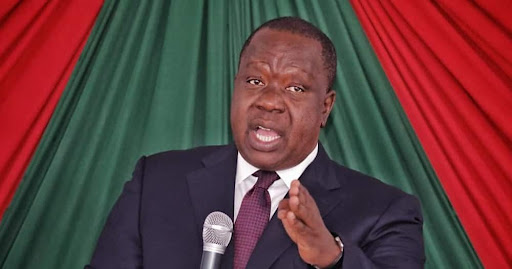
elected ODM MPs from Kisii have thrown their weight behind former Interior CS
Fred Matiang’i’s presidential bid. Most have skipped meetings attended by the President.
Saboti MP Amisi, in a phone interview
with the Star, warned that endorsement of Ruto in 2027 would be the final blow to ODM.
“I am one of the people against any deal with
Ruto. Supporting his reelection will tear ODM apart, if it hasn’t already,”
Amisi said. “We are worlds apart. We don’t share any ideology. Those of us
who are progressive will distance ourselves, and that will be the breaking
point.”
There are also growing fears that continued
flirtation with the ruling coalition could weaken Raila’s influence in key
support zones like Kisii, where competing presidential ambitions are already
shaping local alliances.
Many disgruntled political leaders within ODM have, however, adopted a
wait-and-see stance.
The overall impact of the squabbles in ODM's traditional bases of Nyanza, Western, Coast, Maasai and parts of North Eastern is yet to be determined.
Amisi admitted to
internal disquiet over continued yoking with President Ruto’s UDA.
The Saboti lawmaker said any attempt to back Ruto’s
reelection would be the breaking point of the 20-year-old party.
MPs loyal to the broad-based arrangement have, however, defended it, arguing that cooperation could unlock national development, secure
Raila’s legacy, and usher in a united nation.
Makadara MP George Aladwa – also the chairman of ODM in
Nairobi - downplayed any rift in the party, arguing that everyone is free to
express his or her opinion.
The Nairobi ODM chairman insisted the Orange party is intact
and what is being created does not reflect the situation on the ground.
“There is no problem in the party. Those who support
broad-based government and those are against should be free to express
themselves,” Aladwa told the Star.
“There is no confusion in ODM, everyone has the
right to express himself or herself. You cannot gag anybody from making public
his or her views.
“We are guided by the directions given by the party leader Raila Odinga. Those talking on television are allowed to talk. We are
not leaving the broad-based government.”
ODM executive director Oduor Ong'wen, too, dismissed claims that the party is embroiled in deep confusion, saying the matters being raised are currently being handled by the appropriate party organ.
He also defended the broad-based arrangement, insisting it was not made to save Ruto but the country, which was on the edge.
Ong'wen dismissed Sifuna's claims that there was confusion, including ideological uncertainty around key issues ODM has always stood for.
"The party is not in confusion. The party leader has explained repeatedly that the decision was about Kenya not Ruto."
As the rift widens, ODM has moved to do an audit of the implementation of
its MoU with Ruto with a view to guiding its next course of action.
Raila chaired ODM’s Central Committee meeting last week where the decision
to form a task force was reached.
Whether Raila will contain the rebellion—or whether it explodes into a
full-scale party rupture—may define not just his legacy, but also the future of
opposition politics in Kenya.
INSTANT ANALYSIS
With the 2027 politics already heating up, Raila’s camp stands at a crossroads:
embrace a new alliance with a former rival or stay the course as the face of
Kenya’s opposition. Either way, the fallout could redefine the country’s
political landscape and fracture one of its most enduring political movements.