From the founding father Mzee Jomo Kenyatta to William Ruto,
Kenya’s presidents have consistently cultivated close ties with the church.
This relationship between State House and the pulpit has
been a calculated and strategic alliance that has played a central role in
shaping Kenya’s political and moral landscape since independence.
In Kenya—where over 80 per cent of the population identifies
as Christian—church endorsement confers a powerful form of moral legitimacy.
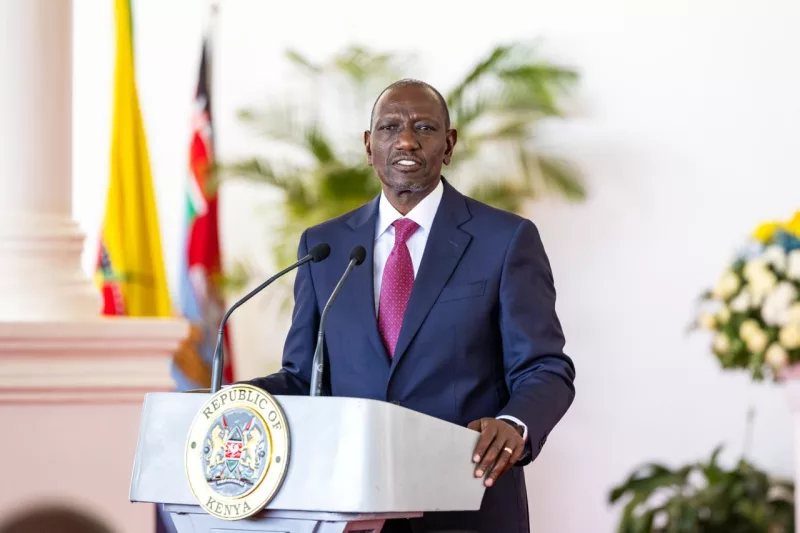
President William Ruto has long been recognised for his
close ties to the church—a relationship that has shaped not only his public
image but also his political trajectory.
From his early days in politics to his rise to the
presidency in 2022, Ruto cultivated a strong rapport with religious
institutions, particularly evangelical and Pentecostal churches.
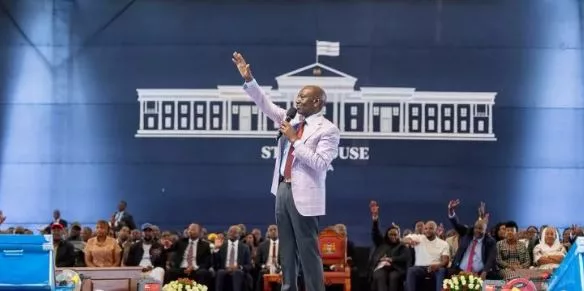
A self-professed born-again Christian, Ruto frequently
attributes his success to divine favour.
He often uses Biblical references in speeches, attends
church services across the country, and invites religious leaders to state
functions.
During the 2022 presidential campaign, Ruto made churches a
cornerstone of his grassroots strategy.
Ruto crisscrossed the country attending church fundraisers,
worship services, and prayer meetings. He contributed generously to church
building projects.
But tax hikes and pushing unpopular levies (fuel, housing,
insurance) turned him into “Zakayo” — a reference to the Biblical tax collector
Zacchaeus.
At first, youth activists criticised the church’s political
complicity. Ruto however fell out with
some churches.
The Kenya Conference of Catholic Bishops (KCCB) recently
condemned tax hikes, corruption, rights violations, and a “culture of lies.”
In November 2024 the Catholic Archdiocese of Nairobi
returned Sh5 million from Ruto, citing ethical conflicts
On March 2, 2025, however, Ruto defended his philanthropy arguing
that bishops shouldn’t return donations to God.
Most recently, Ruto has been at the centre of a storm after
it emerged that he is building a church at State House.
Anglican Church of Kenya (ACK) Archbishop Jackson Ole Sapit
has raised concerns about the project, questioning both its intent and its
constitutional implications.
“Will the president be the bishop or leader of this church,
as we have seen him recently lead public prayers?” Sapit posed, a rhetorical
jab aimed at the blurred lines between state and church under the plan.
Ruto explained that State House already had a chaplain who
had been serving before he assumed office and continued to lead services.
“We already have a chaplain. I heard one bishop asking, who
will be the head of the church? We have a chaplain there who I found already
serving, and he is the one leading services even now. I didn’t appoint him; I
found him there,” Ruto said.
For Kenyan presidents, the church has been seen not only as
a moral compass, but as a vital partner in governance, development, and
political legitimacy.
Mzee Kenyatta maintained a complex and pragmatic
relationship with the church during his leadership from independence in 1963
until his death in 1978.
During his presidency, Kenyatta worked closely with major
Christian denominations, particularly the Anglican Church and Catholic Church,
recognising their role in education, healthcare, and social services.
Kenyatta supported church activities that aligned with his
agenda while discouraging political interference.
Religious leaders who maintained loyalty received government
cooperation, land grants, and development support.
During the late 1960s and 1970s, when some church leaders
began criticising corruption and authoritarianism, Kenyatta responded with
caution, using his authority to suppress dissent while avoiding outright
confrontation with major denominations.
President Daniel Toroitich arap Moi, Kenya’s second
president and longest-serving leader (1978–2002), had one of the most visibly
intertwined relationships with the church.
Moi openly and deliberately embraced
Christianity—particularly evangelical Christianity—as both a personal conviction
and a political tool.
Moi was a devout member of the Africa Inland Church (AIC).
He donated to church projects, appeared regularly at church
events, and appointed Christians, especially from evangelical churches, to key
government positions.
Conversely, churches that questioned Moi’s
regime—particularly sections of the Catholic Church and the Anglican
Church—faced harassment and surveillance.
The church became a safe space for the Opposition. Notably,
figures such as Bishop Henry Okullu (Anglican), Bishop Ndingi Mwana a'Nzeki
(Catholic), and Rev. Timothy Njoya (Presbyterian) used the pulpit to speak
against government repression and push for constitutional reform.
President Mwai Kibaki maintained a unique relationship with
the church—marked by mutual respect and restrained engagement.
Kibaki's approach was more reserved and technocratic. He
rarely used religion for political theatre, yet he remained a practicing
Catholic and a supporter of faith-based development.
President Uhuru Kenyatta, who served as Kenya’s fourth
president, maintained a dynamic and multifaceted relationship with the church.
As a Catholic and the son of the founding president, Uhuru’s
interactions with religious institutions were shaped by tradition, political
necessity, and the evolving place of religion in Kenyan society.
Uhuru is a baptised Roman Catholic, and his faith was often
visible in state functions.
He attended Masses during national holidays, weddings, and
state funerals, and frequently referred to God in his public speeches.