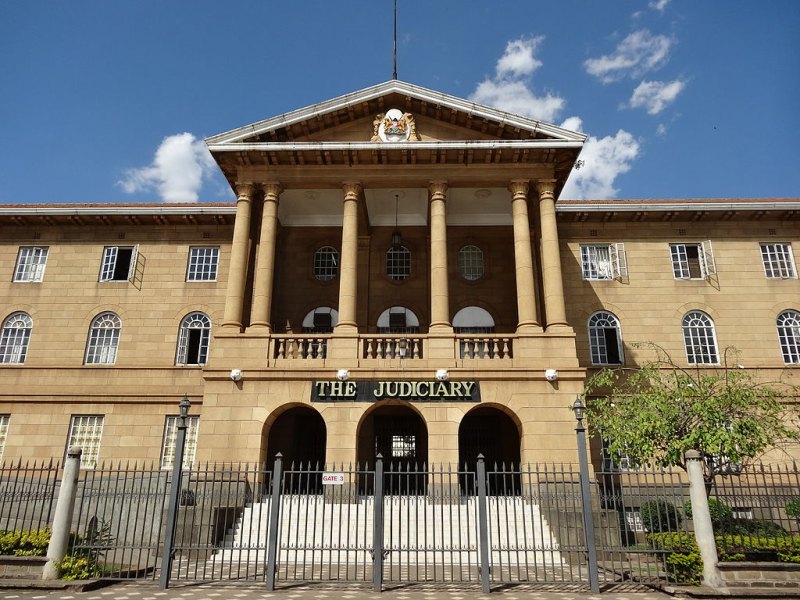
Protesters could soon be barred from demonstrating near
Parliament, State House, courts, or police stations under a proposed law that
seeks to rein in public dissent near critical state institutions.
The proposed Public Order (Amendment) Bill, 2025—currently
under heated debate in Parliament—would grant the Interior Cabinet Secretary
sweeping powers to designate specific protest zones, while making it illegal to
hold demonstrations within 100 meters of what the law terms as "protected
areas."
The Bill, championed by Nairobi Woman Representative Esther
Passaris, is aimed at addressing the chaos and destruction witnessed in recent
protests that rocked the country.
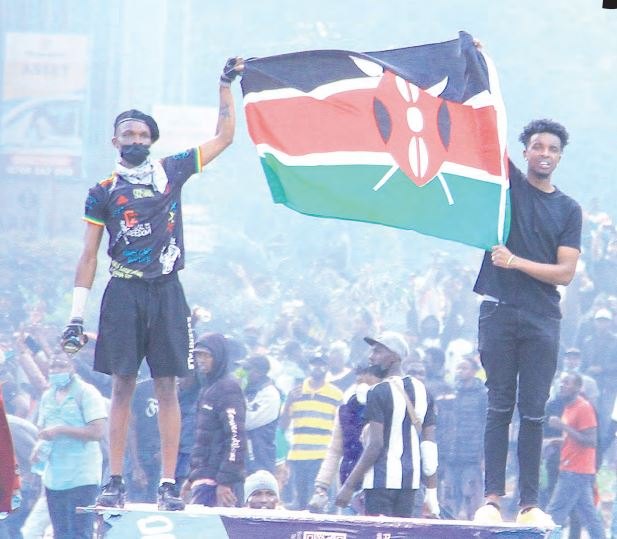
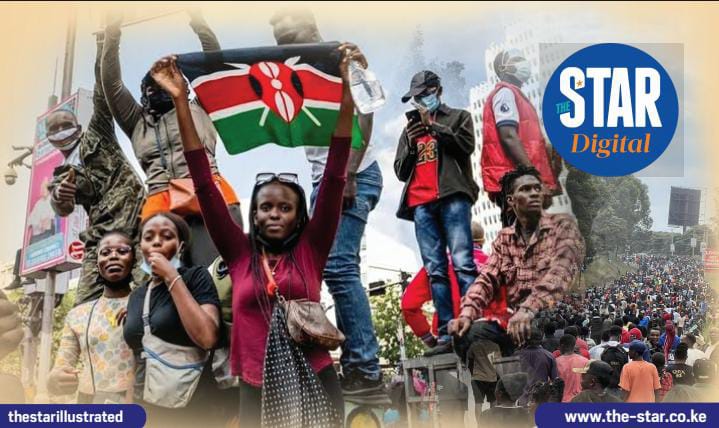
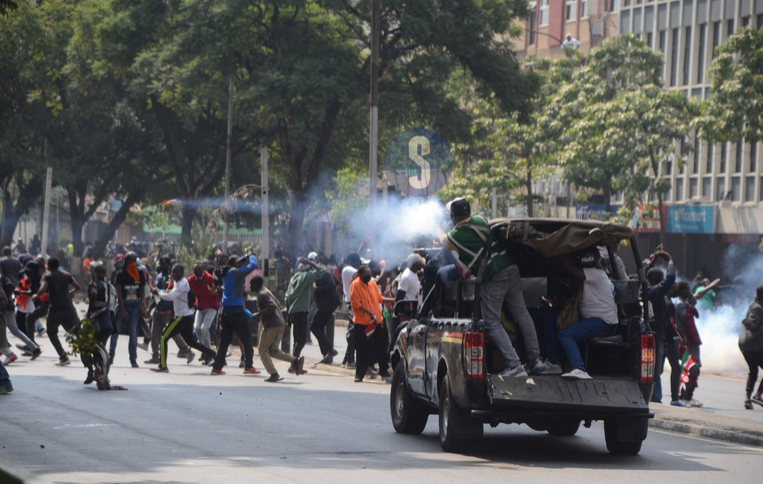
The deadly June 25 demonstrations left at least 16 people
dead and caused significant damage to property.
“The Cabinet Secretary may, by notice in the gazette and
upon consultation with county governments, designate assembly and demonstration
zones in the capital city, cities or urban areas,” the Bill states.
In its current form, the law defines an urban area to
include municipalities, towns and market centres—each expected to host specific
zones where protests can lawfully take place.
It also introduces stiff penalties: violating the 100-metre
protest buffer could attract a fine of Sh100,000 or a three-month prison term.
A public procession or gathering is defined in the Bill as a
congregation of 200 or more people advocating for or against a policy issue.
The legislation is being debated amid national tensions,
with another round of protests already called for July 7—Saba Saba Day—by
organisers of the June 25 demonstrations.
During the June 25 unrest, protesters attempted to breach
Parliament, State House, and City Hall, prompting a robust police response.
Business owners in Nairobi and other towns are still reeling
from the aftermath, counting losses from looting and destruction.
Defending the Bill before the National Assembly’s Security
Committee, Passaris insisted that the proposed law is a necessary safeguard
against violent excesses disguised as civic action.
“Rights must be exercised peacefully and unarmed,” she said.
“Supermarkets were looted, women raped, people terrorised—rogue actors turned
rights into ruin.”
Citing the deadly toll of previous protests—including 97
lives lost during the 2017 elections—Passaris said the law seeks to implement
structured demonstrations in line with a High Court directive.
“We must stop the killings. This bill balances rights with
public safety.”
She also pointed to international examples, “The US, the UK,
Turkey—they all have buffer zones around government buildings.
It is not suppression but structure. Democracies protect
institutions while allowing dissent.”
But opposition to the Bill has been vocal.
Kisumu West MP Roza Buyu warned that restricting protesters
to designated zones risks neutralising their message.
“If protesters are confined, are we curtailing their
freedom? What’s achieved if the unhappy only preach to the choir?”
Other lawmakers echoed concerns over enforcement and
constitutional compatibility.
Homa Bay Town MP Peter Kaluma praised the Bill’s spirit but
criticised its anchoring in the Public Order Act, a law he said has “a bad
history.”
“Article 37 guarantees ‘peaceable and unarmed’ assembly,”
Kaluma said. “This should be a standalone law, grounded in Article 24 of the
Constitution, which provides for the limitation of rights in a transparent and
express manner.”
Teso North MP Oku Kaunya sought clarity on how the 100-metre
rule and penalties were determined.
Passaris replied, “No
area is unpopulated. Without controls, crowds overrun police and criminals
infiltrate.”
Supporters of the Bill, like Sotik MP Francis Sigei, said
comparative global standards justify the restrictions.
“The UK has protest zones. We must borrow best practices to
prevent a repeat of 2007’s violence.”
Mandera East MP Abdirahman Hussein called it “an idea whose
time has come,” comparing it to security measures in Cairo’s Tahrir Square.
Others, like Saku MP Dido Raso, pushed for regulation of
social media-led mobilisation.
Nyakach MP Aduma Owuor struck a balanced tone, calling for
justice and engagement before enforcement.
“We must address protesters’ grievances first, then enact
enforceable laws.”
As the country prepares for Saba Saba protests, the Bill
stands at the heart of a fierce debate over how far a state can go to maintain
order—without eroding the constitutional right to dissent.
The Bill emerges amid judicial scrutiny of Section 5 of the
Public Order Act, which was deemed unconstitutional for vague restrictions.
Courts have called for the setting of clear protest zones,
as is the Parliamentary Powers and Privileges Act, which outlines picketing and
petitioning rules.
Passaris stressed her Bill diverges from the then Mbeere
North MP Geoffrey Ruku’s earlier proposal, which was heavily on the protesters
and the organisers - who were to bear personal responsibility.
“Ruku (now Public Service CS) regulated protesters’ conduct,
while mine organises the environment. His Bill focused on individuals while
mine plans spaces,” the lawmaker said.
Ruku’s proposal was shot down by the security committee on
the grounds that it risked limiting rights guaranteed by the constitution.
The House team declared the Bill incompatible with
international treaties, conventions and best practices governing the conduct of
assemblies.
It thus recommended the complete deletion of the Assembly
and Demonstration Bill, 2024.
The committee argued that any legislation regulating
protests should instead be developed through a broad and inclusive consultative
process.
"The committee, having considered the Assembly and
Demonstration Bill of 2024, recommends the deletion of the Bill,” the committee
said in a report before MPs.
"There is a need to formulate legislation and
guidelines for the conduct of assemblies and demonstrations through a broad and
inclusive process."
Ruku sparked fierce opposition from civil society groups
with the proposal for limitations on the right to protest.
Among its most contentious provisions was a requirement for
demonstrators to obtain licenses before holding assemblies.
Organisers were to be compelled to submit their full names,
addresses and details of marshals tasked with managing the protests.
Additionally, demonstrations would have been restricted to
specific hours, between 6 am and 6 pm, with participants confined to
pre-approved routes and locations.
The proposed law also granted sweeping powers to law
enforcement and allowed police to prohibit protests outright if they deemed
them unauthorised or a potential threat to public order.
Authorities could forcibly disperse gatherings and prosecute
individuals who defied dispersal orders if the bill were enacted.
Protest organisers, meanwhile, would have been held legally
responsible for ensuring public safety, cleaning demonstration sites and
covering any damages to property.
INSTANT ANALYSIS
As tensions simmer ahead of the Saba Saba demos, the Bill’s
fate hinges on reconciling security with Kenya’s protest culture. In a test of
democracy’s resilience, MPs are urging sobriety in order for the august House
to come up with a proper regulatory framework for demos, without limiting
rights guaranteed by the supreme law. Ruku's initial attempt was rejected
overwhelmingly.



![[PHOTOS] Raila Odinga Stadium construction enters home stretch](https://cdn.radioafrica.digital/image/2026/06/45f6990c-4882-4cd2-b83c-8fc730dcdce5.jpg)