EXPLAINER: Understanding IPOA, what it does and its powers
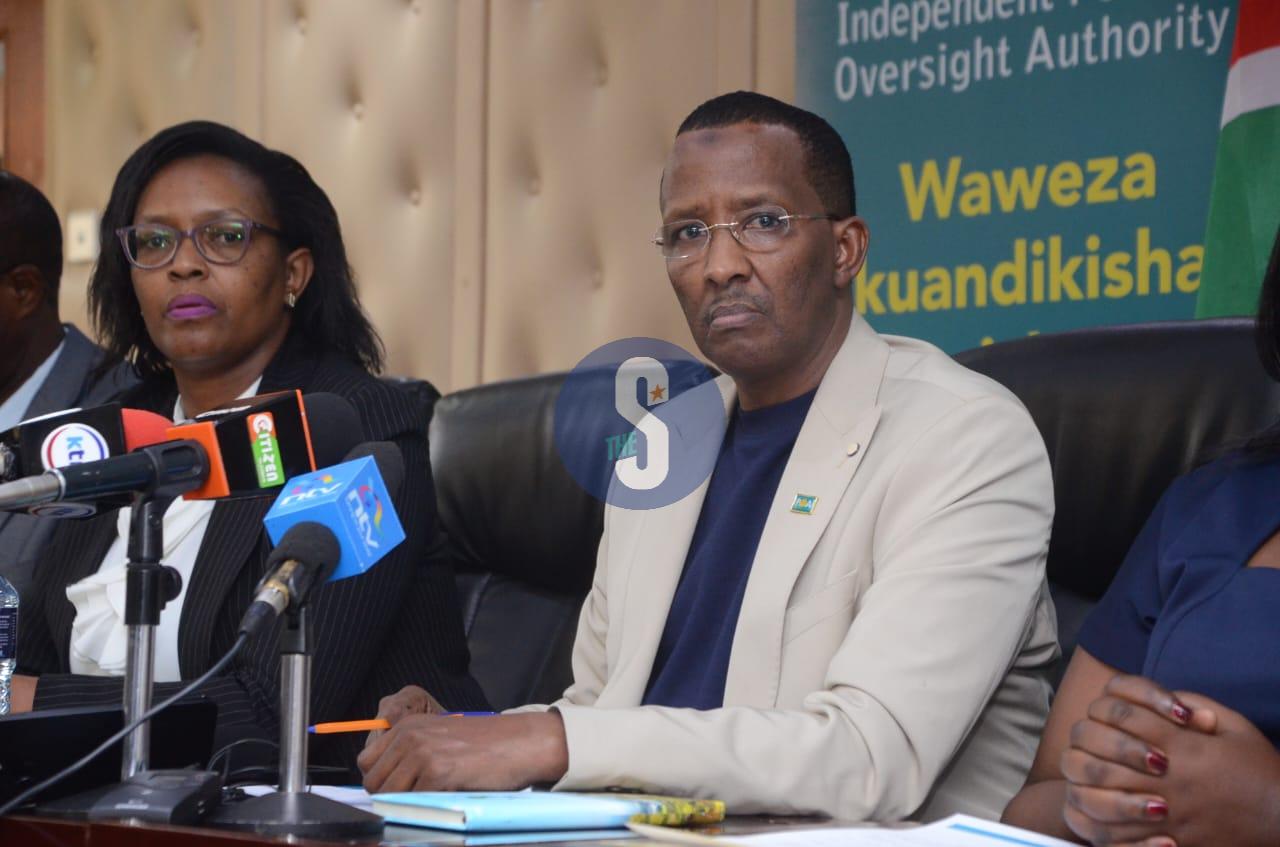
Ipoa is currently probing several cases involving the police.
by FELIX KIPKEMOI
Audio By Vocalize
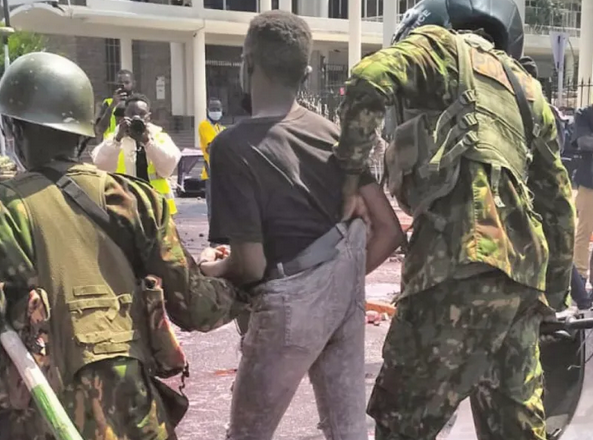
A man is arrested by police officers during a past protest/Ipoa
As concerns over
police conduct continue to attract public attention, one body remains
central to ensuring law enforcement remains accountable-the
Independent Policing Oversight Authority (Ipoa).
Established under
the Constitution and the IPOA Act of 2011, this civilian-led agency
plays a critical role in investigating police misconduct, promoting
professionalism within the service, and protecting citizens' rights.
Article 244 of the
constitution requires the police to strive for the highest levels of
discipline and professionalism, promote and practice, transparency
and accountability in execution of their duties. Ipoa holds them
accountable to this standard.
The inaugural board
was sworn into office in June 2012
The agency is
mandated to monitor, investigate, and report on the actions of the
National Police Service (NPS).
Its creation was a
response to long-standing public outcry over abuse of power,
extra-judicial killings, and lack of accountability within the police
force.
Core mandate and
functions
The Ipoa’s Act
mandates its to conduct several functions.
These are
investigations into deaths and serious injuries caused by police
action before recommending disciplinary action or prosecution on
those involved.
It also investigates
police conduct after receiving complaints made by the public on
police misconduct and undertakes independent investigations.
The Authority also
receives complaints from police officers against fellow officers.
“IPOA can initiate
investigations on its own motion and may refer cases to appropriate
bodies, including seeking the court's intervention to have its
recommendations implemented,” it states.
Ipoa also monitors,
reviews and audits investigations and actions by the Internal Affairs Unit
of the police.
It oversees the work
of the IAU to independently verify that the internal police system
deals with complaints against officers fairly and effectively.
The Authority can
take over investigations if not satisfied with IAU's intervention.
It further conducts
inspections of police premises to ensure they meet basic predefined
standards and that the treatment of suspects and detainees is in line
with the constitution.
In reviewing the
functions of the internal police disciplinary processes, it may
conduct surveys to asses improvement in police internal
accountability mechanisms.
Ipoa also monitors
and audits police operations and internal systems.
After every six
months, it is required to prepare a performance report and an annual
report to inform the public of its activities and provide
recommendations for the improvement of NPS.
What powers does
Ipoa have?
Ipoa has the legal
power to summon officers, inspect police premises, access documents,
and recommend prosecution or disciplinary action.
Although it does not
prosecute cases itself, its findings are handed over to the Office of
the Director of Public Prosecutions (ODPP), which can take legal
action.
Why it matters now
Ipoa is currently
probing several cases involving the police, the latest being the shooting
of a man by a police officer in Nairobi CBD during Tuesday’s
protests.
This came in the
wake of another in which a suspect, Albert Ojwang, died in police
custody.
Several officers
have so far been questioned about the incident.
In recent years,
Ipoa’s work has come under the spotlight due to growing public
frustration over police brutality, particularly during protests,
curfews, and enforcement of security operations.
As more cases of
alleged unlawful killings and abductions are reported, Ipoa's role in
independently verifying these claims and pushing for justice is more
vital than ever.
Critics argue that
Ipoa needs more resources and autonomy to act swiftly and
conclusively. However, its existence remains a key part of the
reforms aimed at transforming Kenya’s policing from a force into a
service.
Kimilili MP Didmus Barasa threatened on Wednesday to sponsor an
amendment to disband the agency for allegedly intimidating police
officers in line of duty.
The lawmaker said the authority has failed on his mandate and
instead resorted to making the work of the police difficult.
Addressing a press conference at Parliament, Barasa also said his
proposed legislation will give the security officers powers to use
reasonable force in the line of duty.
According to Barasa, the authority in its current format only
serves to instill fear within the NPS.
“I have set up a team in my office looking at all this proposal.
The amendments will be out soon,” Barasa said.
“I will propose to disband Ipoa or reduce them to how
parliamentary committees handle petitions.”
This is premium content
Subscribe to Continue Reading
Help us continue bringing you unbiased news, in-depth investigations, and diverse perspectives. Your subscription keeps our mission alive and empowers us to provide high-quality, trustworthy journalism. Join us today to make a difference!