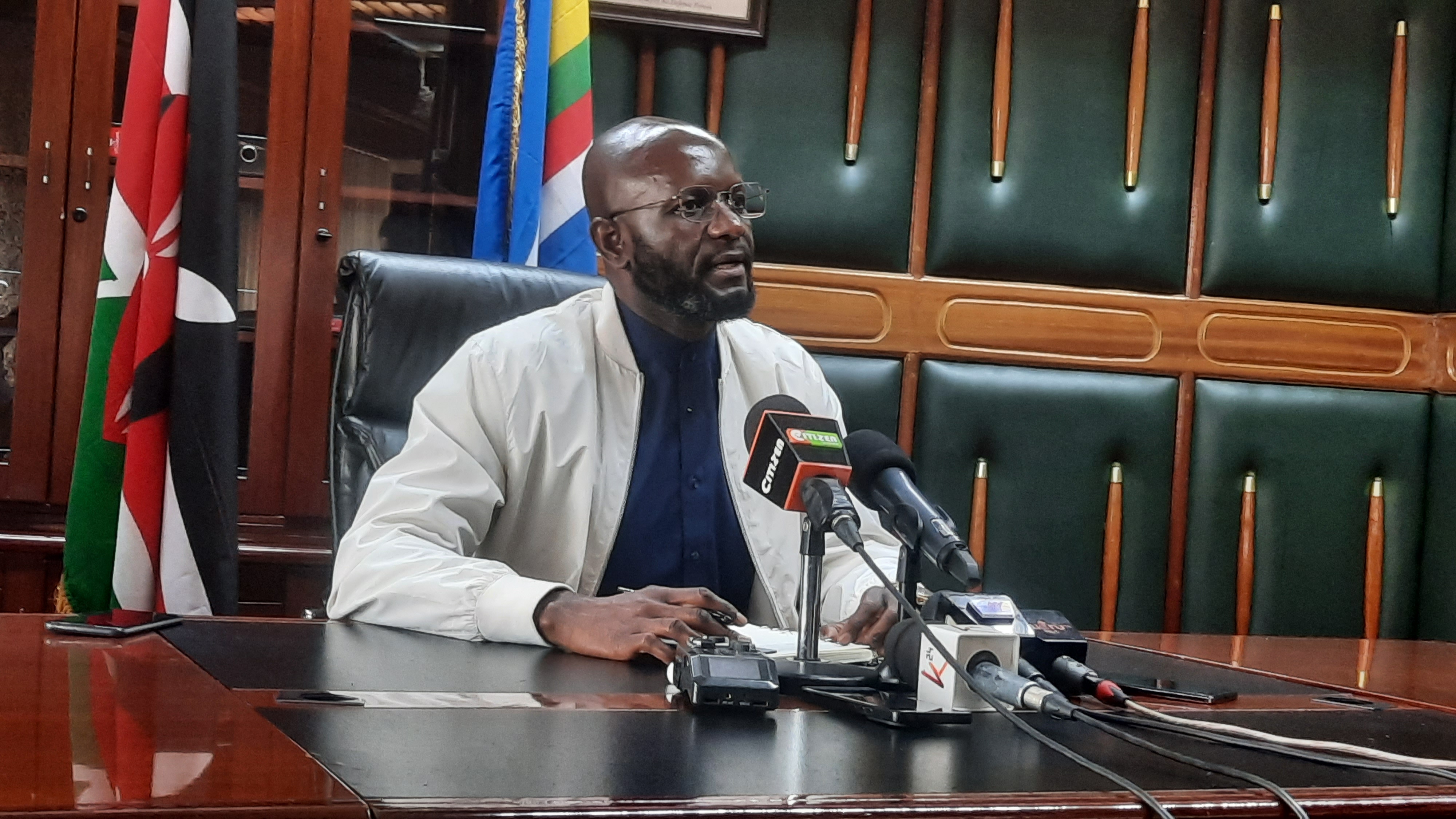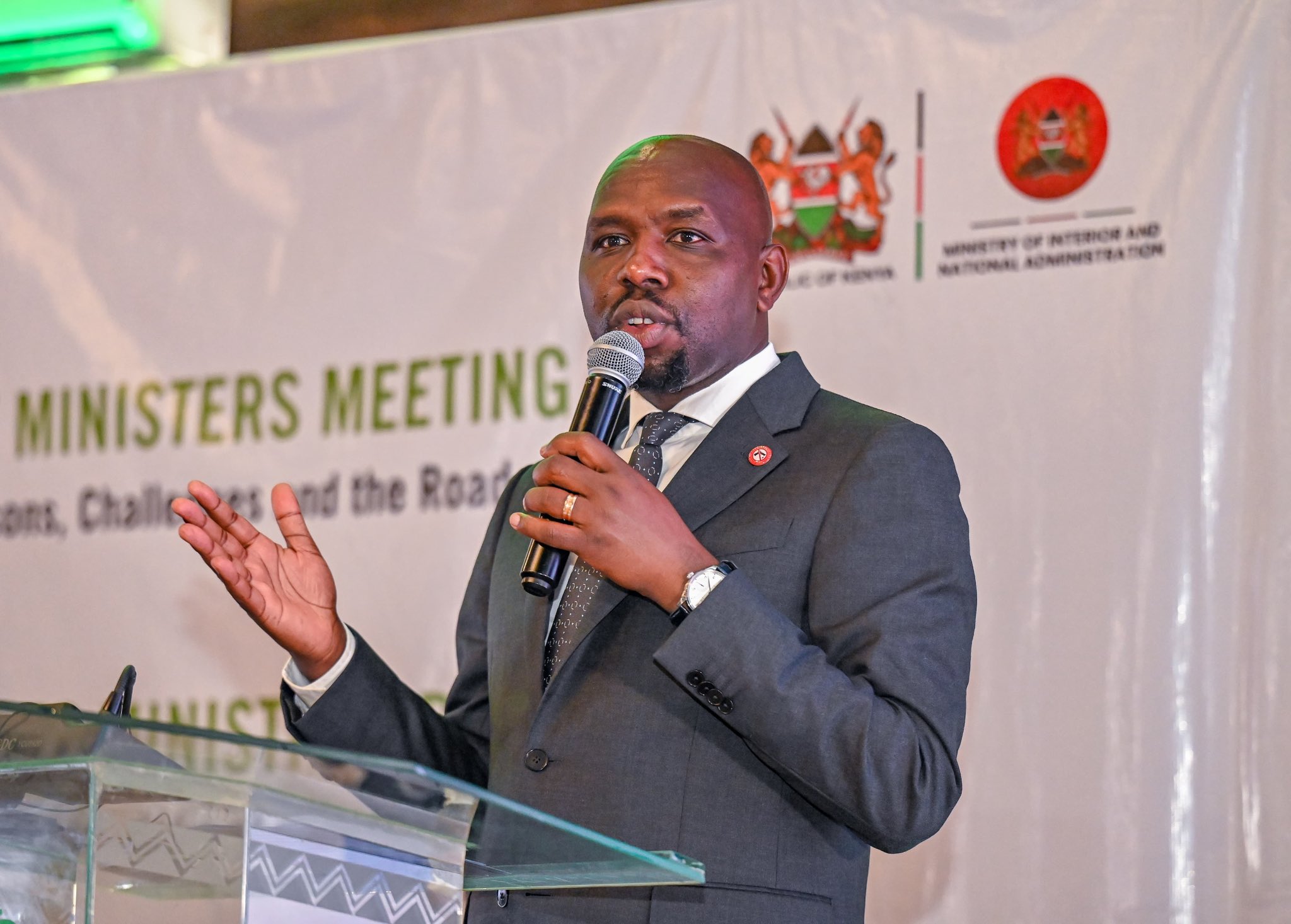
Interior Cabinet Secretary Kipchumba Murkomen on Monday issued a comprehensive statement outlining a new wave of police reforms aimed at transforming the National Police Service (NPS) and enhancing accountability across the board.
Murkomen said the reforms have gained momentum, rooted in the constitutional integration of the NPS and shaped by extensive consultations with key stakeholders.
These engagements, led by a technical committee through joint secretaries, resulted in the drafting of several key amendment bills.
Among them is the National Police Service Commission (Amendment) Bill, designed to strengthen the commission’s independence and oversight capacity.
Also proposed is the National Police Service Act (Amendment) Bill, which aims to improve working conditions, salaries, and service terms for officers.
It also seeks to address persistent challenges including political interference, corruption, inadequate training, and structural weaknesses within the service.
To enhance oversight, the Independent Policing Oversight Authority (Amendment) Bill has been drafted to reinforce IPOA’s ability to fulfill its constitutional role effectively.
The package of reforms also includes the National Youth Service (Amendment) Bill, focused on boosting NYS operations in areas such as logistics, mobility, and equipment.
Additional proposed laws are the Public Order (Amendment) Bill, which aims to clarify and strengthen the management of public assemblies under Article 37 of the Constitution; the National Forensic Science Laboratory Authority Bill, which supports the establishment of a national forensic lab and ten specialized forensic units; and the National Police Service Veterans and Fallen Heroes Bill, intended to improve support for police veterans and families of officers who have died in the line of duty.
Murkomen acknowledged that police accountability has not always been the norm in cases involving excessive force or extrajudicial killings. However, he pointed to significant progress, citing landmark cases where officers were successfully prosecuted.
These include the 2016 murder of lawyer Willie Kimani, his client Josephat Mwenda, and driver Joseph Muiruri, where three officers were sentenced to death; the 2017 killing of Baby Samantha Pendo in Kisumu, where four officers were charged; and the 2013 torture and death of Martin Koome, where an OCS was found guilty and sentenced to death.
Murkomen said these cases reflect painful lessons that have informed the direction of the current reforms.
To further reinforce change, Murkomen announced a new policy reform framework built around transparency, digitization, community engagement, and professional development.
Key initiatives include:
CCTV Surveillance in all 1,209 police stations across the country within two years, to improve transparency and reduce abuse of power.
Digitization of Occurrence Books within a year to align with the government’s BETA digital transformation program, ensuring tamper-proof and trackable reporting of all incidents.
Community Policing Models to be rolled out in every police station, aimed at strengthening trust and cooperation between police and citizens.
Mandatory Annual Training for officers, starting with Officers Commanding Stations (OCSs), through a continuous professional development program based on constitutional standards.
Murkomen concluded by noting that oversight and implementation of the reforms will be centralised at each police station, under the direct responsibility of the station’s OCS.