The Finance
Bill, 2025, was officially released on April 30, 2025 and is now open for
scrutiny, with public participation forums on course.
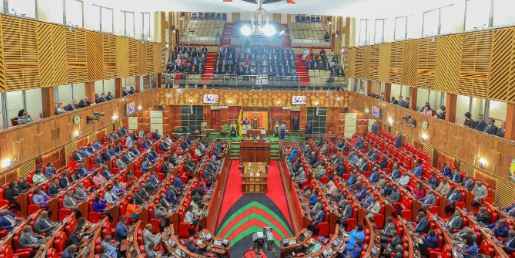
The National
Assembly Committee on Finance and National Planning is on Tuesday, June 3, 2025
holding public hearings on the Finance Bill, 2025 in the counties.
The
committee, which has been receiving views from various stakeholders in Nairobi
for about seven days, will hold public hearings in Busia and Migori, then in Trans
Nzoia and Nandi on Wednesday, June 4, 2025.
This legislative
proposal is set to introduce significant amendments to the tax framework, aimed
at sealing loopholes and enhancing efficiency, as stated by the National
Treasury.
The
committee’s vice chairman, Benjamin Langat, underscored the significance of
public participation in the legislative process, saying all views will be
integrated into the final report presented to the House.
“This is not
an exercise in futility, it’s a very important exercise. This Finance Bill is a
proposal to the National Assembly, and it has to undergo the necessary
legislative process, including public participation, to become law,” Langat
explained on June 2, 2025.
Langat urged
the public to consider the current Bill not in isolation, but in conjunction
with the proposed budget estimates.
“I want to
implore the public to desist from looking at the Finance Bill in isolation.
When you tell us to employ junior secondary school teachers, or even more
nurses, the money to cater for that must come from somewhere. This Bill is the
instrument we use to raise such funds,” he said.
On Saturday,
various stakeholders presented their views on the Finance Bill, 2025.
Grant
Thornton conducted an in-depth analysis of the Finance Bill, 2025, evaluating
its impact on businesses and individuals across various sectors.
The detailed
review breaks down each tax change, highlighting key implications on income.
Income Tax
1. Extensive definition of royalty
payments.
The Bill
proposes to include “the distribution of software where regular payments are
made for the use of the software through the distributor” in the definition of
royalty.
Implication
This
proposal widens the scope of royalty payments to encompass regular payments made
to distributors. Though the proposal clarifies that the distribution of software
qualifies as a royalty, its implementation will increase the compliance burden and
erosion of economic benefits.
2. Minimum top-up tax due date
The Bill
proposes that taxpayers eligible for the minimum top-up tax will be required to
make a payment by the end of the fourth month after the end of the year of
income.
Implication
This
proposal seeks to bring clarity on the due dates for payment of the minimum top-up
tax introduced by the Tax Laws Amendment Act 2024.
3. Repeal of 100% and 150% investment allowances
The Bill
proposes to delete the 100% and 150% investment deduction rates for investments
in a particular year of income where:
The cumulative investment value in
the preceding 3 years outside Nairobi City County and Mombasa County is at
least Sh1 billion.
· The cumulative investment in the
year that a person is claiming the investment allowances is at least Sh 250
million;
· The person has incurred an investment
in a special economic zone.
Implication
Investors
will no longer be economically motivated to absorb the higher costs of
investing outside Nairobi and Mombasa counties if this proposal is enacted,
leading to a significant negative impact on investment in those regions
4. 100% Capital allowance on non-machinery items
The Bill
seeks to clarify the percentage rate of allowance on any implement, utensil or
similar article, employed in the production of gains or profits, not being
machinery or plant, deductible under the second schedule at 100% in that year of
income.
Implication
This
proposal is a welcome move as it will allow businesses to claim full costs of
such items, thereby simplifying tax compliance and ensuring certainty.
5. Removal of deductibility of sports sponsorship expenditure
The Bill proposes to
delete the current provision allowing deduction of expenditure incurred by a
person sponsoring sports, with the prior approval of the Cabinet Secretary
responsible for sports.
Implication
Implications are to redirect these funds towards activities
considered deductible under the Income Tax Act.
If enacted, the proposal will have a negative impact on
nurturing sports and talent, especially on betting firms that have been at the
forefront of sports sponsorship.
6.
Tax deductibility of expenditure on the construction of a public sports facility
The Bill proposes to allow deduction of expenditure incurred
in the construction of a public sports facility in such year of income.
Implication
The proposal is intended to incentivise taxpayers to contribute
to the development of public sports facilities by allowing a tax deduction for
related expenditure.
7.
Limitation on carrying over tax losses
The Bill proposes to limit the carryover of tax losses back to 5
years.
Implications
This proposal will negatively affect capital-intensive
projects that take more than 5 years to be commercially viable and therefore
could potentially discourage both foreign and local investment.
8.
Deletion of the provision providing
for capital losses deduction against future capital gains.
The Bill proposes to delete the provision that allows
taxpayers to deduct any capital loss realised in accordance with the provisions
of the Eighth Schedule against any future capital gains realised.
Implication
Adoption of this proposal would unfairly burden taxpayers
with capital gains tax on the sale of a particular property despite recent
significant capital losses upon transfer or sale of a prior property.
9.
Deletion of the double tax relief provision on
capital gain tax
The Bill intends to delete the Income Tax provision that
exempts income from capital gains tax to the extent that it is chargeable to
tax under any other provision.
Implication
Taxpayers may now face double taxation on capital gains due
to this provision being deleted.
10. Clarity regarding CbCR filing for constituent entities based in Kenya
The Bill proposes to provide clarity on CbCR filing where
there is more than one constituent entity of an MNE who are resident in
Kenya, by stating that the MNE Group may designate one of the entities to file
a CbCR in Kenya.
Implication
Clarity on the obligations of filing CbCR in Kenya for
resident entities
11. Repeal of CbCR filing exemptions
for resident surrogate parent entity
The bill proposes to delete CbCR filing exemptions for resident
surrogate parent entities.
Implication
Clarity on the wording of the law with intent to align with the
exemption criteria per BEPS Action 13.
12. Introduction of Advance Pricing Agreements
The Bill proposes to allow a taxpayer to enter into an advance
pricing agreement for a fixed price, subject to a maximum period of 5 consecutive
years.
Implication
This proposal reduces the administrative tax burdens for
taxpayers on transfer pricing between related parties by minimising costly and
time-consuming litigation or adjustments by agreeing on arm’s length pricing
upfront.
13. Withholding tax on payments to
charterers and ship owners
The Bill proposes to subject gains or profits derived from
the business of a nonresident ship owner or charterer other than transhipment to withholding tax.
Implication
This proposal widens the tax base to encompass income from
non-resident ship owners or charterers, therefore increasing government
collection. If passed, it could lead to higher cost of doing business and
possible re-routing of shipping activity.
14. Automatic approval of a change in accounting
periods
The Bill proposes that a taxpayer’s application for a change of
the accounting period shall be deemed to have been approved if the commissioner
does not revert within a period of six (6) months.
Implication
This proposal provides certainty to taxpayers on the approval of
the change of accounting period by the commissioner by preventing
administrative delays and unfair penalties.
15. Tax exemption of gains on transfer
of securities
The Bill proposes to exempt gains on the transfer of securities
traded on any securities exchange licensed by the Capital Markets Authority.
Implication
This proposal will attract foreign investment through
securities, considering such gains on the transfer of securities will be exempt from
tax.
16. Tax exemption of dividends paid by a company certified by NIFCA
The Bill
proposes to exempt dividends paid by a company certified by the Nairobi
International Financial Centre Authority where the company reinvests at least
Sh250 million in that year of income.
Implication
This
proposal will incentivise companies to reinvest more than Sh250 million to
qualify for such exemptions. This will balance tax incentives with economic
development.
17. Tax incentives for companies
certified by NIFCA
The Bill
proposes to reduce the corporate income tax rate for companies certified by the
Nairobi International Financial Centre Authority to 15% for the first 10 years
and 20% for the subsequent 10 years, where such a company:
· invests at least Sh3 billion in the first 3 years of operation
· is a holding company, and at least
70% of its employees in senior management are employees of Kenya
· The regional headquarters of the
company is in Kenya, and at least 60% of the employees in senior management are
citizens of Kenya.
In the case
of start-ups certified by NIFCA, the Bill proposes to reduce the corporate
income tax rate to 15% for the first 3 years and subsequently 20% for the
succeeding 4 years.
Implication
This
proposal encourages investors to set up within the Nairobi International
Financial Centre while attracting foreign direct investment and helps startups
to preserve cash flow for growth.
18. Digital asset tax reduced to 1.5%
The Bill
proposes to reduce the digital asset tax rate from 3% to 1.5% of the transfer
or exchange value of the digital asset.
Implication
This proposal reduces the tax burden for
businesses engaging in digital asset transfers, or engages further stimulation higher trading volumes in Kenya’s digital asset market by making
transactions more cost-effective.
19. Extensive definition of
Significant Economic Presence Tax
The Bill
proposes to expand the scope of significant economic presence tax to include
business carried out over the internet or an electronic network, including
through a digital marketplace.
Implication
This
definition brings clarity to taxpayers subject to the SEP Tax with respect to income
earned through digital platforms.
20. Removal of the threshold for the applicability of Significant Economic
Presence Tax.
The Bill
proposes to delete the provision exempting non-resident persons with an annual
turnover of less than Sh5 million from Significant Economic Presence Tax.
Implication
This
proposal is likely to increase compliance costs for non-resident persons with
minimal turnover and may potentially discourage businesses from providing
digital services in the Kenyan market since the economic benefits derived may
not be commensurate with the compliance costs incurred.
21. Fringe benefit taxed at a resident
corporate tax rate
The Bill
proposes to charge to tax fringe benefits at the prevailing resident corporate
income tax rate.
Implication
This
simplifies tax compliance on the computation of fringe benefit tax, which eases the
administrative burden on such obligation.
22. Requirement to include the dividend distributed out of untaxed gains in
the tax return.
The Bill
proposes that every company shall, in its return, include details of any dividend
distributed out of untaxed gains in a particular year of income.
Implication
The Bill
seeks to bring clarity on the declaration of dividends distributed out of untaxed
gains, which will be made through the income tax return.
23. Withholding tax on the sale of scrap and the supply of goods to a public entity
The Bill
proposes to include payments for the sale of scrap and supply of goods to a
public entity under the ambit of withholding tax.
Implication
This
alignment with section 35 of the Income Tax Act provides clarity that income
from such supplies and the sale of scrap is subject to tax.
Personal tax
24. Increase of per diem threshold
The Bill
proposes to increase the allowable cash benefit limit from Sh2,000 to Sh 10,000
on the amount received by an employee as reimbursement in respect of a period spent
outside his usual place of work while on official duties.
Implication
This
proposal is a welcome relief to employees since it is commensurate with the
current economic conditions and increased cost of living.
25. Employee reliefs and deductions
The Bill
proposes to grant employees all applicable deductions, exemptions and reliefs
under the Income Tax Act, before computation of PAYE.
Implication
The proposal
intends to ensure employers effect deductions, exemptions and reliefs on the
employee’s taxable income before deducting PAYE.