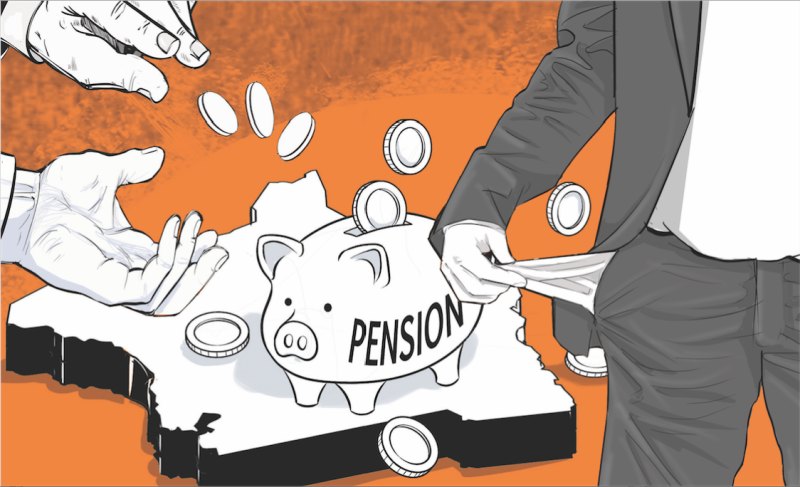
AJUOK: The public debt question: Why must marginalised areas pay?
If the country borrows heavily to fund development, and these funds are allocated in a skewed manner, this raises a moral question about repayment.
by COLLINS AJUOK
Audio By Vocalize
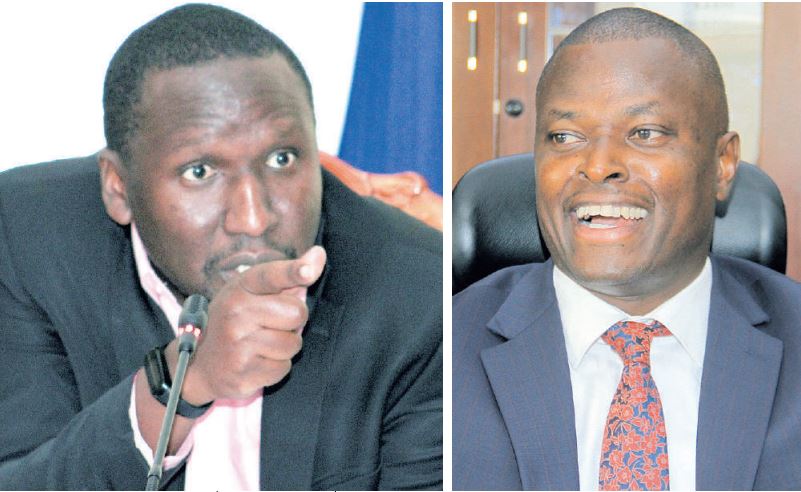
Kericho Senator Aaron Cheruiyot and Kiharu MP Ndindi Nyoro /FILE
Senate Majority leader Aaron Cheruiyot is prone to regular
emotional outbursts on the floor of the House, but he is undoubtedly one of the
smartest, most articulate debaters in the entire Parliament.
Being a young leader with a newer worldview, and having
President William Ruto’s ear means that at a certain level, the country’s
progressive and liberal sections can depend on him to counterbalance the
conservative and ignorant wing of the Kenya Kwanza administration, represented
by characters such as Kapseret MP Oscar Sudi.
Last week, during a heated debate on the Division of Revenue
Bill, Senator Cheruiyot said something interesting, which made me reflect
deeply.
The Kericho senator accused Kiharu MP Ndindi Nyoro of
allocating Sh14 billion to his (Nyoro’s) constituency for roads in the last
financial year, when Nyoro was still chairman of the National Assembly Budget
Committee What the senator said next is the subject of my attention today.
The Senate Majority leader and I totally agree: if the
country borrows heavily to fund development, these funds are allocated in a
skewed manner, and this raises a moral question around of repayment of the
national debt.
Cheruiyot suggested, almost in jest, that a county such as
his own, Kericho should just calculate the net effect of the national debt and
repay only its fair share of the allocation.
This leaves undeserving beneficiaries, such as the alleged
case of Kiharu, to carry the bigger burden.
I totally love this line of thought, because a sharply
divided nation, such as Kenya, needs uncomfortable conversations like this, to
focus on the years of marginalisation of certain regions since Independence.
Marginalisation and state neglect are difficult to legislate
against, but the fact that the entire country must foot the bill for skewed
allocation of the national cake poses a moral question: why and how this has been
allowed to go on for so long.
For a week earlier this month, I visited Homa Bay county,
seized by a flurry of activity as it prepared to host the Madaraka Day fete
this weekend. The county will also host the Devolution Conference in August.
From the grassroots, I encountered bittersweet tales.
There is bitterness following long years of state neglect
perpetuated by successive regimes since Independence, and yet you can sense the
newfound joy some stalled projects from years ago are now receiving attention
from both the national and county governments.
When I visited, Homa Bay looked like a giant construction
site.
Works on the Raila Odinga Stadium, Homa Bay, strangely
abbreviated to ROSH, was proceeding at lightning speed to beat the Madaraka
hosting deadline.
In the meantime, senior government officials were on the
ground to oversee progress of the ongoing tarmacking of the 74-kilometre
Mbita-Sindo- Magunga-Sori road, a perennial eyesore on those shores.
Residents also cheered the sparkling-new Mfangano Ring Road.
As if that were not enough, traders were in high spirits
over the forthcoming new fish market, a far cry from previous lakeshore trading
that diminished the dignity of such a critical economic sector. And here we
must pose the moral questions.
Lake Victoria has
always been facing largely untapped economic potential and obviously not
meeting its desired status as a massive transportation and integration hub for
East Africa’s goods and people.
Even from a security standpoint, one Nyanza city on the lake
should have been hosting a huge Navy Base, with all attendant facilities but it
hasn’t, 62 Madaraka Days later!
It is easy for politicians, especially
vociferous ones from the Mt Kenya region, to dismiss the attention given to Luo
Nyanza by the current regime, as merely the quid pro quo effect of cooperating
with Raila Odinga’s ODM.
But it is important to note that every region deserves the
development and progress that three presidents from that region have given
their people in massive infrastructure projects, growth of the agricultural
sector, and a functional economy.
Otherwise, the fish trader of Sindo, riding his motorcycle
through dam-sized potholes on murram road, to get to the nearest market, has no
moral obligation to service the national debt in the same manner as the tea
farmer in Mathira, who has the luxury of using smooth tarmac to get his produce
to the nearest collection centre in its freshest form.
This is not a matter of broad-based governance or
cooperation with a sitting government, although it may not seem so to leaders
from regions used to being pampered for producing presidents.
This is a right that should extend to all Kenyans.
The
advent of devolution was partly meant to remedy some of these issues. In fact,
Senator Cheruiyot delivered his argument during a debate in which the Senate
was demanding counties receive Sh456 billion in equitable share of revenue in
the new financial year.
In the last financial year, the Senate had proposed a little
more than Sh400 billion, which the National Assembly rejected, forcing a
mediation that settled on Sh387 billion?
If the Senate
succeeds in getting Sh456 billion passed, it would be a major milestone for
devolution, because the revenue share would pass the Sh400 billion mark for the
first time.
The Senate has
already acquitted itself quite admirably as a House more responsive to the
needs and aspirations of the people than its counterpart, the National
Assembly. In fact, there is a running joke among senators that the national
assembly is where Senate bills go to die.
In its role as the upper house and watchman of the people,
the Senate should put its foot down and force pro-devolution legislation that
ultimately minimises state control of public resources and allocates more to
counties, so that one constituency doesn’t end up receiving Sh14 billion while
others receive nothing, due to clear gaps in the law.
I would love to see an overview of national debt and its
development allocation over the past few decades. It would be intriguing to see
the effect of the decision points, vis-à-vis the identity of the man sitting in
State House, as a way of rationalising spending public resources against the
manner in which each beneficiary was identified.
I think this would be a good report for each Kenyan to read
and internalise.
At that point, we can discuss at the national level the
sustainability of national taxation and borrowing, which benefit only a few
regions of the country.
We can conclude by
reminding pampered regions that eradicating their self- entitlement will
obviously be painful.
I am reminded of the
days when former President Uhuru Kenyatta commissioned the refurbishment of the
Port of Kisumu and the Kenya Shipyards Limited in Kisumu, prompting some Mt Kenya
leaders to remark that “Uhuru has
taken all our development to Luos”.
For people like this,
all other regions merely exist to watch development happening in a single
region.
But the joke is on them, because the new Kenya is asking the
hard questions, such as why all of us can be here just to fund the raging
appetites of others as we get marginalised forever!
This is premium content
Subscribe to Continue Reading
Help us continue bringing you unbiased news, in-depth investigations, and diverse perspectives. Your subscription keeps our mission alive and empowers us to provide high-quality, trustworthy journalism. Join us today to make a difference!