Vion Kenya – that grand promise of a just, inclusive, prosperous and globally competitive nation – is fast unravelling into a national punchline. The dream lies buried beneath layers of dysfunction, its tombstone engraved with the bold epitaph: Here lies Vision Kenya, murdered by political idiocy.
And let us be clear from the outset: this idiocy is not the exclusive preserve of politicians. It is a shared affliction – a national malaise.
Political idiocy, in the Kenyan context, is not merely a matter of poor leadership or bad governance. It is a systemic dysfunction – a willful, habitual undermining of democratic norms, meritocratic principles and constitutional values in favour of tribalism, whataboutism, short-termism, populism and elite self-preservation.
It is the refusal – or inability – of a political system to mature; the celebration of ignorance over intellect, loyalty over logic and the victory of expediency over ethics.
Political idiocy manifests when leadership is viewed as entitlement, not responsibility; when elections are tribal census exercises; when public appointments are rewards for political patronage rather than tools for service delivery. It is, in short, a national disorder in which mediocrity thrives, corruption is a calling card and politics is reduced to a game of survival and spectacle, not service to the people.
A nation cannot elect charlatans and expect statesmen, recruit clowns and expect a symphony.
Yet every five years, like clockwork, Kenyans queue at polling stations not to vote for ideas or integrity but to pledge allegiance to tribal amulets, transactional politics and the theology of stomach infrastructure.
Our democracy has become a ritual of self-sabotage – a carnival of delusion where we trade our power for petty favours and wonder why we remain poor.
Kenya’s political class is a masterclass in mediocrity. We no longer have leaders – we have landlords of the republic. Parliament resembles a reality TV show where substance goes to die and drama thrives. Legislators perform for cameras, not constituencies.
Governors, many of them unqualified even to manage a kiosk, now preside over billions in devolved funds – and somehow still manage to bankrupt counties.
Every ministry is a buffet. Every docket is a hustle. Take a stroll through the education sector and you find half-baked reforms served cold. Healthcare? A graveyard of white-elephant projects and missing medical equipment.
Agriculture? A sad joke whereby farmers are glorified beggars in gumboots, tossed seeds and fertiliser during elections and planting seasons and quickly forgotten.
Policy is written for donor optics, not public good. Launches are lavish, but follow-through is mythological. Public participation is a staged ritual, complete with tea, allowances and scripted speeches.
Corruption is not just rampant – it is institutionalised. It is no longer a scandal when a leader is implicated in theft; the real scandal is when one is not.
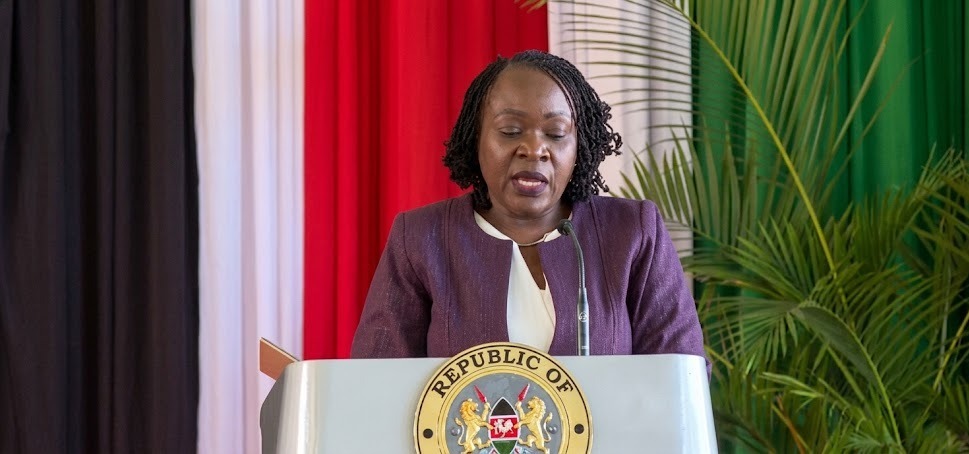
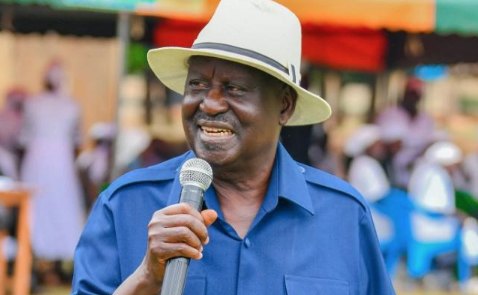
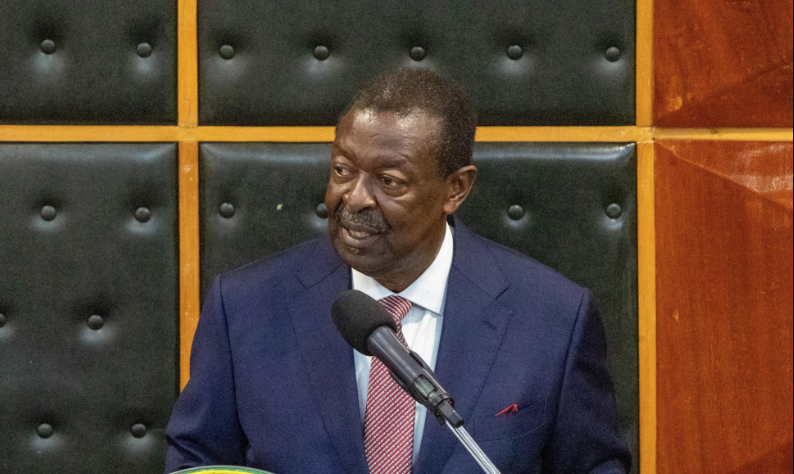
Nowhere is this political idiocy more evident than in the absurdity recently been paraded before us as the “Broad-Based Government”.
The term “Broad-Based Government” has been bandied about in political circles with the sanctimonious tone of national salvation. In reality, it is a mongrel – a crossbreed of desperation, elite collusion, and constitutional mischief. There is no such provision in the constitution. It is a political Frankenstein, cobbled together to satisfy the appetites of losing politicians under the guise of inclusivity and stability.
Let’s be clear: what is being marketed as a “broad-based” government is nothing more than an elite pact – a desperate attempt to co-opt opposition figures into government, not on the basis of competence, public interest or ideology, but as a survival tactic for the regime and a payday for the opposition. It’s not about the people. It’s about power. This is political idiocy in high- definition.
This obsession with co-opting everyone into the Executive betrays a fundamental misunderstanding of democracy. Healthy democracies thrive on opposition. On accountability.
On structured dissent. A system where everyone is on the same side is not unity – it’s authoritarianism in sheep’s clothing.
The so-called “broad-based government” is an insult to millions of Kenyans who voted in a competitive election expecting checks and balances. It reduces political engagement to a game of, “How close can I get to the feeding trough?” And it signals to young people that principles are negotiable, that political betrayal is lucrative, and that loyalty to the electorate is an inconvenience, not a duty.
In short, the “broad-based government” idea is the latest installment in Kenya’s political idiocy – an eloquent demonstration of how the ruling elite will bend rules, co-opt dissent, and disguise self-interest as statesmanship.
Vision Kenya, as conceived in our national planning documents and patriotic anthems, cannot be actualised in an environment of mass.
The writer teaches
Globalisation
and International
Development
at Pwani
University and is
a Programmes
Associate at DTM, a
Media CSO
[email protected]