WANJAWA: We must untangle political theatre from political reality
Kenya must awaken from the haze of slogans and the allure of political mirages
by EDWIN WANJAWA
Audio By Vocalize
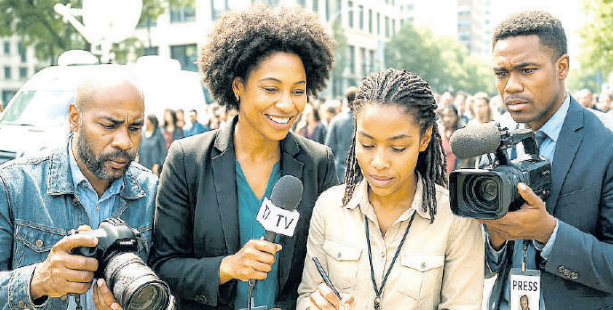
Journalists at work /AI ILLUSTRATION
In the grand theatre of Kenyan politics, illusions are not merely tools of persuasion — they are governance strategies.
We elevate slogans to state policy, confuse party loyalty with ideological commitment and mistake stage-managed crowds for popular support.
This enduring delusion is what philosopher Alfred North Whitehead described as the “fallacy of misplaced concreteness” — the error of treating abstract concepts as if they were real, actionable truths.
At Development
Through Media, where our mission is to strengthen civic engagement and deepen
democratic accountability, we encounter this fallacy regularly in the stories
people tell, the questions they ask, and the promises they believe.
As
communicators and governance advocates, we are challenged daily to untangle
political theatre from policy reality — and help Kenyans do the same.
We often speak of political parties as if they are rooted in
ideology. In truth, Kenyan parties are temporary vehicles for electoral gain — assembled
in haste, dissolved with convenience, and devoid of any lasting commitment to
policy direction.
Today’s fierce rival is tomorrow’s running mate; party
manifestos are cut-and-paste jobs from past campaigns. But the public clings to
the illusion of party loyalty, expecting coherence in a landscape defined by
betrayal and fluid alliances.
This political amnesia is reinforced by media cycles that
reward spectacle over substance. Without interrogative journalism and a
critically informed citizenry, these formations continue to masquerade as institutions,
even as they behave more like personal businesses.
Few slogans have captivated
the national imagination like the ‘bottom-up economic model’. Promoted as a
silver bullet for inequality, it promised to uplift the common hustler from
poverty to prosperity. But slogans are not strategies.
With no policy roadmap
or implementation framework, the model quickly gave way to the familiar
realities of high taxation, runaway borrowing and unaffordable basics.
We have seen how media-driven narratives can create false expectations.
When messaging substitutes for policy — and public debates are shaped by buzzwords
rather than facts — disillusionment becomes inevitable. Political communication
should not be mistaken for economic transformation.
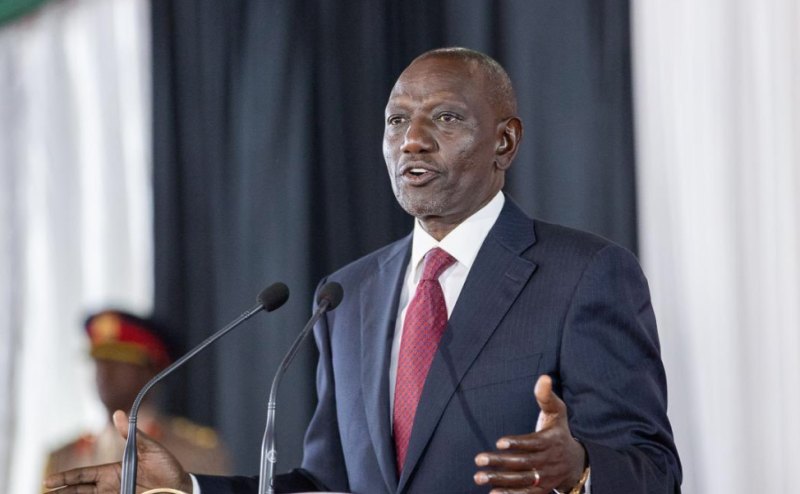
President Ruto’s recent tour of Mt Kenya sparked headlines
declaring him “King of the Mountain”, based on the sheer size of cheering
crowds. But in Kenyan politics, crowds are rarely spontaneous.
They are mobilised,
facilitated, and often financially incentivised. The assumption that turnout
equals allegiance is a textbook case of misplaced concreteness.
True political support is tested not at rallies, but in
moments of hardship — when livelihoods are under strain, school fees are due, and
promises remain unfulfilled. At DTA, we emphasise media literacy and civic
education to help citizens look beyond political theatre and assess leadership
on policy, delivery, and accountability.
Devolution was designed to decentralise
governance and correct historical injustices. But in practice, it has
decentralised corruption.
Governors have become local power barons. Counties are
riddled with ghost projects, bloated payrolls, and procurement cartels.
Yet, we
still speak of devolution with romantic idealism, ignoring how systemic
weaknesses and elite capture have hollowed it out.
Through our grassroots media partnerships, DTA amplifies
community voices calling for transparency and citizen oversight. Devolution’s
promise is not lost, but it must be reclaimed through vigilant public
engagement and consistent accountability.
Every election cycle, the political elite rediscovers Kenyan
youth. A few are given public appointments and microphones to wave the flag of
generational change. But this is often tokenism — optics over opportunity.
The
real youth agenda remains buried beneath unemployment statistics, underfunded
innovation programmes and underwhelming political representation.
DTA’s youth-focused programming highlights this disconnect —
showcasing both the frustration and the potential of young people locked out of
decision-making spaces. Without structural support, parading a few youthful
faces will not solve systemic exclusion.
Kenya must awaken from the haze of slogans and the allure of
political mirages.
The fallacy of misplaced concreteness has real consequences:
poor policy, broken trust, and a populace cycling between hope and despair.
Civic awareness, fact-based public discourse, and media accountability are the
antidotes.
DTA remains committed to fostering this awakening — through storytelling,
research and citizen engagement.
We believe that when people are empowered to question
narratives and demand substance over symbolism, the political culture begins to
shift.
Because misplaced concreteness is not just a philosophical error — it is
the bedrock of Kenya’s political disappointment. And until we learn to see
through the illusion, we will continue mistaking fiction for governance, and
spectacle for service.
In times of uncertainty, it is tempting to romanticise the
past or catastrophise the future.
Yet history teaches us that progress is
neither linear nor accidental — it is crafted by those audacious enough to
imagine better and disciplined enough to build it.
The arc of history bends not
because it must, but because we insist.
This is premium content
Subscribe to Continue Reading
Help us continue bringing you unbiased news, in-depth investigations, and diverse perspectives. Your subscription keeps our mission alive and empowers us to provide high-quality, trustworthy journalism. Join us today to make a difference!