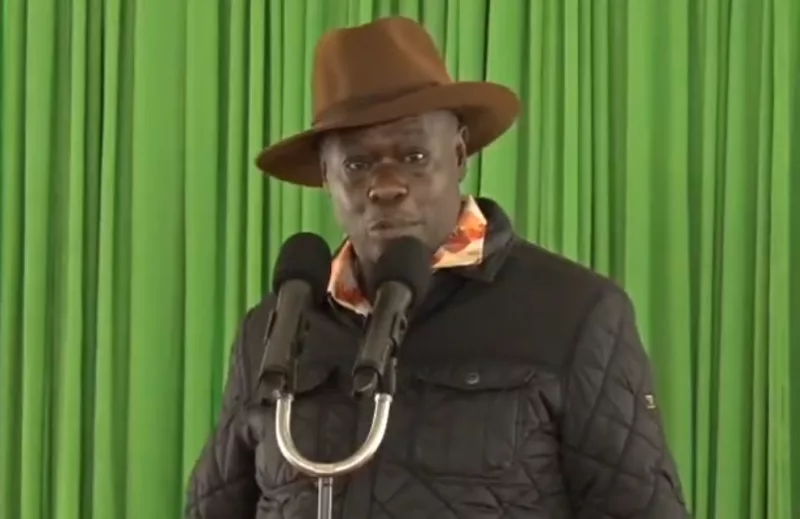
The senator wanted to know whether the tendering process was conducted transparently.
by LUKE AWICH
Audio By Vocalize
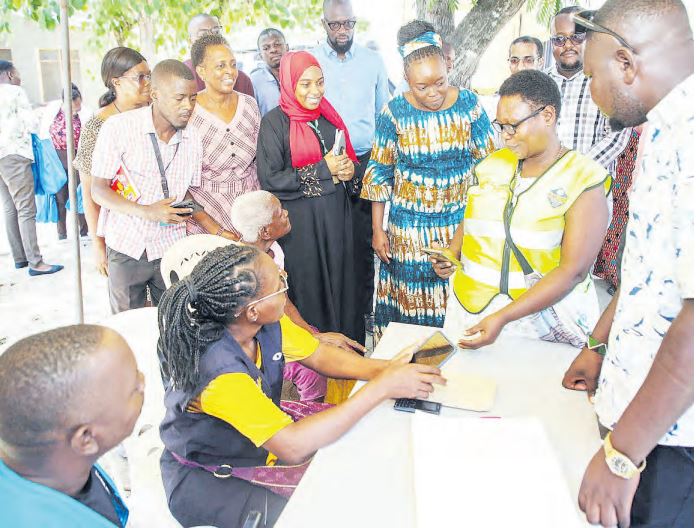
Health Cabinet Secretary Debra Barasa at Mtwapa Level 4 Hospital in Kilifi county /FILE
LAWMAKERS are now seeking to
unearth the mystery of the Sh104.8
billion system running the Social
Health Authority programme.
Senators have launched an inquiry
into the controversial Integrated
Healthcare Information Technology
System, a move that will put spotlight
on the Ministry of Health, Controversy rocked the roll-out of
the IHTS after revelations about the
billions it gobbled and the opaque
nature in which the system was
procured.
Top state officers have been linked
to the contract for the system, which
observers have described as a rip-off.
In the inquiry being conducted by
the Health Committee, the senators
are seeking to establish why SHA
system is being run by individuals.
“Explain why Kenya’s health data
is being held by private individuals,”
Machakos Senator Agnes Kavindu
asked.
The senator wanted to know
whether the tendering process was conducted transparently.
The system is a key component
of the Universal Health Coverage
Programme and will be implemented
over 12 years, with Safaricom PLC
as the lead partner.
However, concerns emerged about
Safaricom’s role in leading the
consortium despite what it termed
its limited stake in the project at
approximately 13 per cent.
The consortium, which includes
Apeiro Limited and Konvergenz
Network Solutions Limited, were
reportedly single-sourced to facilitate
deployment of the system.
The procurement was conducted
under the Specially Permitted
Procurement Procedure (SPPP)
and involves the development of a
comprehensive digital healthcare
platform.
CONTRACT AGREEMENT
The probe seeks to unearth details
of how the contract was awarded,
number of bids received, criteria used
in selecting the consortium awarded
and the costs of the award.
In addition, the lawmakers want
to know the reasons behind the ‘nondisclosure’ of the control charges
fees of 2.5 per cent on members’
contributions claims on health
facilities of five per cent.
“Explain non-disclosure of track
and trace solutions at a rate of 1.5
per cent for 10 years with projected
revenue to the consortium of Sh111
billion,” Kavindu said.
The committee also wants to
establish why the contract signed
between the government and the
consortium bars usage of alternative
systems.
They also want to know the details
of the signatories of the account in
the contract agreement.
In the probe, the Ministry of Health
will explain why there is a transfer
of funds to the escrow account on a
daily, weekly basis.
The ministry will also explain why
it did not disclose the Sh7 billion set
aside in the contract for training,
support and customer education.
This will include the number of
health workers to be trained on the
system and the mode of training that
led to arriving at the said cost.
“Explain why the contract signed
requires that disputes arising be
resolved by arbitration under
the rules of the London Court of
International Arbitration, contrary
to the provisions of the Public
Procurement Administrative Reviews
Board (PPARB) and the Public
Procurement and Disposal Act,”
Kavindu said.
The ministry will also provide
reasons for the non-accessibility
of the Controller of Budget to the
Social Health Authority (SHA) and its
operations outside the Consolidated
Fund.
This is premium content
Subscribe to Continue Reading
Help us continue bringing you unbiased news, in-depth investigations, and diverse perspectives. Your subscription keeps our mission alive and empowers us to provide high-quality, trustworthy journalism. Join us today to make a difference!