The country’s debt crisis could be
turning for the worse with new revelations indicating the stock is past
the Sh11 trillion mark.
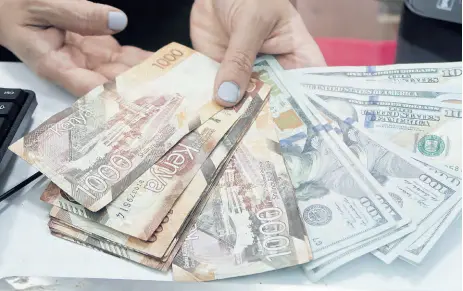
Latest disclosures by the National Treasury indicate the public debt
stood at Sh11.02 trillion as of end of
January this year.
Domestic comprised of Sh5.93
trillion while foreign lenders were
owed Sh5.09 trillion in the review
period, translating to 65.7 per cent
of gross domestic product.
MPs have warned the situation
wouldn’t get better, especially with
debt service obligation set to increase to Sh2.47 trillion by June
2027.
Some Sh1.87 trillion was paid in
the current financial year, with the
projected figures set to keep the proportion of revenue to debt repayment at above 60 per cent.
Economic experts say this loosely
means that for every Sh100 the government collects as revenue, only
Sh40 is left for operations, salaries
and development.
“This growing debt is likely to
limit fiscal flexibility for other essential expenditures,” the National Assembly Liaison Committee said
in a report.
The committee chaired
by Deputy Speaker Gladys (Uasin Gishu) said they project the
debt repayment pressure is likely to
persist through 2027.
MPs have further cautioned the
government against relying on loan
financing to bridge the fiscal deficit.
“Relying on loan financing will
contribute to the continued rise
in public debt, which has already
breached the record levels,” the
committee said.
The report comes hot on the
heels of findings by the Controller
of Budget that the government has
breached the limits set in law.
The law says the debt should not
exceed 55 per cent of the country’s
gross domestic product, which
Treasury estimated at Sh16 trillion
in September 2024.
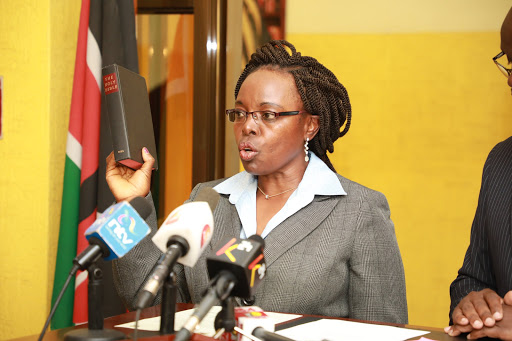
Controller of Budget Margaret
Nyakang’o recommended further
cuts in spending to reduce the budget deficit financing.
“Borrowing should only be undertaken to finance productive projects.
The National Treasury should pursue economic policies that support
accelerated economic growth to enable the country to grow out of debt
in the long run,” she said.
The conclusion by MPs – and the
Controller of Budget thus begs the
question on how the Kenya Kwanza
administration would fund the next
budget.
President William Ruto’s administration intends to borrow Sh831
billion to fund shortages in the next
financial year’s budget.
Treasury says in the 2025 Budget
Policy Statement that it would borrow Sh684 billion locally and Sh146
billion from foreign lenders.
But MPs say it is time the National Treasury looked at alternative
sources to finance the budget deficit.
“It is crucial to explore alternative non-debt financing mechanisms
to fund government expenditures
while mitigating the growth of public debt,” the committee said.

![Kenya's domestic debt [Sh trillion]](https://cdn.radioafrica.digital/image/2025/02/5557ee82-d941-4d66-b968-ab5b95d75e14.jpeg)