Hundreds of civil servants who
landed their jobs fraudulently continue to receive pay from government coffers despite being unmasked
for using fake certificates.
In a major cover-up, most of those
who have survived the purge are
highly connected people and relatives of politicians.
Parliament, one of Kenya’s best
paying institutions, is among the
most affected, with the Parliamentary Service Commission unable to fire
hundreds of staff found to lack requisite qualifications.
“We are still with them here
[certificate cheats]. Nothing has
happened because the numbers are
large,” a senior parliamentary officer
told the Star.
Last year, the Star exclusively reported how the commission had
unearthed a massive academic scam
following a review it initiated.
In the audit, Parliament verified
the authenticity of the KCPE, KCSE,
diploma, degree and master’s certificates held by its staff.
At least 200 employees, including directors and deputy directors, some with a few years to retirement, were implicated in the forgery of academic
papers.
However, it has emerged the number has since increased.
Political interests, efforts to protect Parliament’s image and revelations that some of those implicated
are children and relatives of “who is
who” in society have clipped Parliament’s wings.
“Would you want to touch the
child of a former minister or vice
president, for instance? That is the
challenge. It is deep,” the source said.
About 1,300 people are on the
parliamentary payroll. This excludes
staff in MPs’ constituency offices.
Apart from Parliament, there are
many senior civil servants within the
entire civil service who continue to
earn salaries despite being outed.
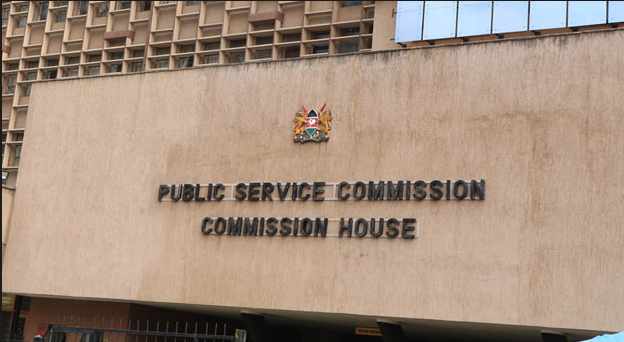
There are also concerns the Public
Service Commission is yet to expose
the full extent of the rot.
According to the commission,
more than 1,000 civil servants had
fake academic papers in the period
to December 30, 2024.
The 2023 review also unearthed 2,000 cases.
In 2021, the Kenya National
Qualifications Authority, the state
agency involved in vetting academic certificates, announced nearly
250,000 civil servants possessed fake
certificates
.
The authority’s bid to crack down
on culprits foundered after the exercise was stopped by a court.
“Our estimate is that 30 per cent
of the certificates are fake. It’s very
unfair that I sit in a university for
four years, and someone else just gets
a similar certificate in five minutes,”
then KNQA director general Juma
Mukhwana told the press.
According to the PSC report, state
corporations had the highest number
of fake certificates at 598.
Kenya Railways, as per the report,
had the highest number of officers
with fake certificates at 127.
Another 116 were found at public
universities.
Constitutional commissions and
independent offices had 65 staff with
fake certificates, nine at statutory authorities, and 36 at TVETs.
For fake professional certificates,
there were 34 cases at commissions, 13 at ministries, 46 at public universities, and 67 at state corporations.
The 2024 compliance report, however, reveals that unspecified action
was taken on only 744 staff, with the
rest yet to be dealt with conclusively.
The commission disclosed that
449 officers were dismissed from
public service, 181 resigned and 26
have since retired.
The PSC says 10 went through a
disciplinary process – whose nature
is not stated - while disciplinary processes for 70 staffers were still ongoing.
Another 79 officers were under investigation, while action for 15 was
not indicated in the reports submitted to the commission.
Earlier, President William Ruto directed that those with forged certificates should leave the public service.
Before their bitter fallout, his then-deputy Rigathi Gachagua, promised
to spill the beans of leaders with fake
degrees.
He claimed the implicated individuals were looking for him to intervene so as not to be fired. The PSC
has set a June 30, 2025 deadline for
state agencies to authenticate papers of their staff.
“All public institutions to authenticate certi� cates for all their staff
since the date of joining service,” the
PSC recommended in its report tabled in Parliament.
Of the 150 agencies 30 per cent
of the public institutions - that had
not verified the certificates, 100
promised to conclude the review by
June 30, 2025.
Another 32 said they would authenticate by March 31, 2025 while 18 did not provide timelines.
Going forward, the commission
wants state agencies to authenticate
certificates before they issue appointment letters at entry
level.
The commission says papers
should be veri� ed before individuals
are considered for promotional appointments.
Public institutions are required to
terminate the service of any officer found to have used forged certi� cates
and forward the names to EACC.
It is also emerging that institutions
are not making complete disclosures
to the anti-graft agency.
Only 43 of the 49 institutions
that reported to PSC that they had
forwarded a list of officers with fake
certificates EACC provided evidence
of the same.
There are pointers to a cover-up
amid grumbles that some of the concerned are untouchable, thanks to
their godfathers.
Four institutions submitted lists
that were inconsistent with the number of officers who were found with
fake papers in the respective institutions.
They are Moi Teaching and Referral Hospital, Kenya University
Teaching and Referral Hospital,
Tana and Athi-River Development
Authority, and Technical University
of Kenya.
“It could not be confirmed whether six institutions submitted a list of
names of officers found in possession
of fake certificates to the Ethics and Anti-Corruption Commission and
the Public Service Commission,” the
PSC said.
Anti-graft agency EACC has cited
public servants who use fake papers
to secure state jobs and promotions.
Its quarterly reports have cited
cases at the Independent Electoral
and Boundaries Commission, National Police Service, Nairobi Water,
and Kenya Rural Roads Authority.
Employers are concerned that the
proliferation of fake papers risks
compromising the quality of service
delivery.
Federation of Kenya Employers
CEO Jacqueline Mugo said the incidents point to a poor value system in
the country.
“We need to put a deterrence to
this malpractice that locks out deserving persons from jobs they qualify in,” she said.
EACC disclosures pointed to
a deputy principal of a TVET in
Samburu who was under probe for
alleged falsification of academic certificates.
Cases of alleged academic cheats
were also cited at Bomas of Kenya,
Nairobi Water; Kiambu, Kisumu,
and Wajir county governments,
IEBC, and Commission on Revenue
Allocation.
Among the alternatives the authorities have given the targeted
staffers is that they return all monies
earned as salary from the irregularly
acquired positions.
Several people have been charged
and sentenced by courts, detailing
the huge number of academic cheats.
In March last year, PSC, EACC,
and DCI joined hands to weed out
public officers with fake academic
papers.