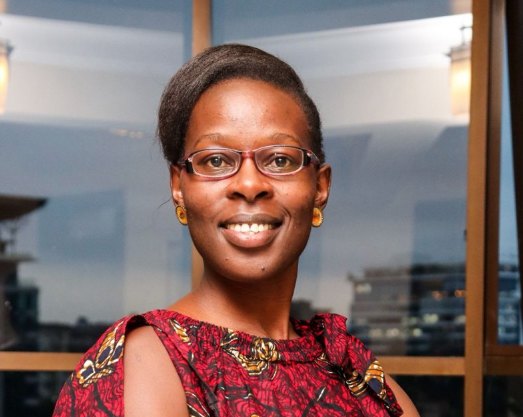
She liked climbing trees for leisure.
Born to strict parents who were teachers, she would use every opportunity to escape from their keen eyes and into the wilderness.
“From a very young age, I was a very inquisitive child. My best days were those that I would go to my grandmother, where I could climb trees and eat guavas. My most favourite thing was climbing trees,” she says with a smile that took her back to the old days.
“I was very naughty. Every time my mother (now deceased) threatened to beat me, I would go up the tree where I knew she wouldn’t find me until late when I knew her temper had cooled down,” she says.
She reminisces going to the river to fetch water for her grandmother and says this is where she fell in love with nature.
In 2005, she moved to Mombasa armed with her degree in business management from the University of Nairobi as she looked for a job.
She worked for several companies in Mombasa before she finally got a job as an administration and human resource officer at Metal Refinery EPZ in 2009.
A single mother by then, her son was still young and had to be dropped at her office when he came from the daycare he attended at lunchtime every day because there was no one to take care of him at home.
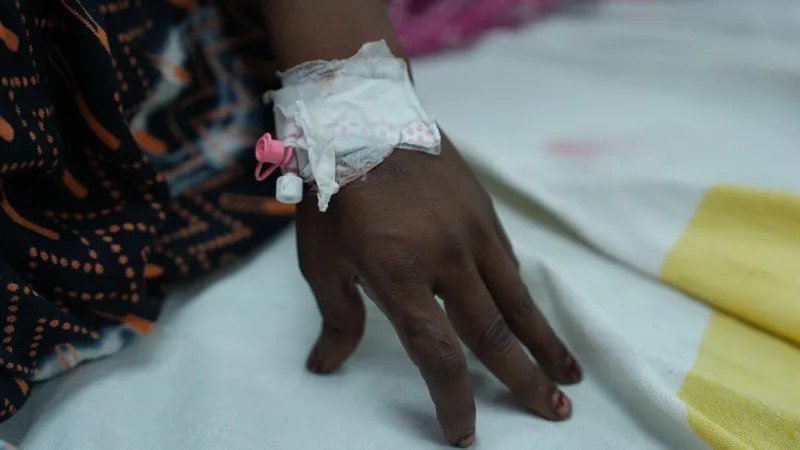
“Unfortunately, my son started falling sick and was in and out of hospital as doctors struggled to find out what was wrong with him. He was at one time hospitalised,” Omido says.
He constantly had fever, watery eyes, diarrhoea and his respiratory system was messed up and could not breathe properly.
Then someone within one of the state agencies asked her if she had ever tested her son for lead poisoning.
But there was no facility in Kenya that tested for lead poisoning and she had to take her son’s blood samples to South Africa. It came back positive.
“At that time the World Health Organization defined lead poisoning at 10 micrograms per decilitre of lead in blood. He had 35. It has now been revised to five micrograms per decilitre of lead in blood,” Omido says.
This prompted her to pick three random children in the Owino Uhuru neighbourhood where the Metal Refinery EZP, a lead smelting factory, was located.
All three had high levels of lead in their blood.
“I looked for partners. I wrote to Green Belt Movement and one Dr Karanja came in and paid for 10 blood tests. All turned out positive for lead poisoning. It was crazy because we had levels up to 100 micrograms per decilitre of lead in blood which is a critical condition,” Omido says.
That is when she decided to start amplifying the matter to inform government officials.
“At first, I thought that government would act fast once I told them what I had discovered. Unfortunately, the response was not good,” she says.
In 2010, a government agency wrote to her informing her that the allegations she was making were strange to them and that they were ready to defend themselves in court.
The strangest thing was that they even threatened to take legal action against her for defamation.
“I still have that letter. I think I will frame it. That got me shocked because I was not making this up,” she says.
She moved to different government authorities including the Export Processing Zone Authority, but got no positive response.
She then started mobilising the community to start making noise because apparently, most of them had no idea the smelting factory was the cause of the many sickness they and their children suffered.
She organised many demonstrations against her own company.
In 2012, there was a major demonstration that got her arrested and charged with inciting violence and illegal gathering.
“I spent the night in the cells of Changamwe police station. That night was troubling for me. The police kept on beating people in the male cells.
“In the morning, when I was being taken to the court, I saw a huge crowd outside the station. I thought something had happened, only to realise later that they were members of the Owino Uhuru community who had come to show solidarity with me,” Omido recalls.
That was the day she decided she would become an environmental activist full time.
The courtroom was jam packed.
“That was when fear left me and for the first time, I identified myself as an environmental defender. That was the first time I actually accepted my role. I am really grateful to the Owino Uhuru community because they, in some way, guided me,” she says.
Her arrest and consequent charging in court provided fuel to the metal refinery. They increased their smelting engulfing the Owino Uhuru neighbourhood in smoke day and night.
“One night I was called over a woman who has having a miscarriage. When the foetus came out, it was covered in a black substance. The doctors at Port Reitz were shocked and wanted to preserve that for further research but it was not possible. This made me think hard,” Omido says.
Sadly, the state agencies were reluctant.
She says the saddest part is that when the environment is polluted it is actually the people who suffer and not the environment itself.
“The environment will always regenerate,” she says adding that she documented over 300 deaths in Owino Uhuru because of the lead melting company.
Her lowest point in activism was when a five-year-old boy called Sammy died because of lead poisoning.
Sammy was attached to her. The day before his death, he had asked whether Omido would go to pick him in her car.
“At around 2 am the next day, I received a call that Sammy had rested. It broke me. For almost a year, I could not operate. I fell into depression and had to be put on medication after counselling,” she says.
The highest point of her work was in 2014 when she managed to shut down Metal Refinery EPZ.
“They had political power because one of the directors was an MP at that time,” she says.
Three smelting factories in Mombasa and 14 others across the country were shut down.
“Sammy is the one that keeps me going to date. He died a painful death. In his last days the skin was peeling off him. He could not understand why I was no longer holding him.”
His mother, who also had high levels of lead, fell into depression when Sammy died, and succumbed shortly after.
“Sadly, many of the Owino Uhuru community members died. Mzee Daudi told me ‘Even if I die, don’t give up. Follow this matter to the end.’ Sammy’s mother had told me the same thing,” Omido says.
“Every time I want to give up, I remember that their dying wish was that I get justice for them,” she says.
Some of the other highest moments in her activism work were when she received international awards for her work.
She has received the Goldman Award in 2015, which opened the floodgates for awards.
“Last year, I got the Right Livelihood Award,” the Centre for Justice Governance and Environmental Action executive director says.
She is now working to ensure the Uyombo community in Matsangoni, Kilifi county does not suffer the same fate that the Owino Uhuru community did.
Uyombo has been earmarked for Kenya’s first nuclear power plant, which she says will be even worse than the Owino Uhuru debacle.
“Uyombo is another battlefront. It is about, first, the site location. The site that Nupea (Nuclear Power and Energy Agency) have chosen is an asset to this country,” Omido says.
The area is protected under a United Nations Educational, Scientific and Cultural Organisation biosphere, meaning it is a unique ecosystem.
“I would invite anyone to visit Uyombo and Mida Creek. Many tourists fly from Europe and America to visit the area and swim with the dolphins at Watamu Marine Park,” she says.
Tourists bring in the much needed foreign exchange and create employment for Kilifi people, she adds.
“The other thing is the lack of disaster preparedness that our government has.”
She warns that radioactive waste is not a matter to joke with and could easily wipe the whole of Kilifi county.
“Lead poisoning is a minute problem compared to radioactive waste. Are our hospitals prepared to deal with exposure to radioactive waste?” she posed.
“We are speaking not just for Uyombo but for generations to come,” she says.
She says her two children have paid the highest price for her activism work.
“I want to be with them but the work takes me away from them. One is 18 and the other is five, so you can see how my work takes me away from family,” she says.