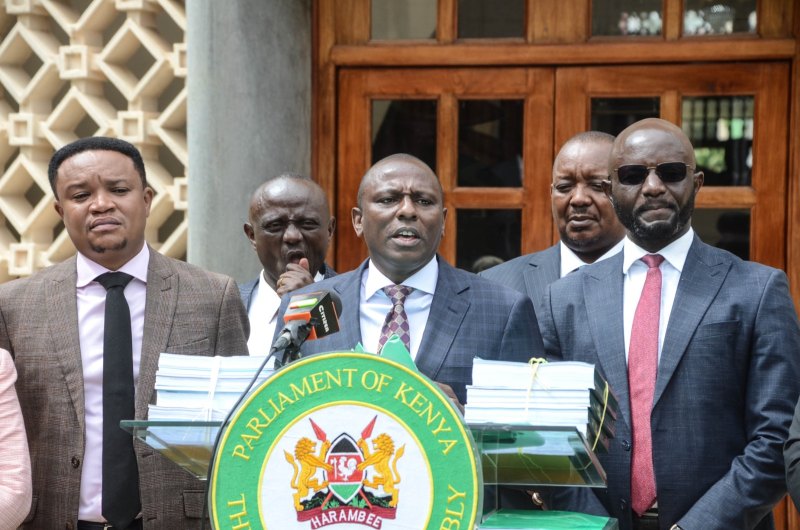
A National Assembly committee has invited the Auditor General to conduct a forensic audit on the expenditures from July to September 2022, mostly through supplementary budgets.
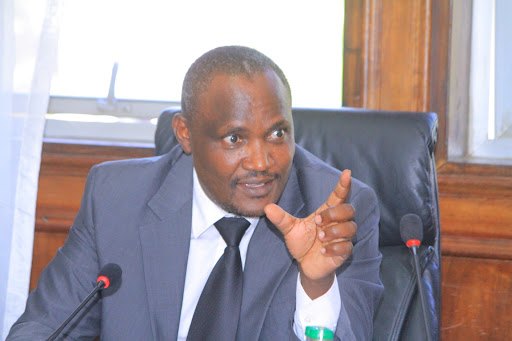
The MP Nimrod Mbai-led team further wants Auditor General Nancy Gathungu to establish the roles top officers in the Kenyatta administration played in the controversial spends.
“If found culpable, appropriate action should be taken against them,” the committee said after considering a petition by Cofek secretary general Stephen Mutoro.
The committee has warned there are no safeguards to bar an outgoing administration from incurring expenditure in case of an emergency.
“The Constitution gives the National Treasury leeway to spend as long as the amount spent is in line with Article 223 of the Constitution. The Public Financial Management (PFM) Act, 2012 and the attendant regulations need further amendment to bar misuse of Article 223 spending,” the MPs recommended.
Days before their departure, President Kenyatta’s team spent and made commitments of Sh55 billion in extra budgets for the financial year 2021-22.
They drew a supplementary budget at a time Sh23 billion of the extra cash was already spent by ministries, state departments and agencies.
Most of the additional budgets under probe were made available less than a week before the August 9 general elections.
Of the amount, Sh16.6 billion went to fuel price subsidy, Sh11.4 billion for road construction projects, Sh8.2 billion for support to CBC and Sh6.1 billion to support Telkom Kenya.
Uhuru’s administration also spent Sh4.5 billion for unga subsidy, Sh3.5 billion for the Defence Research Hospital and Sh3.8 billion for the Office of the President.
The financial year 2021-22 budget thus increased by Sh204 billion overall.
Controller of Budget Margaret Nyakang’o stirred up a storm with claims she was coerced to approve some of the extra budgets.
The Public Petitions Committee wants the forensic audit to narrow down to the Sh6 billion Telkom Kenya buyback and the Sh4 billion which was spent on maize subsidies.
“The committee notes that certain expenditures did not find favour within the provisions of Article 223 of the Constitution,” the committee said in a report tabled in Parliament recently.
The committee, in the latest twist, wants a further re-look into the approval and disbursement of Sh9.45 billion that was allocated to three roads.
They include Sh2.8 billion which was provided and paid out for the improvement of the Lamu-Ijara-Garissa road.
Sh4.8 billion was paid to the contractor who was dualling the Nairobi Eastern Bypass while Sh1.8 billion was provided for the Makupa Causeway contractor.
“Treasury CS did not provide the Controller of Budget with the minutes ratifying the prioritisation of the three roads by the Transport ministry, which occasioned approval and disbursement of Sh9,450,000,000,” the committee said.
In the petition, the Consumer Federation of Kenya is seeking to have officials of the Kenyatta administration required to provide strict proof of the queried transactions.
Mutoro named former Treasury CS Ukur Yatani, Controller of Budget Margaret Nyakango, accounting officers of the beneficiary departments, and members of the public and professional organisations linked to the transactions.
Yatani has denied any wrongdoing saying the approvals were above board, saying the budget controller was being malicious.
“The committee notes that Article 226 (5) of the Constitution provides that the holder of public office, including political office, who directs or approves the use of public funds contrary to the law or instructions is liable for any loss, whether the person remains the holder of the office or not,” MPs said in respect of the Cofek secretary’s prayer.
During the period under review, the Defence Ministry got its Sh2.2 billion additional request for the state-of-the-art forces hospital.
Funding for the Telkom buyback was provided on August 6, the report shows, while maize subsidy suppliers were given Sh4 billion two days earlier.
The presidency got Sh411 million out of the requested Sh2.9 billion after it failed to provide supporting documents for the rest.
MPs in the current Parliament approved all the expenditures, apart from that of Telkom and maize subsidy.
The petition committee observed that none of the government departments sought emergency cash from the Contingency Fund.
“None of the MDAs (Ministries, Departments and Agencies) requested from the fund due to the stringent conditions under Section 21 of the Public Finance Management Act, 2012. They preferred to make funding requests under Article 221(1)(a) and not Article 223 (1)(b) of the Constitution,” MPs said.
The report of the petition committee has come as anti-corruption authorities are already acting on the files.
EACC said in its report for June-September 2023 that it had forwarded the file on the probe into the Sh6 billion Telkom buyout to the Director of Public Prosecutions.
The commission recommended charges against Yatani, business mogul John Ngumi – who was the transaction adviser in the buyout – former Treasury Principal Secretary Julius Muia, and Eng Stanley Kamau, who was the former director of Public Investments at Treasury.
Several Telkom Kenya top officials, including chief executive officer Eddy Njoroge were also mentioned.
On the maize subsidy, the Agriculture committee of the National Assembly recently concluded that 82 per cent of the flour could not be traced. Kenyans were billed billions for it.
“The DCI should investigate this and present their findings to the National Assembly within three months of adoption of this report by the House,” the committee chaired by Tigania West MP John Mutunga said.