Chief Justice Martha Koome has revealed the logic behind establishment of Judiciary desks at Huduma centers.
In a statement on Thursday after meeting with the Law Society of Kenya (LSK) to address concerns over operationalisation of the desks, Koome said they targeting those unable to use the IT system in court processes.
She said the stations will ensure the poor and illiterate self-representing litigants are not left behind.
She said digital exclusion resulting from lack of internet access, low literacy levels and lack of access to computers or other ICT devices is denying many access to justice.
"It is this problem that we are trying to deal with by providing Assisted Filling Desks at Huduma Centres," the CJ said.
Koome also noted that the move complies with a court order issued by the High Court in 2021 in the case pitting Kituo cha Sheria and two others against Chief Justice, National Council on Administration of Justice (NCAJ) where Attorney General and LSK were interested parties.
The court ordered the Judiciary to develop programmes and initiatives to address the risk of digital exclusion during the roll out of its online filing and virtual hearing programmes.
"The import of this court order that we are trying to comply with is that our use of ICT must be rights-centric and user-friendly to avoid digital exclusion," Koome said.
The CJ added that the programme came about as a suggestion from e-filling consultation meetings.
She said during the consultation meetings, it was suggested that Judiciary comes up with Assisted Filling Desks to cater for those who do not have ICT devices and internet, and who are illiterate.
The Judiciary carried out the meetings with both Advocates and Court Users.
During Thursday's meeting, Koome addressed the question on whether the Assisted Filling Desks provide legal services or an opportunity to masqueraders.
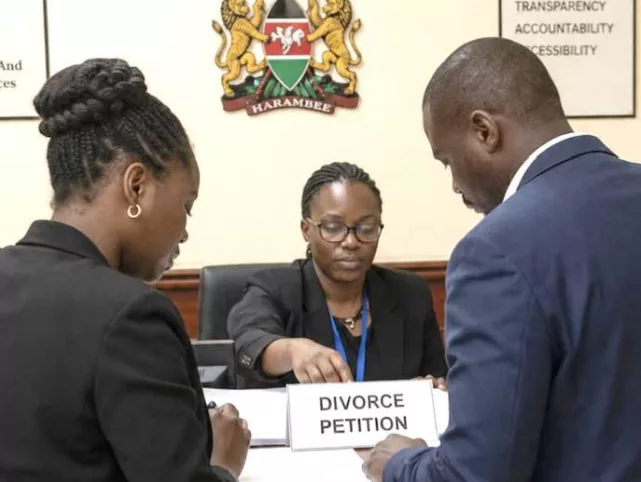
She said the desks are purely registry services.
"We can, however, find mechanisms to secure the integrity of the profession without isolating the poor and indigent," she added.
Koome said the desks will be manned by the Judiciary's registry staff who are under firm instruction to restrict their duties to assist self-represented litigants to upload their pleadings on the e-filling portal.
"Nothing more. Should they engage in drafting or preparing pleadings that would be a violation of the Code of Conduct and disciplinary action would ensue," she warned.
The CJ further said the Judiciary is ready to get suggestions and proposals on how to strengthen the operating protocols to ensure masqueraders do not exploit the Assisted Filling Desks.
In addressing the concerns of Judicial independence and separation of powers, Koome clarified that the desks at the Huduma centres offer only registry support services but not core judicial processes.
She pointed out that separation of powers as enunciated by the Supreme Court in the CDF Judgment (2022) does not mean splendid isolation of the branches of government.
"Its core mandate cannot be discharged by the other branches. In the case of the Judiciary, core mandate is judicial decision making; that has not been ceded to the other branches. In fact, Judicial officers and Judges will not be based at the Huduma centres," she added.
To affirm her point, Koome noted that there are a number of courts hosted in government premises and mobile courts being conducted at the centres.
At the same time, Koome said they are working to institutionalise a Quarterly Standing Meeting between the Law Society of Kenya (LSK) National Council and the Chief Justice and Judiciary Leadership Team.
The meetings will be replicated at the court stations, she revealed.
Koome affirmed that the Judiciary is ready to listen to and work with LSK to implement and enforce measures that will go a long way in strengthening operations of the Huduma Desks and comply with the orders of the High Court in the Kituo Cha Sheria case.