The Budget Implementation Review Report for the first half of 2023-24 reveals declining own-source revenue collection by counties and commonly delayed funds released by the National Treasury.
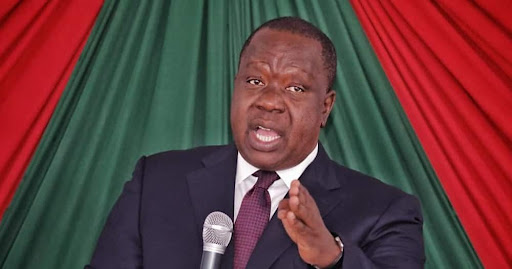
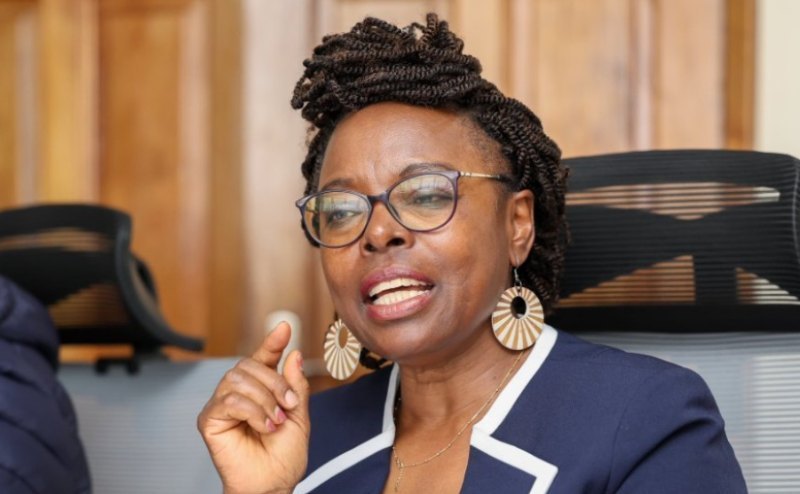
Controller of Budget Margaret Nyakang’o released the report on Thursday.
Consequently, the devolved units are unable to implement planned development projects, deliver quality services, including medical services and pay staff salaries on time.
During the period under review, the county governments collected Sh19.95 billion or 24.9 percent of the annual target of Sh80.20 billion.
This is against an expected performance of 50 percent of the annual target in the first half of 2023-24 financial year.
“The underperformance of own-source revenue collection implies that the counties could not implement some planned activities due to budget deficits,” Nyakang’o said in the report.
On the other hand, the report reveals the National Treasury has continued to ‘starve’ devolved units of funds due to perennial delays to release the monies.
As at December 31, 2022, the National Treasury had disbursed Sh142.47 billion as equitable share for 2023-24.
This represented 37 per cent of the total allocation of Sh385.42 billion for the financial year.
Ideally, the Treasury should have released at least Sh192.71 billion or 50 percent of the annual allocation by December 31, 2023.
“Failure by the National Treasury to release funds to county governments affected budget implementation, as shown by low expenditure on development activities,” the report said.
During the six months, counties spent Sh24.81 billion against the total annual allocation of Sh203.11 billion on development.
“The National Treasury should ensure that the disbursement of the equitable share of revenue to county governments is in line with the approved disbursement schedule to ensure effective budget implementation,” Nyakang’o recommends.
Governors have often complained that erratic exchequer releases were hurting the development and delivery of crucial services.
But, while criticising the Treasury’s late releases, the country’s budget boss also indicted governors for meager collections of own-source revenue, despite most of them spending millions to automate collections.
Kericho, Kilifi, and Machakos reported the lowest collections of their own source revenue at 12.7 percent, 10.5 percent, and 7.4 percent of their targets, respectively.
Other counties that posted low collections against their targets are Kakamega at 13.7 percent, Kisii at 15.9 percent, Kisumu at 18.7 percent and Nairobi at 18.7 percent.
The counties were expected to have collected at least 50 percent of their annual targets as at the end of the first half of the fiscal year.
Only five counties achieved the target of 50 per cent.
They are Samburu at 55.7 per cent, Elgeyo Marakwet at 56.3 per cent, Isiolo at 62 per cent, Narok at 63.9 per cent and Nyeri at 71.4 per cent.
Other counties that posted impressive own revenue performance are Turkana at 48.6 per cent, Meru 43.4 percent, Kitui 40.1 percent, Embu at 38.7 per cent and Baringo at 37.9 per cent.
The Controller of Budget revealed many counties are too reliant on the health sector as the main source of revenue. It amounted to Sh6.4 billion and represented 32.1 per cent of the total realised own source revenue.
“Many counties depended on FIF (Facility Improvement Financing) to prop up their revenue.
They include Elgeyo Marakwet at 79.6 per cent, Homa Bay at 78 per cent and Siaya at 75.7 per cent. In addition, several county governments are yet to develop their FIF Regulations to regularise the spending of revenue receipts by health facilities at source.
“The Controller of Budget advises county governments to build the capacity of key staff in revenue collection and implement revenue enhancement programmes to realise OSR [own source revenue] potential,” Nyakang’o recommended.