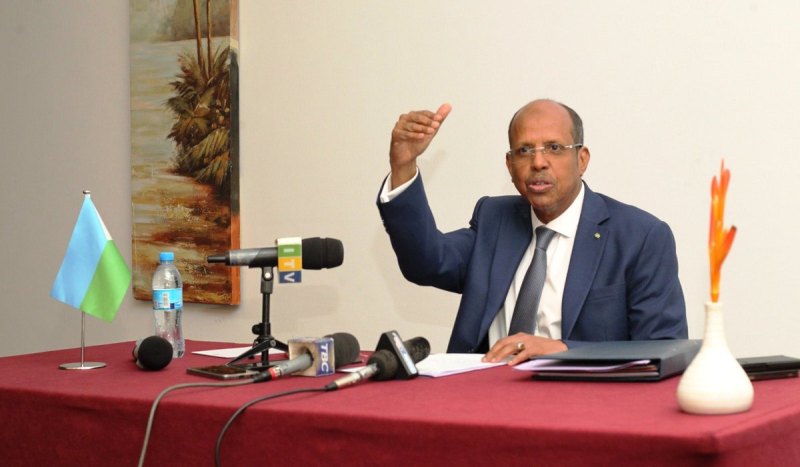
Acting Director General for Health Patrick Amoth said at least eight in every 10 newborns are vaccinated against pneumonia, making it one of the most successful vaccine roll out in the country.
However, the disease still claims between 8,000 to 10,000 young lives annually in Kenya, representing approximately 20 per cent of all child deaths.
"Promoting good hygiene practices, such as handwashing, wearing of masks when one has a cough, and good ventilation, can help to prevent the spread of infectious agents that lead to pneumonia," he said.
Amoth said using clean cooking fuels can reduce pneumonia incidence by up to 75 per cent where it is a major risk factor.
In 2011, Kenya became the first African country to rollout the 10 valent Pneumococcal Conjugate Vaccine (PCV 10). The "10" in PCV 10 indicates that the vaccine provides protection against 10 different strains or serotypes of the bacteria.
The country saw a sharp reduction from 2008, when the disease killed 30,000 children under five years.
Amoth highlighted the crucial role of immunisation against the two most common bacteria responsible for pneumonia, Streptococcus pneumoniae and Hemophilus influenzae type b (Hib).
“These vaccinations have demonstrated a 22–35 per cent reduction in pneumonia incidence and a four per cent reduction in all child deaths,” he said.
Amoth, who spoke in Nairobi during the World Pneumonia Day on Saturday, said tat both the National and County governments are collaborating to raise full immunisation coverage to over 90 per cent, an improvement from the current 80 per cent.
"In the event that we succeed in reducing pneumonia-related fatalities, we will increase the likelihood of achieving the global goal of reducing under-five mortalities to less than 25 deaths per 1,000 live births by 2030, a significant reduction from the current rate of 41 deaths per 1,000 live births," Amoth said.
Globally, pneumonia claimed the lives of 2.5 million individuals in 2019, with almost one-third of these victims being children under the age of five, contributing to over 700,000 annual fatalities.
Pneumonia stands as the leading infectious cause of death among children under five worldwide, accounting for approximately 15 per cent of deaths in this age group.
In 2013, the Integrated Global Action Plan for the Prevention and Control of Pneumonia and Diarrhoea (GAPPD) was introduced to reduce childhood deaths from pneumonia. The target was to reduce the number of childhood pneumonia deaths to three per 1,000 live births in all countries by 2025.
In Kenya, the Ministry of Health has adopted the GAPPD strategy as the Kenya Global Action Plan for the Prevention and Control of Pneumonia and Diarrhoea (KAPPD), that is aligned with the national priorities including Vision 2030 and Universal Health Coverage.
Compared to the other top causes of childhood deaths, progress on reducing pneumonia deaths lags behind.
This is especially concerning because majority of pneumonia deaths are easily preventable through simple measures such as the use of vaccines and provision of adequate treatment, the ministry said.
Amoth said should the country succeed in reducing pneumonia deaths, it shall increase the chances of meeting the global target of reducing under five mortality to less than 25 deaths per 1,000 live births by 2030, from the current 41 deaths per 1,000 live births.
“From the statistics, you can clearly see that as a global community we have a problem; that one particular condition can account for more than 2.5 million deaths,” he said.
“Behind the statistics, there are stories of innocence lost, dreams unfulfilled, and futures cut short. We must not allow these tragedies to persist.”
Pneumonia deaths are falling but more slowly than other major causes of child mortality.
Amoth said the ministry is supporting the scale up of use of Amoxycillin DT for management of non-severe pneumonia through development of appropriate clinical guidelines for childhood illnesses.
He noted that support has also been provided to counties through training of healthcare workers on detection of hypoxaemia using pulse oximeters and effective use of oxygen for management of severe pneumonia.
Experts project that taking action against pneumonia would save 3.2 million children between 2020 and 2030.