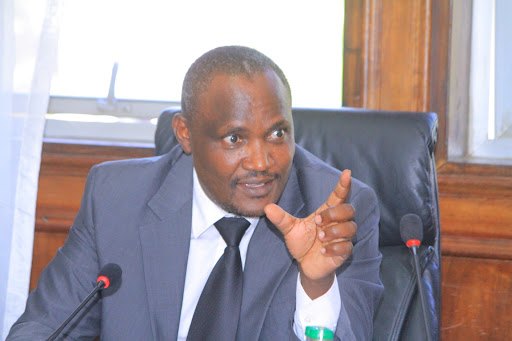
Kalonzo vowed to start campaigning immediately for the 2027 presidential election. With no real office currently, and having time on his hands, I couldn’t agree more with the former vice president.
In fact, the ongoing Azimio protests over the rising cost of living should be fashioned as Kalonzo’s campaigns too. This would give his run the proper grounding around people issues, while also adding an edge and potency to it.
First, I am assuming that if the Azimio coalition holds, by whatever name it will be called in 2027, their presidential candidate will most likely be Steven Kalonzo Musyoka. He has earned it by standing with Azimio boss Raila Odinga in three straight elections.
More importantly, in Kenya’s “what you bring to the table” political equation, the Wiper boss has a heads tart with a solid tribal base to bargain with. If he indeed launches early campaigns and keeps consistent on pro-people messaging, he could whitewash the incumbent in the contest.
History may be favourable to Kalonzo on this. But Ruto’s own failures will play a greater role. In 2002, Kenyans in their multitudes trooped to polling stations to give Mwai Kibaki an overwhelming mandate.
His victory was so comprehensive that it marked the first, and the last time in our elections, that a main opponent had gracefully conceded defeat, when Kanu’s Uhuru Kenyatta called a press conference to accept the results of the elections. Those who gauge hope and happiness reported then that we were one of the most hopeful nations on the planet at that point.
But no sooner had the Bible come down at Kibaki’s swearing-in at Uhuru Park in January 2003 than reality sank in.
Former Mwingi South MP David Musila in his memoirs, 'Seasons of Hope' and former Vice President Moody Awori, in his autobiography, 'Riding on a Tiger', have both narrated how Kibaki’s erstwhile allies in the Narc victory were arriving at State House immediately after the swearing-in to find the new tribal gatekeepers were not interested in the “face of Kenya” that had been portrayed all through the Narc campaigns and victory.
In subsequent months, the Kibaki regime went into a culling extravaganza of people from his predecessor’s community, out of the civil service and security forces.
New appointments were heavily skewed in favour of the Kibaki’s Mount Kenya region. The power wielding Mafia turned a blind eye and deaf ear to the rest of Kenyans. By the time a referendum on a new constitution came just two years into Kibaki’s tenure, his government was so unpopular that the opposing Orange movement served it a humiliating defeat in the plebiscite.
He didn’t quite recover, as the general elections arrived soon, and depending on who you ask, Kibaki needed help from shadowy quarters to be declared winner in the 2007 election.
There are lots of similarities between the things that happened after the Kibaki election in 2002 and the current Kenya Kwanza government’s own rule.
First, the vengeful removal of Uhuru-era appointees from top government positions by this government mirrors the Kibaki power men’s vendetta against Moi appointees, especially when you consider emerging complaints that Ruto’s government has been making appointments skewed towards his own community.
Beside that, there is the matter of huge promises made at the election campaigns in 2022 that sticks to the government like a bad skin infection. More ominously, the tendency to block ears and eyes from the issues affecting the masses is now fully a Ruto regime philosophy.
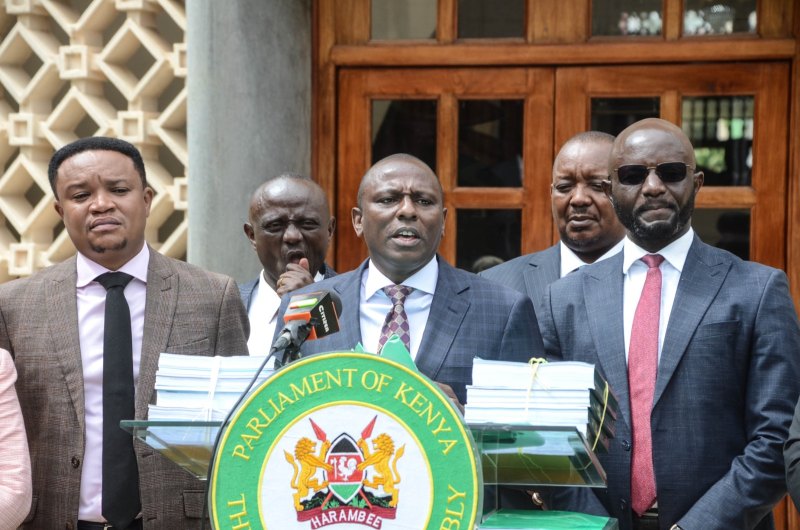
You simply need to revisit the untidy way in which the Finance Bill, 2023 was handled, to understand this. Despite loud protestations from the country over the difficult economic times, Kenya Kwanza marshalled its numbers to pass the bill, in a show that fell short of turning MPs into mere voting machines.
I say so because I am certain that no MP would have been brave enough to face his/her people to sell the proposals directly but opted for the safety of Nairobi to bulldoze it, with the President signing into law soon after.
Talking of voting machines, on Monday this week, the Senate held a special sitting to determine the fate of Siaya Deputy Governor William Oduol, after Siaya’s county assembly impeached him and the Senate’s own special committee found him culpable.
Ordinarily, you wouldn’t expect the matter of a mere deputy governor in an opposition stronghold to be of great concern to the government side, but they mobilised to save Oduol with such efficiency and forcefulness that I was left wondering why the majority side was creating a stake where none existed.
Some of them could not even pronounce the name of the deputy governor! If anything, their involvement left stigma hanging on Oduol, with East Yimbo MCA remarking after the Senate hearing that “the owner of the dog had finally shown his face”.
Those who saved the deputy governor have in fact now made his politics more difficult among his people. Seen as a UDA mole within his party and county circles, the enthusiasm and fist bumps after saving Oduol will give way to the reality that a political grave may indeed have been dug for him at the Senate on Monday.
I predict that the more the legislature is turned into a den of voting robots with no regard for the common good, the more the government is going to get more unpopular even within its Mount Kenya second base. I suspect that Githunguri MP Gathoni wa Muchomba spoke for many of her fearful colleagues from the region when she strongly opposed the Finance Bill.
As long as the economy doesn’t improve, many more will come out openly, portending the possibility of Ruto losing the Mount Kenya vote. If he does, without gaining another solid regional block vote outside his own Rift Valley, he will be toast.
This is why I think Ruto is destined to be a one-term president. If Kalonzo mounts a credible challenge and inherits the Raila bases, he could send the President home in 2027.
There is a belief that Kenya Kwanza’s politics has thrived on the perennial habit of creating a fear factor around a Raila presidency but may not be ready for a Kalonzo run supported by Raila.
Of course, Kalonzo would know by now that to inherit the Raila strongholds, especially the Nyanza bedrock which has for decades followed only brave and uncompromising leaders, he would not only have to campaign very hard, but must show some of these traits to convince the electorate.
The new Kalonzo, buffalo soldier, appears primed for contest ahead. He will have to navigate through the jealousies and vested interests within Azimio, but if he ends up bagging the ticket and Kenya Kwanza refuses to be wiser by listening to the people, then we are headed to an exciting election in 2027 in which I see Kalonzo whitewashing the incumbent.