My colleague and I had been invited to an evening event at Victoria Office Suites, around 74 Riverside Drive.
For such events, I prefer using a cab and with the digital revolution that is now running the city’s taxi space, I went into one of the hailing applications in my mobile phone, entered my pick-up location and destination, and ordered.
In less than five minutes, our driver had arrived to rush us to the event, which was approximately 20 minutes from our work place along Waiyaki Way.
The shortest distance was through Ring Road Wetlands Lane onto Riverside Drive.
At the intersection of Ring Road Kileleshwa and Riverside Drive, just near Prime Bank, our destination was towards the right turn but the voice Global Positioning System (GPS) driving directions advised our driver to turn left towards Chiromo.
Knowing the direction, we ignored it and turned right.
With several misses on the exact intended destination, and tired of the driver making several turns along the road, we decided to alight and ask security guards at one of the buildings.
Only to find that we were just a few metres away from the event.
It is also common with drivers using hailing apps to make unexpected braking or slowdown whenever a new request comes in, putting them at risk of being hit by trailing cars.
Loss of concentration on the road as the driver attends to the incoming request also puts one at risk of veering off or hitting the car ahead.
NO COMPREHENSIVE
These are some of the operational glitches that are now being blamed for the high accident rate along roads in the city, which has hit insurance firms hard, leading to review of policies.
A number of underwriters have stopped comprehensive insurance cover for a wide range of small engine capacity vehicles, commonly used in the taxi business and public transport.
But is it a reaction to the failed attempt to adjust, upwards, payable premium rates?
In January this year, a number of firms announced an increase by up to 50 per cent on premiums, where comprehensive insurance was the main focus affecting both new and renewal business.
The move was however stopped by the High Court.
In the latest developments, “The beast” Probox model is among the major targets by insurance firms.
The car has been turned into a major mode of transport for passenger and cargo in most parts of rural Kenya.
When in used as a PSV, the vehicle mean to comfortably carry four passengers plus the driver can pack up to 15 passengers.
It is equally not rare to see a cow or goats loaded on a speeding Probox on rural roads.
It is also common with those transporting the Mugukaa stimulant, a variety of Khat.
Underwriters have in latest trend tended to shy away from these units and other small cars.
APA insurance is the latest to blacklist 28 car models, a decision likely to hit the taxi industry and private car owners hard.
Affected in the APA decision are 12 Toyota models, six Nissan models, four Honda and Mazda models and two Suzuki types.
GA Insurance has also withdrawn comprehensive cover for five Toyota models and some Suzuki cars.
Geminia Insurance is also said to have developed cold feet towards covering taxis.
The decisions by the companies revolve around rising claims, occasioned by a high number of accidents involving the blacklisted cars.
According to insurance firms, some of the private cars are being “misused” as they are deployed into PSV.
"After a comprehensive review of our motor private book and the loss trends, we wish to communicate that there are vehicles whose usage has been misemployed," GA Insurance business development manager (Bancassurance), Kenneth Kagira notes.
This has made it a challenge when settling claims, he adds.
CLAIMS
There has also been a spike in claims in the taxi segment, with cases of vehicles being fraudulently written-off.
Of the 37 insurance fraud cases reported to the Insurance Fraud Investigation Unit (IFIU) during Q2 2022, motor had 12 cases, data by the Insurance Regulatory Authority (IRA) indicates.
In quarter four of 2021, the sector recorded an increase in claims and policyholders’ benefits that saw losses deepen mainly in the general insurance business, which recorded a loss of Sh6.34 billion, compared to Sh1.18 billion in Q4 2020.
This was mainly attributed to a high increase in underwriting loss among them motor, which came after relaxation of restrictions that had been imposed on travel due to Covid-19 pandemic.
Motor private made an underwriting loss of Sh6.17 billion, and motor commercial an underwriting loss of Sh3.32 billion.
The industry paid claims amounting to about Sh164.1 billion, cutting across long-term insurance business (Sh81 billion up from Sh67.8 billion), general insurance (Sh70.1 billion up from Sh57.4 billion), and general reinsurance, which paid Sh13.8 billion in claims.
TAXI DRIVERS
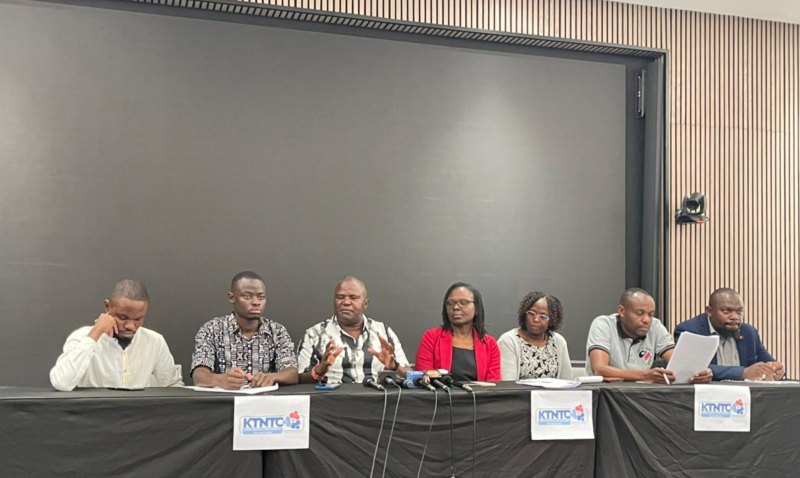
The Digital Taxi Association, which represents over 10,000 members, agrees to the high number of accidents in the hailing business, even as it calls for a stakeholder engagement to end address the problem.
According to associations’ chairman David Muteru, most drivers are not well trained on using the digital apps.
A huge number is also poor at reacting whenever a request pops in during a trip.
“What do you expect when someone gets a car and papers and just jumps on the road as a cab driver? Many of these new drivers are inexperienced. Some don’t even understand directions while others cant multi-task,” Muteru told the Star.
He has since called on the government, insurance players and the operators to formulate a way forward that will restore sanity and ensure underwriting business is equally offered to all customers.
“We need to sit down and come up with a policy that will guide the industry,” Muteru said.
The Insurance Regulatory Authority (IRA) has termed the move as an underwriting decision, which is also the Association of Kenya Insurers’ observation.
"It must be informed by the losses they have experienced touching on these model of vehicles,” "AKI executive director Tom Gichuhi told the Star.
Last week, the Association of Insurance Brokers of Kenya condemned the move to discontinue offering comprehensive insurance to some vehicles.
AIBK chairperson Antony Mwangi termed the move a violation of human rights and unfriendly for business growth.
“Let's not punish everyone, the laws are there. The companies should deal with individual culprits,” he said.