The song is about a young girl who denounces her male teacher, who uses her as a maid in his house and demands sexual relation from her in exchange for good grades in her final examinations.
The girl abhors the man's infidelity and questions the value of an education system that tolerates sexual predators. The girl cautions the teacher to “slow down” otherwise she will quit education and go back to tilling the land.
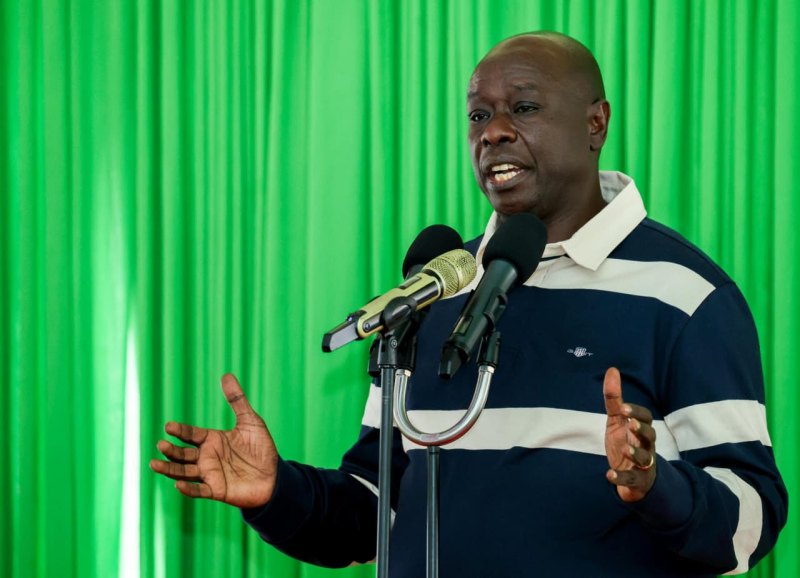
Were Kamaru alive today, he will be cautioning Deputy President Rigathi Gachagua to slow down as well though in his case for the speed at which he is going in his role as DP. The DP— or Riggy G as he was branded in social media, a nickname he readily embraced —is going at a speed uncharacteristic of those in his position.
Jaramogi Oginga Odinga served as our country’s first vice-president before he resigned from the post and quitting Kanu altogether in 1966 to form Kenya People’s Union. We then had a succession of vice presidents under Jomo Kenyatta, Daniel Moi and Mwai Kibaki before the position was overhauled in in 2010 and renamed deputy president.
All vice presidents had one thing in common: They had no power to do anything the President did not approve or did not ask them to. They were primarily there to be seen, not to be heard.
Those who understood that fact lasted, those who did not, didn’t.
Put another way, the vice presidents served at the President’s pleasure. However, all that changed after promulgation of the 2010 Constitution. Deputy presidents now have clout and as President William Ruto demonstrated to many a foe’s chagrin, a deputy president under the Constitution is an enshrined position and no easy pushover, even by the president himself.
Correction: even an entrenched deputy president can be pushed over or altogether be politically neutered to the point of irrelevancy by a president who knows how to.
Following the handshake that has in hindsight left bad taste in many a mouth, now retired President Uhuru Kenyatta had a fallout with his deputy that progressively got worse to open and public hostility. This was followed by numerous efforts to clip Ruto’s power and influence and to altogether tame him politically but all to no avail.
Were Uhuru not the weak president he was, and had Raila not had a poorly run campaign as he did, Ruto would right now be a thorn in the flesh in the opposition against a Raila government.
Giving credit where it is due, Ruto was masterful in using his office and unmatched skills to thwart these efforts and hoist himself to the presidency. He remains a case study for future politicians with aspirations to be president.
The speed at which Riggy G is going in making all manner of pronouncements, some it doubtful he cleared with the boss, leads one to believe he may become the first casualty of Ruto’s system.
When the framers of the 2010 Constitution made it almost impossible to remove the deputy president from office, they did not envision disharmony between the president and his deputy. They must have assumed the two would go hand and glove in executing their respective duties. We now know they were wrong.
By creating a powerful deputy president office as we have, they created a sphere of power, which will at some point find the two office holders in conflict, especially when the DP believes they are co-president.
But they are not, or they should not be.
Riggy G should slow down, know his role is not the jargon the president publicly announced but one of being submissive and making sure the Prime Cabinet Secretary does not eat too much into his limited territory.
Should he have ambitions to succeed Ruto, which he no doubt has, he should peel a page from the President’s own book and just do things discreetly and quietly.


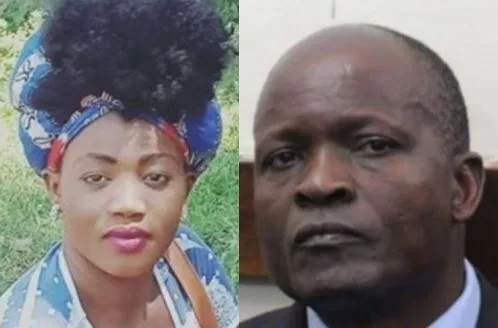
![[PHOTOS] Obado Leaves court in handcuffs](https://cdn.radioafrica.digital/image/2026/07/efc75d55-2eb9-4019-bb24-937dc4fc4f56.webp)