Speaking separately to the Star on Monday, money market experts warned that the weakening shilling will have a spiral effect on the cost of living and the overall economy.
''The developments in the US are not good for currencies in developing nations like Kenya. The increase in the Federal reserve rate will likely pull more investors into risker markets, further destabilising currencies,'' HFD Capital chief executive Jacob Melli said.
He added that although the increase in the Fed rate is the best bet in slowing rising inflation in the US where it has hit a forty-year high, it might cause a recession in the process.
Last week, Federal Reserve chairperson Jerome Powell made it clear that he expects rates to remain at levels that should slow the economy “for some time.”
He said he expects another 1.5 percentage points or so in interest rate increases this year as the Fed continues to battle the highest inflation levels since the early 1980s.
''The Fed’s continued tightening of credit will cause pain for many households and businesses as its higher rates further slow the economy and potentially lead to job losses,'' he said.
After starting 2022 near zero, the rate has now come up to a range of 2.25 per cent to 2.5 per cent. A 1.5 per cent increase will push it to four per cent.
The announcement by Jerome Powell saw major stocks drop globally.
According to BBC, Japan's Nikkei 225 index closed 2.7 per cent lower on Monday in Tokyo.
Elsewhere in the Asia-Pacific region, the Kospi in South Korea and Australia's ASX 200 were both down by around two per cent, while the Hang Seng in Hong Kong was 0.8 per cent lower.
That came after the main share indexes in New York each fell by more than three on Friday immediately after Powell's remarks.
Besides the Fed rate, Melli says Kenya's uncertain political future is likely to spur an investor flight, piling more pressure on the shilling that has so far hit an all-time high of Sh120.
Yesterday, it opened the market at Sh121.09 before stabilsing to 119.92.
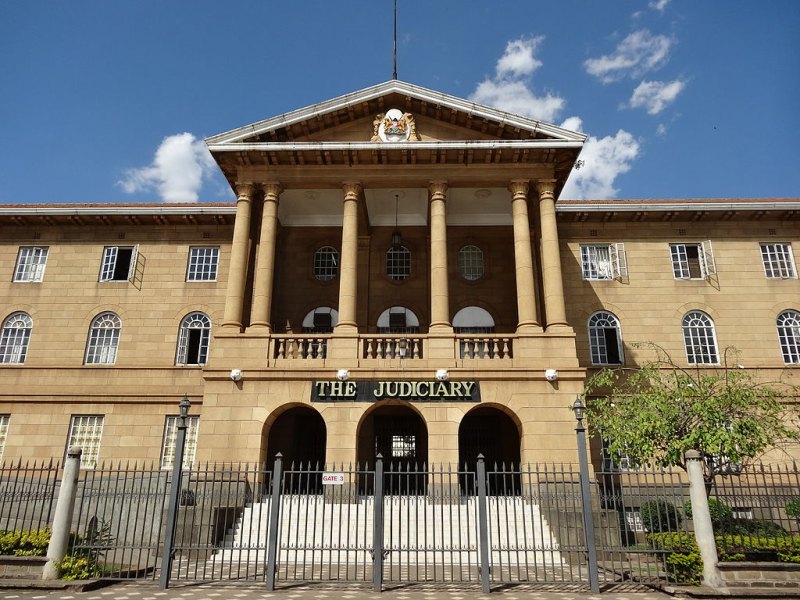
Daniel Manga, a freelance forex trader said the local currency is likely to lose more ground in the coming days as the Supreme Court hears the presidential election petition challenging President-Elect William Ruto's win.
"We have seen tough counter accusations in the case being tabled at the Supreme Court. The level of antagonism is not good for the shilling and the economy,'' Manga said.
''He added that the volatile position will likely drive the shilling above 130 units against the US dollar, a move that he terms 'catastrophic', considering that Kenya is a largely import economy.
A weak shilling means a high cost of living as the importers pass the bill to consumers. Although it is good for exporters, the balance tilts to the negative,'' Manga said.
Kenya's shilling has maintained a downwards trend against major international currencies, shedding six per cent in value against the greenback in the last 15 months.
On Friday, the Central Bank of Kenya maintained optimism in its weekly bulletin, saying the currency maintained stability.
''The Kenya Shilling remained stable against major international and regional currencies during the week ending August 25. It exchanged at Sh 119.86 per US dollar on August 25, compared to Shh119.47 per US dollar on August 18,'' CBK said.
The foreign reserve continued to tumble, dropping further against the East African import cover threshold. It closed the week at 4.39 months of import cover against the required 4.5 months.
According to Financial Risk Analyst Mihr Thakar, a large number of factors are working against the Kenya Shilling, among them a drop in exports.
Horticultural exports, for instance, plunged 8.5 per cent in the 12 months to June 2022 against a similar period last year, Thakar noted.
“Although overall goods exports surged 11.2 per cent , this was far surpassed by the 21.7 per cent growth in imports of goods,” he said.
He added that cracks have begun showing in remittances due to the high cost of living and election-related uncertainty, having declined 5.1 per cent in July 2022 versus July 2021, he notes.
“The lack of a substantive government and heightened opposition activism is likely to keep sentiment skewed on the side of caution,” Thakar added.
Early this year, Reincap projected the shilling to cross 120 against the US dollar by the end of the election time.
Both World Bank and the International Monetary Fund (IMF) have also projected a drop in currencies in the global south in their latest economic reviews.


![[PHOTOS] Raila Odinga Stadium construction enters home stretch](https://cdn.radioafrica.digital/image/2026/06/45f6990c-4882-4cd2-b83c-8fc730dcdce5.jpg)