Empty rooms in Kilimani as tenants look for cheaper options
Landlords are now shifting to Airbnbs to compensate for rent lost
by The Star
Audio By Vocalize
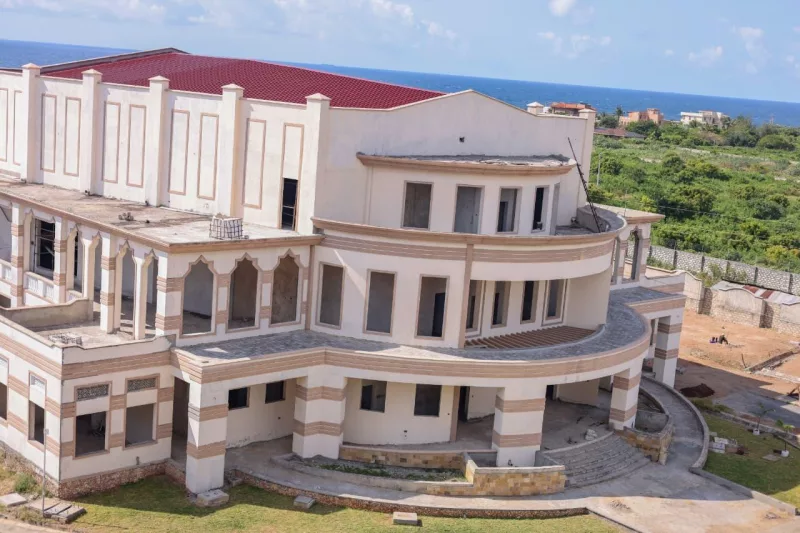
LUCRATIVE: An office block under construction in Westlands, Nairobi. The area has high returns on real estate investments.
Landlords are staring at empty houses in the Kilimani area as tenants shift to satellite towns as the high cost of living bites.
A spot check by the Star in Kileleswa and Lavington areas in Nairobi shows most of the high-rise buildings erected between 2019 and last year are below 50 per cent occupancy rate, with some owners resorting to turning some into thriving Airbnb businesses.
A caretaker at Viena Court along Othaya Road told the Star that at least three tenants exit the apartments every week, with the majority moving towards Syokimau, Kamulu and Kiambu Road.
The employee who requested anonymity fearing due to sensitivity of the matter told this writer that the majority are citing cost-cutting measures due to the rising cost of living.
''Many are citing affordability as a reason to move to regions away from the capital city. Several talked of job loss while others are moving to their own homes,'' the caretaker who has been in the area for eight years now said.
Simon Gichuru owns a two-bedroom house on a half-empty four-story apartment near Quickmatt Supermarket in Lavington’s Valley Arcade.
He told the Star that the building has attracted only three new customers since October last year, despite a 20 per cent discount offer.
"I was among the first occupants of this building, having paid Sh8.9 million. The price was slashed last year to Sh7 million but three people have bought a unit since last year,'' Gichuru said.
Sales prices in the region have dropped by an average of 4.8 per cent in the past year according to Hass Consult and 5.3 per cent according to Cytonn.
A three-bedroom in Kileleswa is going for an average of Sh65,000 per month. The same amount can pay two months rent in Kikuyu, Syokimau, or Tatu City area.
In the latest market watch report by Hass Consult, rent prices have dropped by up to 8.7 per cent in Kilimani and 4.4 per cent in Kileleswa while rising in satellite areas of Kitengela, Mulolongo and Syokimau due to the Nairobi Express Way.
Property and rent prices have also dropped in Westlands, Langata and Parklands regions since Covid-19 struck the country in March 2020.
Yet, there are several apartments coming up in those regions, an aspect that is annoying several residents in Kilimani area.
''Kilimani is slowly transitioning into a third-rate estates like Huruma and Pipeline. This area used to attract the burgeoning middle class to management positions. This is the case no more,'' Andrew Katambi said.
His sentiments are echoed by Jerry Muli who is considering moving due to lack of exclusivity, the top reason that made him move to Lavington Estate a decade ago.
According to the Kenya Bankers Association House Price Index (KBA-HPI), the pattern mirrors the price evolution experienced in 2017 with indications that the slow pace of price growth experienced in the past quarters will prevail.
"On the supply side, the market appears to be tilting towards a few additional units coming into the market due to constrained access to credit by developers. Limited credit is a binding constraint on the demand side,’’ the KBA report said.
These thoughts are shared by JLL consulting which says the market is slowly recovering from the Covid-19 pandemic which hurt credit to investors and shrunk spending power for buyers and tenants.
The firm is, however, worried about the ongoing shakeups in the global economy that has seen inflation rise to the highest levels in 40 years, apex banks adjust base lending rates upwards and currency devaluates.
''Kenya is not an exception. The high cost of living has made families prioritize food and investors adjust accordingly. The upcoming general election is also likely to slow the property market,'' JLL experts told the Star.
Private sector credit growth hit a near six-year high in March according to new data from the Central Bank of Kenya (CBK).
According to the reserve bank’s latest monetary and financial statistics, private sector credit growth stood at 10.9 per cent in March, the first double-digit rate of growth since June of 2016.
Private sector credit in the period stood at Sh3.177 trillion during the month compared to Sh2.865 trillion in March of 2021.
''The record growth is largely attributable to the resurgence of economic activity following the end of Covid-19-related restrictions,'' CBK said in the latest market Perception Index.
Airbnb app is seen on a smartphone in this illustration taken, February 27, 2022.
AIRBNB OPTION
The slow uptake of housing units in Kilimani area has seen landlords diversify their scope, with the majority leaning towards the thriving Airbnb market.
Jerry Olang, a property administrator in Kileleswa says three apartments he manages have been transformed into Airbnbs in the past two years, a decision they don't regret.
''Although it is an evolving concept, returns have started trickling in. We project double revenue compared to rent even at 50 per cent occupancy,'' Olang said.
Data from AirDNA, an Airbnb market watch platform shows a high concentration of such facilities in locations near Nairobi Central Business District (CBD), with Kilimani, Upper Hill, Lang'ata, Ruaka, Kileleswa and Riara leading.
According to the platform, the occupancy rate of Airbnbs in the city has risen in the past six months to 42 per cent from 28 per cent in December, with the price also rising to Sh5,078 per day from Sh4,772 in December.
This is premium content
Subscribe to Continue Reading
Help us continue bringing you unbiased news, in-depth investigations, and diverse perspectives. Your subscription keeps our mission alive and empowers us to provide high-quality, trustworthy journalism. Join us today to make a difference!



![[PHOTOS] Obado Leaves court in handcuffs](https://cdn.radioafrica.digital/image/2026/07/efc75d55-2eb9-4019-bb24-937dc4fc4f56.webp)