To the casual eye, Kirigiti Girls Rehabilitation School is a normal primary school.
However, there is a police vehicle curiously parked at the entrance.
A closer scrutiny reveals heavy grills installed on doors and windows around the institution.
This suggests that although the establishment is a learning institution, it is also an isolation facility.
Kirigit is one of the many organisations put up by the government to ensure children found guilty of crime are reformed before being reintegrated to the society.
Established in 1920s by the colonial government, the Kirigiti Girls Rehabilitation School is currently home to 30 girls confined for committing both low risk, and high risk offences.
The school is run through collaboration between the Ministry of Labour and Social Protection and caters for 12 to 17-year-old girls sentenced to a maximum of three years confinement.
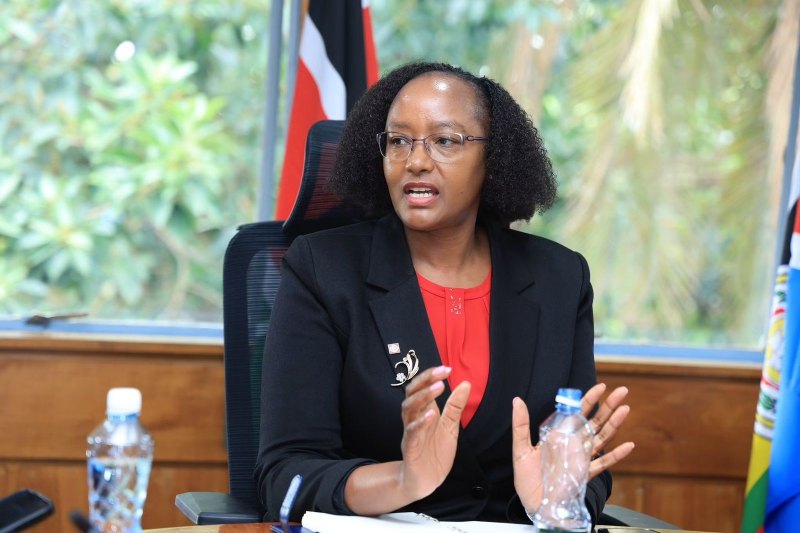
Speaking to KNA in her office, Jenifer Chepgeno, the institution’s manager, said the rehabilitation centre boasts of behavioural change in 90 per cent of girls who pass through it.
The children’s department officers, she added, observe behavioural patterns in the girls once they are re-admitted into the society, and make reports on a monthly basis with the assistance of parents.
The school only admits under-age offenders who cannot be sent to normal jails since they are delicate and also need education.
“The school runs from class five to class eight and also offers technical skills like tailoring, beadwork, baking and hair dressing to the girls. These activities encourage them not to go back to a life of crime,” added Chepgeno.
Meanwhile, Kiambu Sub County Children officer Rachael Karanja says that about 85 per cent of children found guilty of committing crime come from dysfunctional families.
“Children suffer most in case of broken families and the effects vary depending on their age. For example, infants and young children may suffer some negative development effects. Older children and teenagers, on the other hand, tend to suffer more lasting effects on their social, emotional, and educational aspects. This scenario tend to pull them to crime,” said Karanja.
“There is no trust more sacred than the one the world holds with children. There is no duty more important than ensuring that their rights are respected, that their welfare is protected, that their lives are free from fear and want and that they can grow up in peace,” added the children's officer.
In the last one month, an estimated 35 schools across Kenya have been set on fire, forcing many to shut down. Authorities say the fires are being set by students.
The wave of arson has worsened, raising a debate across the country on who to blame for the indiscipline among the students. Is it the teachers, students or the parents?
Education Cabinet Secretary George Magoha last week blamed the unrest on irresponsible parents saying: “Discipline starts from the family, and it is a fact that a number of our families have failed us. It looks mundane and juvenile for somebody in high school to burn a building."
Officials are blaming drug abuse, stress, curriculum overload and poor student-teacher relations for the unrest.
Sam Ndunda, Secretary-General of the Kenya National Association of Parents, said teachers were not effectively dealing with discipline cases.
“Let’s say there are a number of students who have already been sent out of school to discipline them. These students have been kept out of school for quite a long time. These students feel so bitter that ‘our colleagues in the school are learning whereas we are given a definite suspension’. We feel such children come up and organise the fires,” Ndunda claimed.
Teachers have, on the other hand, blamed the school calendar saying it is short and a lot of learning is expected from the students, which has frustrated some to the point of burning the institutions.
The Directorate of Criminal Investigations in January announced that they would collect and store information on students involved in criminal conduct, potentially ruining their chances of employment.
"Let each student be informed that his criminal past will automatically be reflected on the police clearance certificate when such a student will apply for one. This will be a permanent criminal mark that will bar many students from achieving their goals, as no worthy employer will dare employ such characters," the DCI said.
Reducing conflicts, crime, violence and discrimination and ensuring inclusion and good governance are key elements for people’s wellbeing and are essential for securing sustainable development.




![[PHOTOS] Uhuru graces commissioning mass of Catholic Women](https://cdn.radioafrica.digital/image/2026/06/0bbd7e96-f180-4e02-966f-97c3fb201478.jpg)