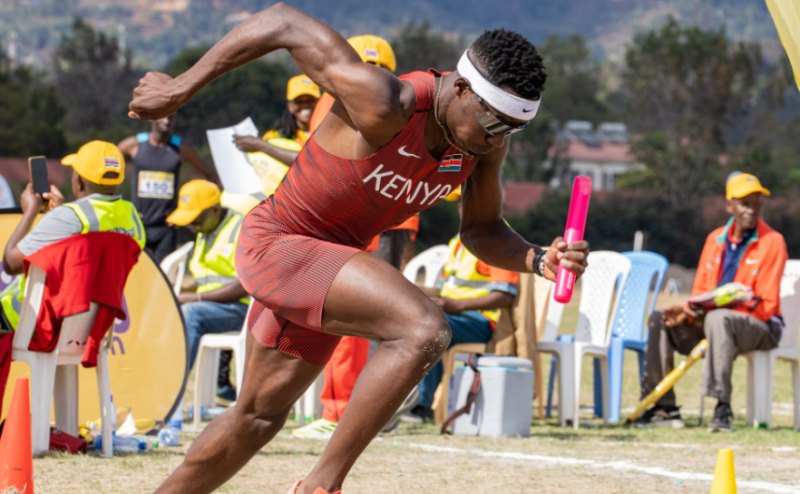
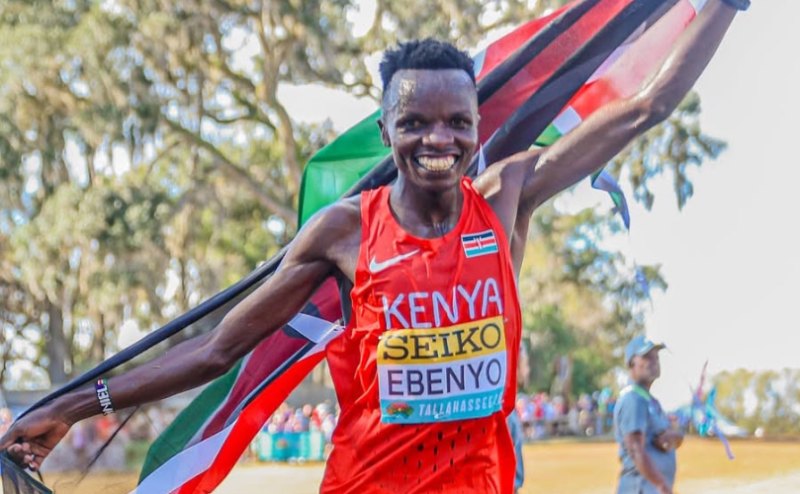
Researchers are always advancing explanations for why Kenyan athletes have dominated distance running since the 1960s.
What is it about elite runners compared with their trained, tip-top shape but nonelite peers?
Some attribute it to food, genes and surroundings, while others propose a psychological advantage whereby Kenyans already see themselves as unbeatable.
A new study now offers two more possible answers — shorter ground contact time and better running economy.
Better runners are known to spend less time on the ground and more time in flight.
Robert Ojiambo and Meshak Sang from Moi University’s medical physiology department studied 10 female Kenyan athletes during trials on a flat outdoor track at the intensities corresponding to their everyday training intensities.
The subjects showed "moderate to very good" running economy, which correlated with ground contact time.
“We provided the evidence that ground contact time is associated with the superior running of the female Kenyan runners,” the researchers said.
Running economy is a measure of how much oxygen (or energy) the body requires to run at a particular pace.
The better running economy one has the, more endurance one has and the faster one can run.
The study is published in the 'Journal of Strength and Conditioning Research.'
Four other researchers from Estonia, Ethiopia and the United States contributed to the study.
“This study is the first to report the running economy and gait characteristics of East African female athletes measured under everyday training settings,” they said.
Vincent Onywera, a professor of exercise and sports science at Kenyatta University, has also been studying Kenyan long-distance athletes.
For several years, he studied Eliud Kipchoge — who won Gold at the Tokyo Olympics men's marathon. He concluded Kipchoge’s success has a lot to do with a unique interplay between nature and nurture.
"Based on this body of knowledge and empirical data, I would observe that Kipchoge’s extraordinary and excellent performance has a lot to do with his mental strength, physical fitness, diet, and great running economy which enables him to utilise oxygen and generate energy more efficiently," he said.
Prof Onywera said research still does not answer all of the questions surrounding the performance of Kenyan runners.
“Sports scientists like myself have also linked their success to their diet, which is typically high in carbohydrates and low in fat,” he said
Most Kenyan runners say they generally eat ugali, sukuma wiki, milk, beans and eggs.
Although Kenya’s 41-year dominance in the steeplechase was broken at the Olympics in Japan, the country’s runners resumed dominance in other races.
Kenya's Peres Jepchirchir won the Olympic women's marathon in Sapporo on Saturday, claiming the country's second consecutive gold medal in the event.
Fellow Kenyan Brigid Kosgei took silver and Molly Seidel of the United States took bronze.
This was Kenya’s third gold after Emmanuel Korir (800) and Faith Kipyegon (women’s 1500m) clinched the first two gold medals. Kenya completed the Tokyo 2020 Olympics with four gold medals after Kipchoge won the marathon.
Silver medallists are —Hellen Obiri (5000m), Kosgei (marathon), and Ferguson Rotich (800m). Hyvin Kiyeng won bronze in the women’s 3000m steeplechase.
Kenya finished with four silver medals and two bronze medals at position 19 and top among African competitors at the olympics.
Ethiopia and Uganda too ran well.
Ethiopian distance runner Selemon Barega 'flew' to a 10,000m victory to claim gold.
Peruth Chemutai became the first Ugandan woman to win an Olympic medal as she took gold in the women's 3,000m. steeplechase
And the research goes on.
(Edited by V. Graham)