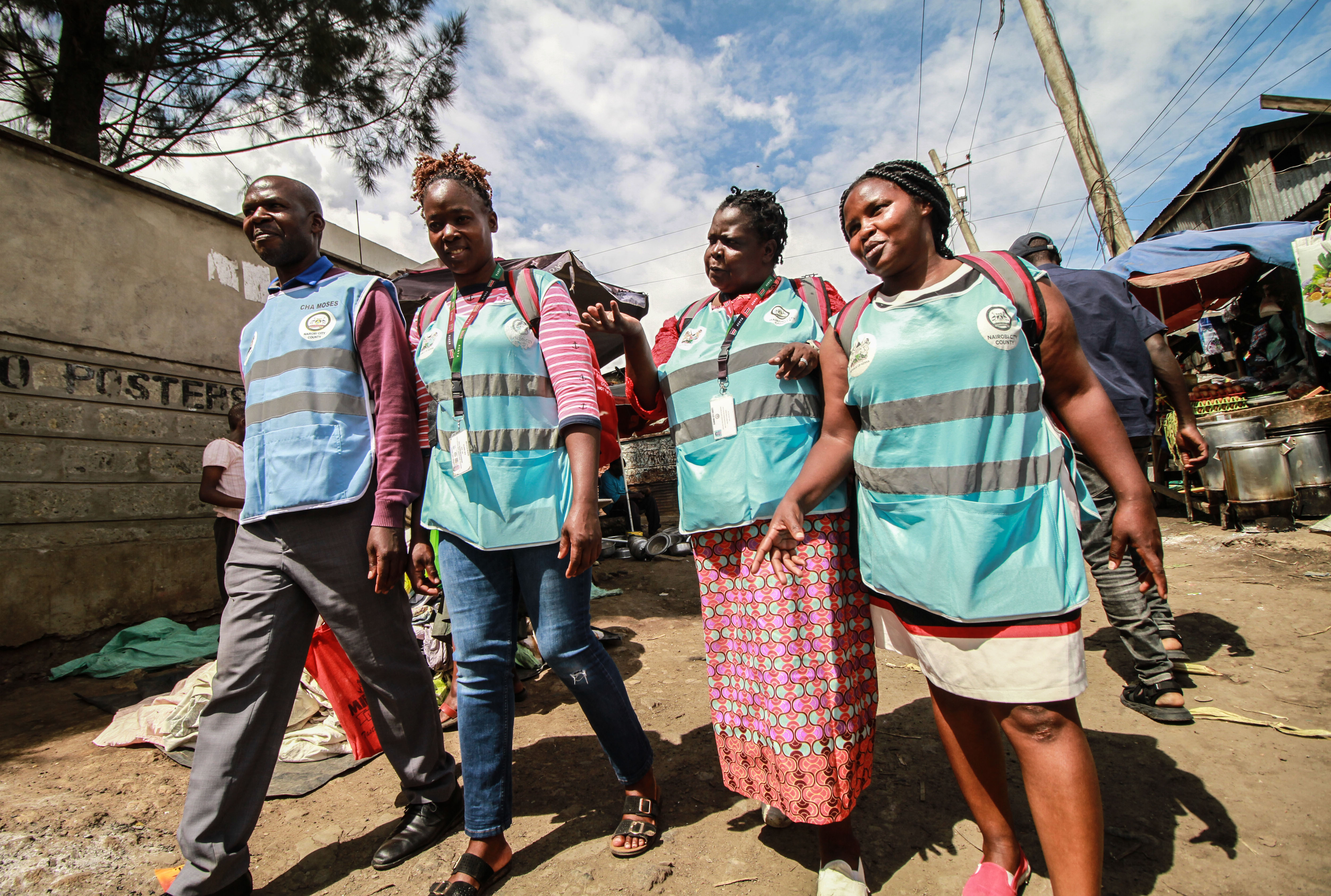
Community Health Promoters (CHPs) work quietly within communities, going door to door across Kenya’s informal settlements to monitor pregnancies, detect early danger signs, and connect high-risk mothers to care.
Armed with essential backpacks containing their day-to-day requirements and supported by training, they have helped reduce complications that can lead to premature births—ultimately saving lives even before birth.
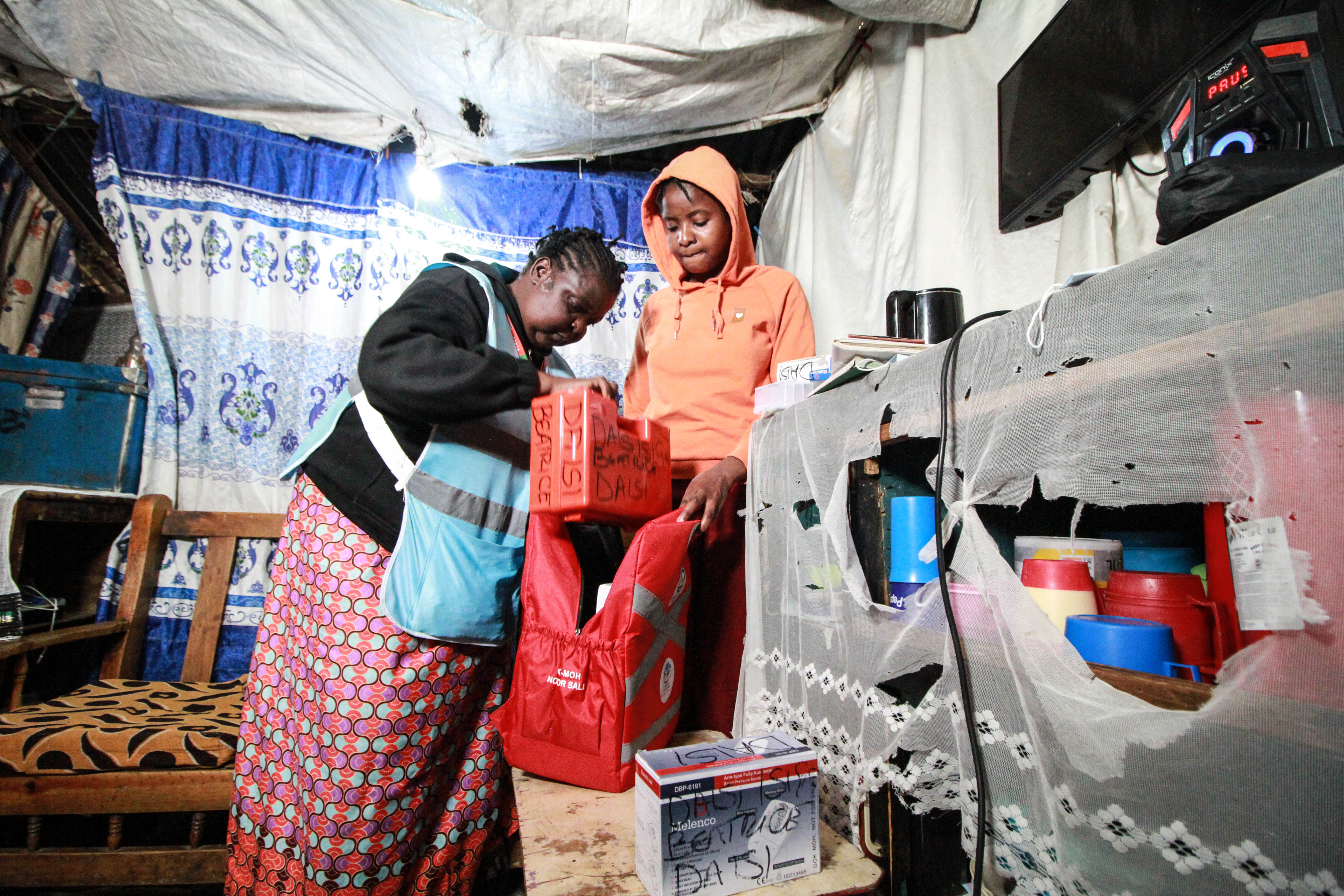
Daisi Isige, assisted by her daughter, packs her first aid kit into an essential backpack ahead of a scheduled household visit in Kiambiu, Eastleigh South, Nairobi/Enos Teche.
At least 100,000 Community Health Promoters have been recruited across the 47 counties to provide much-needed primary health care, aimed at transforming health services toward a more preventive approach.
These community health providers are distributed within Kenya’s most vulnerable areas, tasked with offering preventive, promotive, and basic diagnostic services at the household level, while referring cases that require more attention to Level 2 and 3 hospitals within their respective counties.
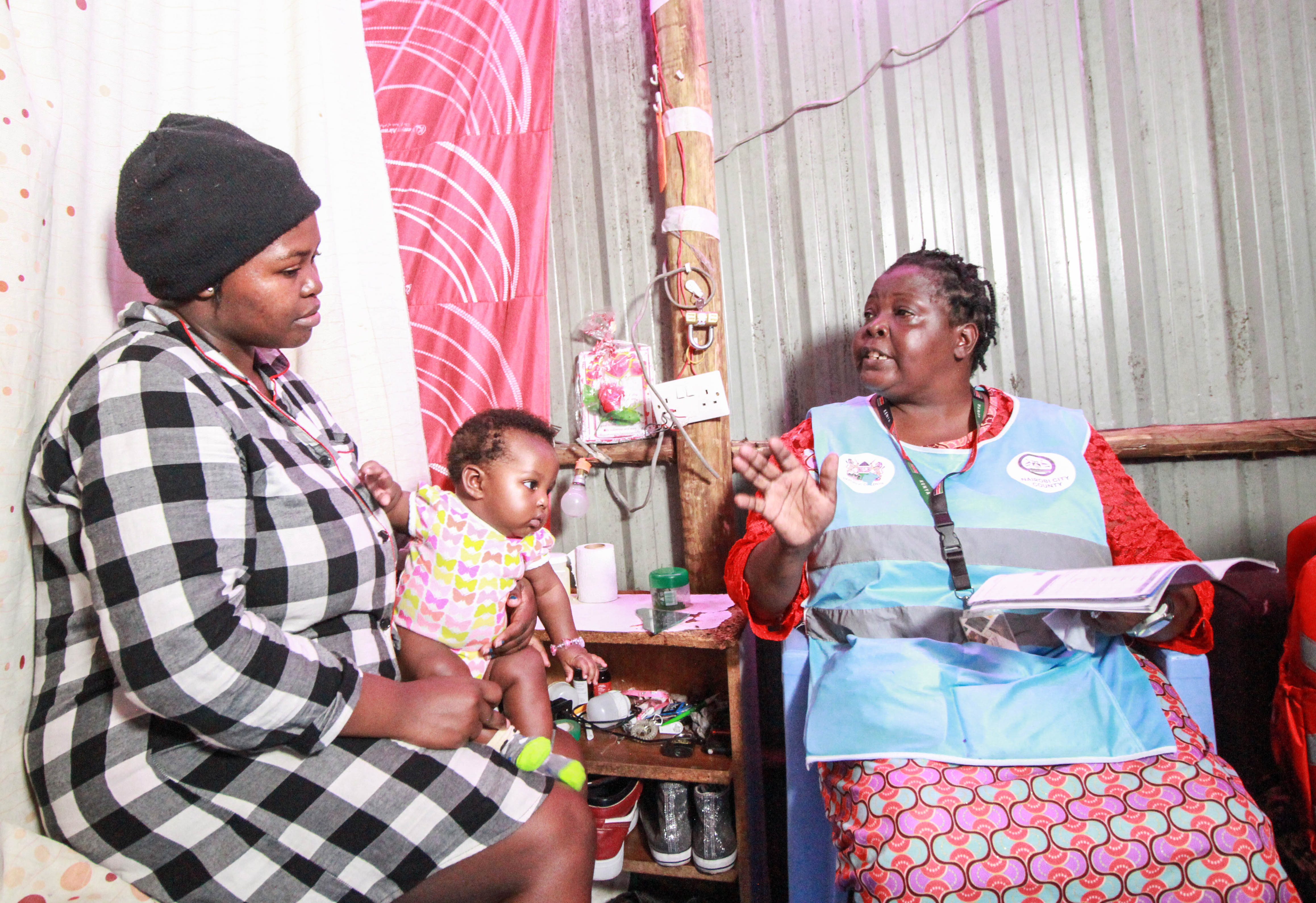
Kiambiu, one of Nairobi’s densely populated informal settlements within Kamukunji Constituency, has several CHPs assigned to it.
With a population of more than 20,000 people, each Community Health Promoter in the area is tasked with handling at least 100 households. Anne Were is one of the community-based health promoters within Kiambiu.
She confirms that through various trainings from both the government and health partners, such as Save the Children, Kiambiu has witnessed improved health-seeking behaviour, as well as reduced neonatal and infant mortality.
She explains that the Integrated Community Case Management approach has equipped them with sufficient knowledge to support the very communities they belong to, by identifying and guiding pregnant girls and women throughout their pregnancy journey.
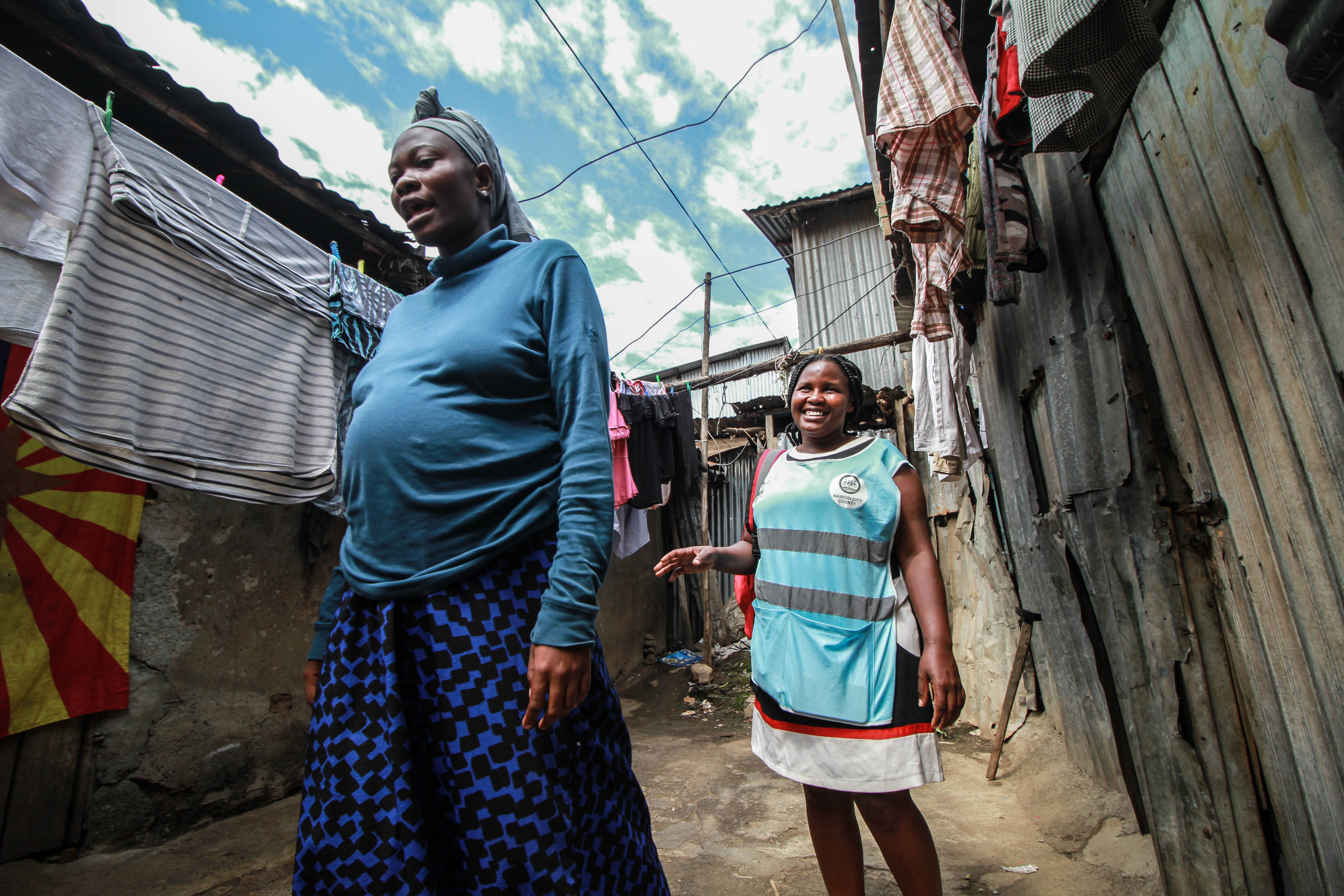
“Our routine household visits, aimed at providing essential care, increasing facility-based deliveries, and managing diseases like malaria, pneumonia, and diarrhoea, have significantly helped reduce child mortality rates in Kiambiu,” she says.
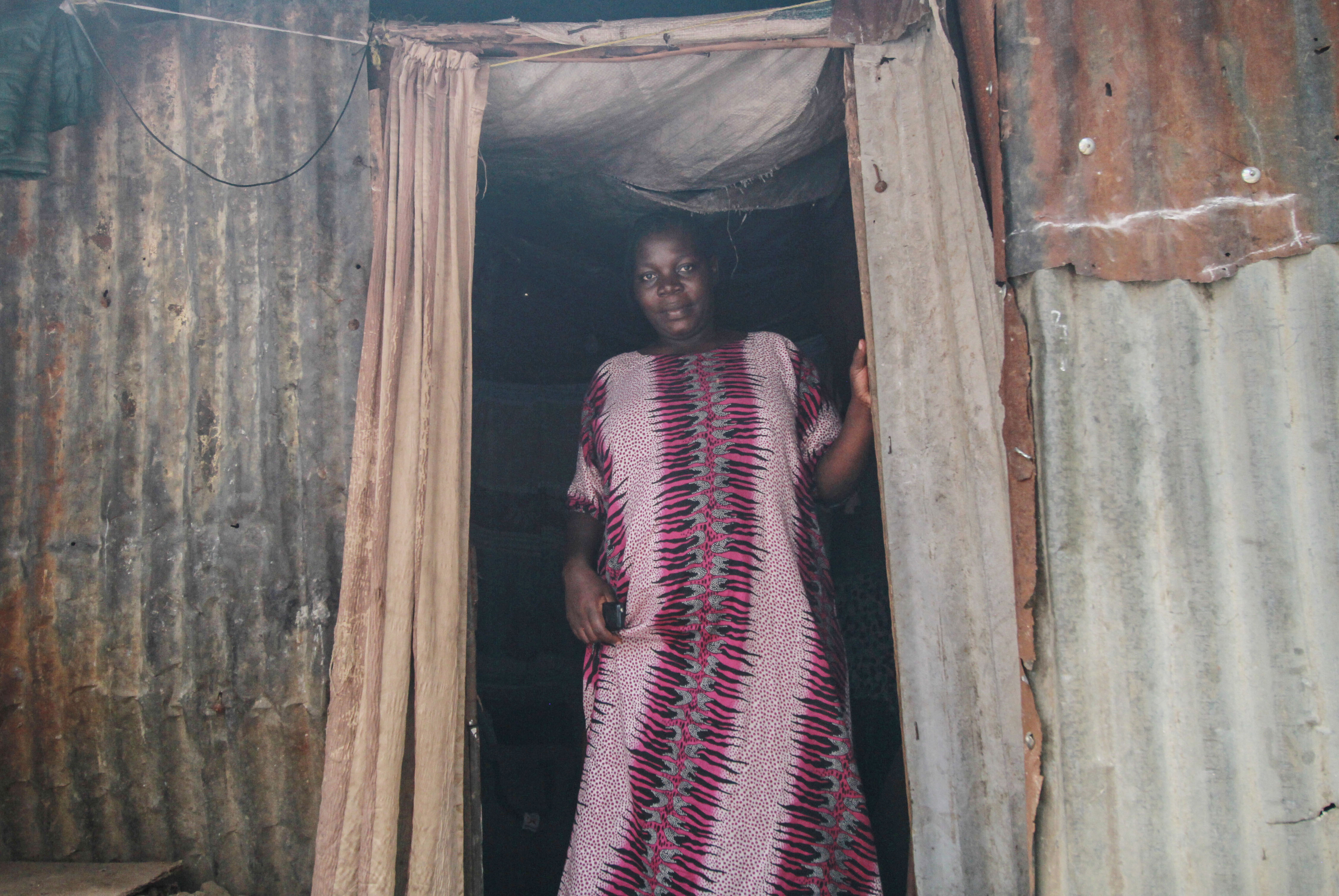
She adds that this progress has been facilitated by goodwill from community members, who now actively refer pregnant cases to them for assistance.
Daisy Asige, a 52-year-old mother of three, is also among the 160 Community Health Promoters in Kiambiu. She attests to improvements in prenatal and neonatal health, as well as overall community health.
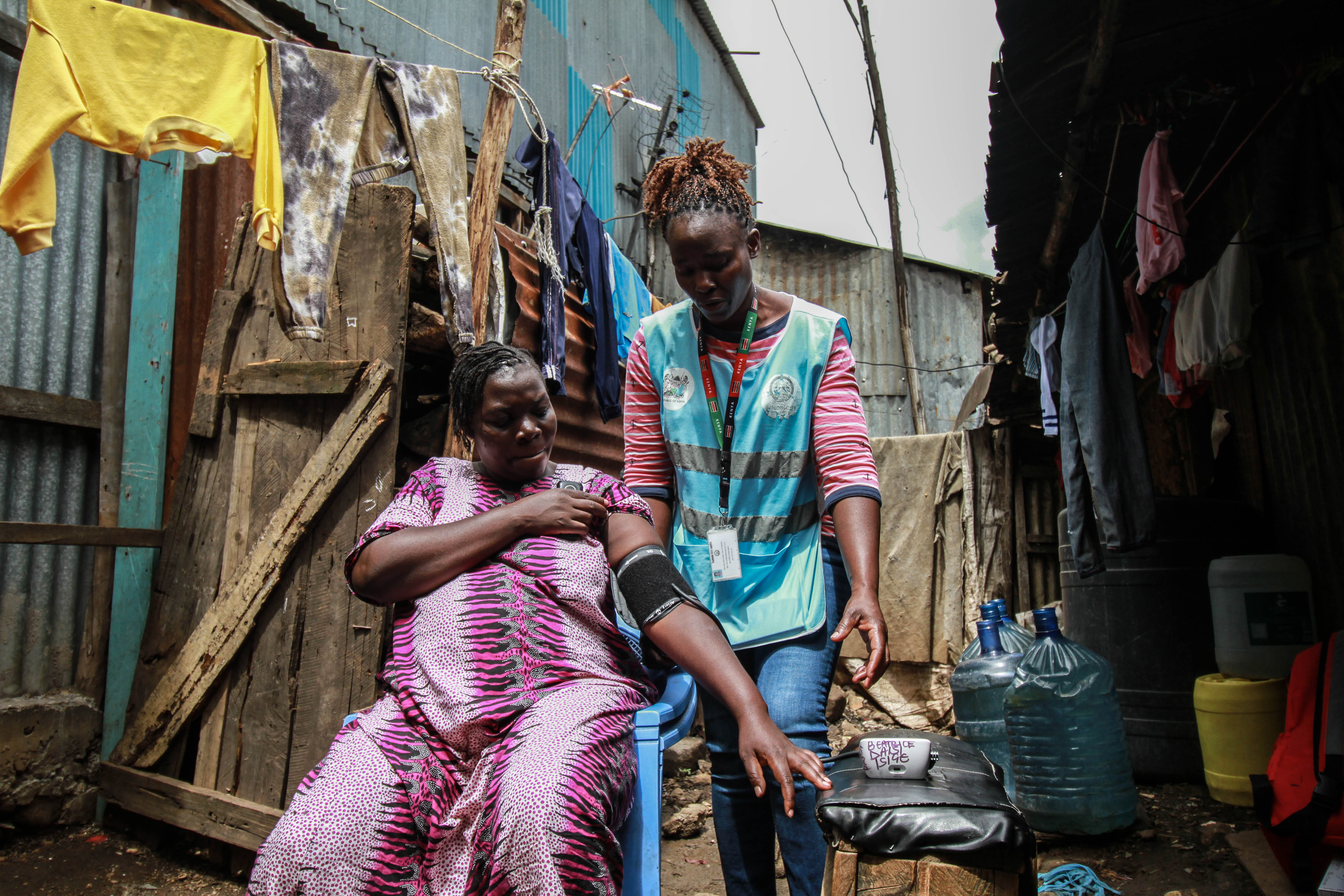
Having previously served as a community health volunteer, she attributes the success of their work to regular trainings that enable them to serve the community more effectively.
Asige recalls how tiresome it was back in 2003, when they would walk door to door with notebooks registering cases.
“The essential backpack has helped us manage our assigned households effectively and identify cases that require referrals. I can schedule all my 126 households, as the phone provided in the kit has enabled me to organise visitation accordingly,” she explains.
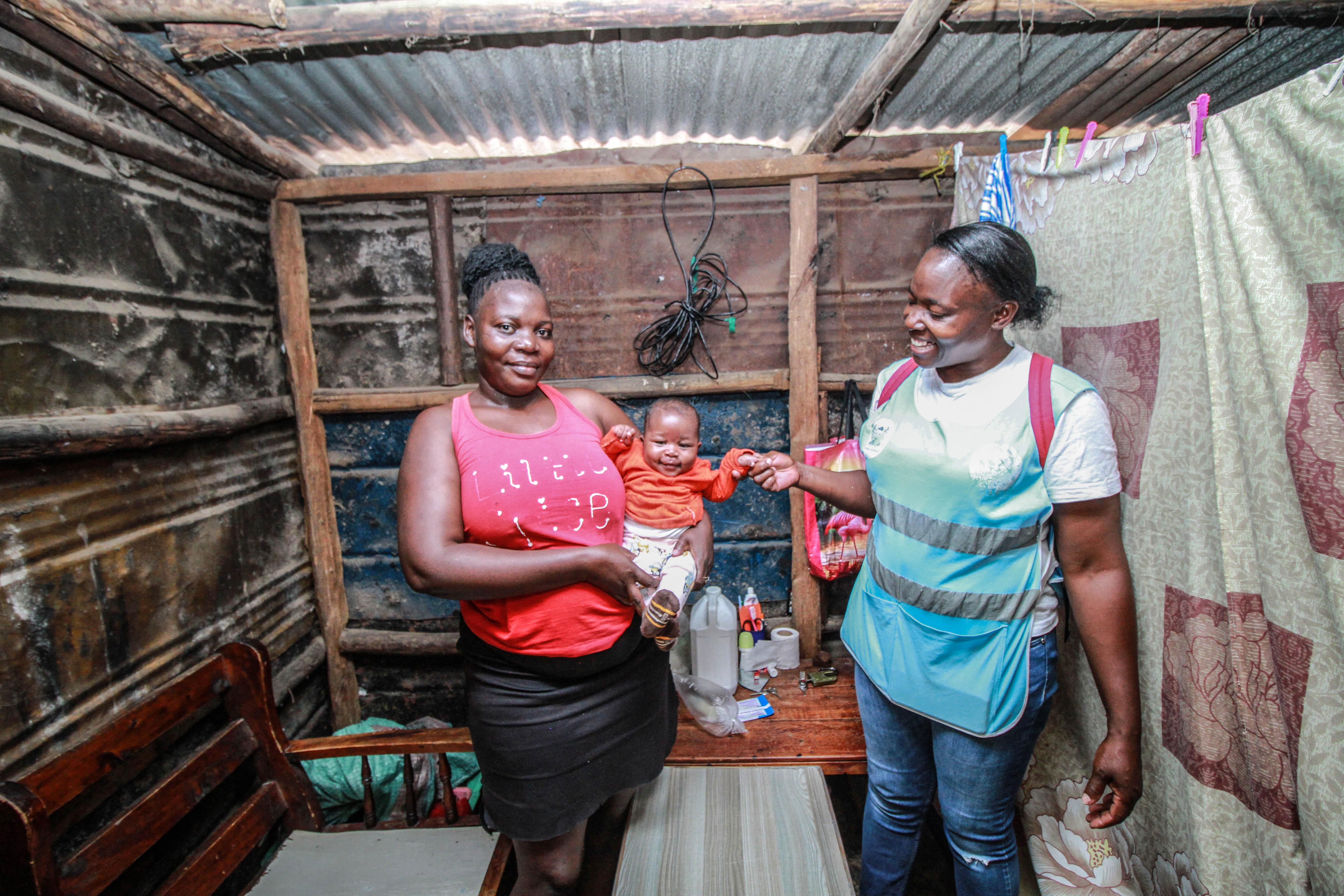
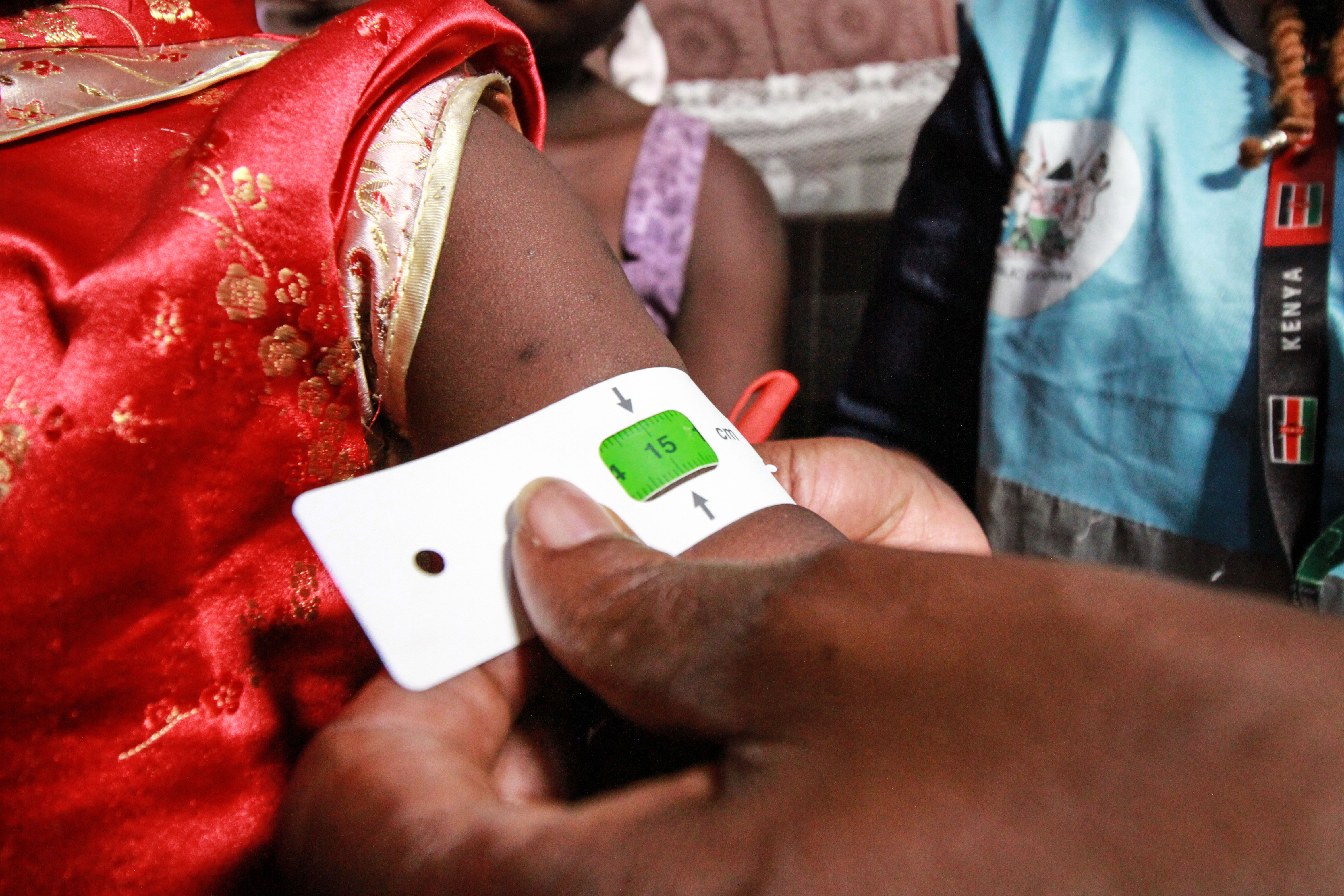
The kit includes a carrier bag, a first aid box, and a jacket for easy identification of CHPs. It also contains a weighing scale and blood pressure machines to detect cases of diabetes and hypertension, as well as an infrared clinical thermometer for contact-free temperature measurement. Additionally, the backpack includes MUAC tapes for both adults and children.
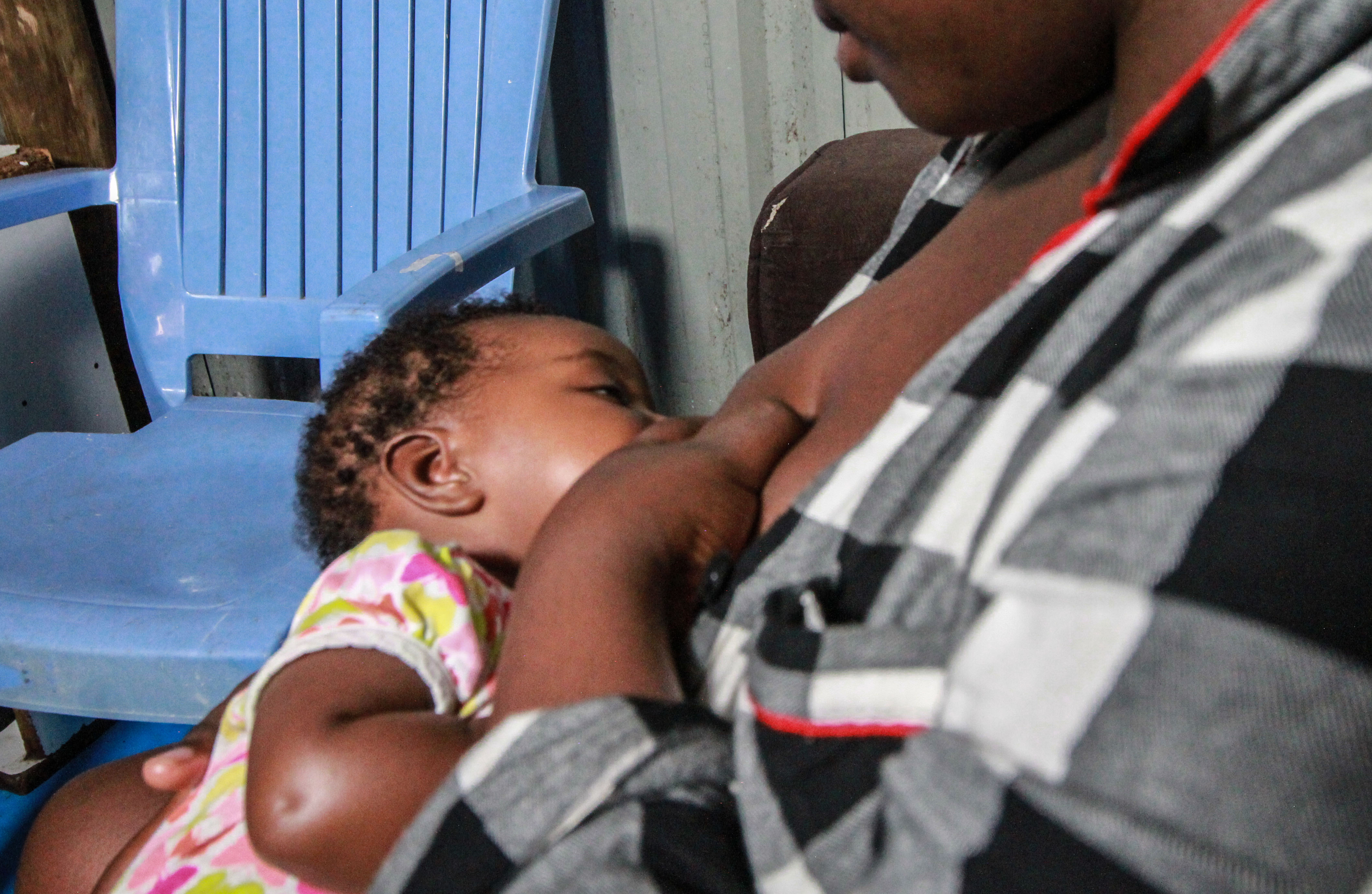
The government has stepped up efforts, working alongside donors, to reduce child mortality and improve antenatal care for pregnant women through CHPs. These promoters follow up to ensure safe deliveries in health facilities and promote adherence to vaccination schedules for newborns.