Sh100bn leaves Kenya every year on medicine imports, says Duale
State to offer financial guarantees to investors who want to build medicines factories in Kenya
by JOHN MUCHANGI
Audio By Vocalize
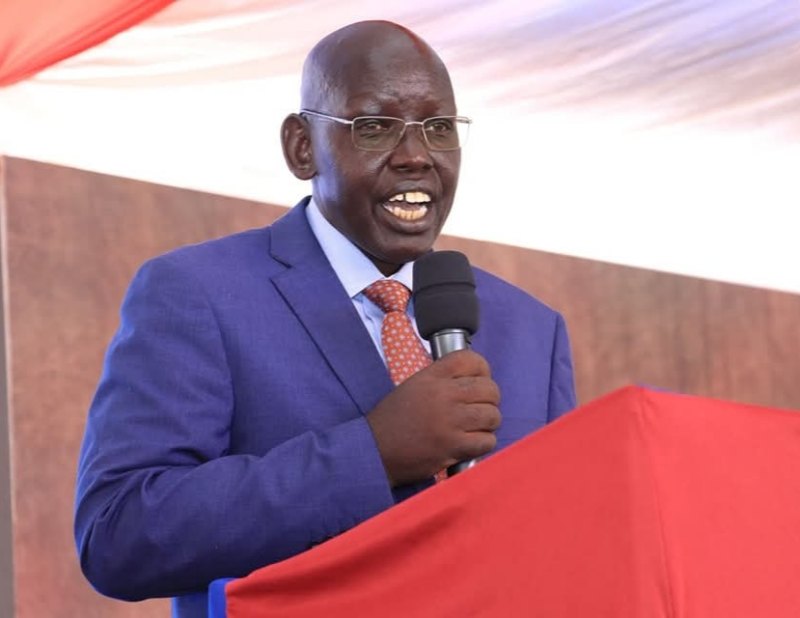
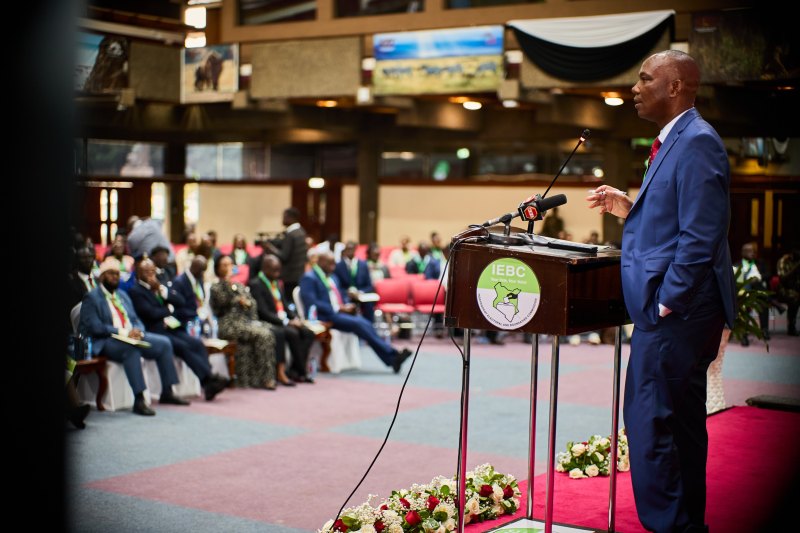
Medical Services PS Ouma Oluga at the launch of the Kenya Health Products and Technologies Local Manufacturing Strategy 2026–2030 in Nairobi.
Kenya will help reduce financial risks for investors willing
to build medicine and health products factories locally as part of a plan to
cut imports and strengthen the country's health security.
Health Cabinet Secretary Aden Duale said Kenya currently
imports about 70 per cent of its pharmaceutical products and nearly all the
vaccines used in the country.
In total, Kenyans spend about Sh155 billion ($1.2 billion)
on health products every year, but nearly Sh98 billion ($760 million) of that
money goes to other countries because the products are imported, Duale said.
The CS said the government will work with financial
institutions and development partners to make it easier for manufacturers to
access long-term loans needed to establish production plants.
"Government's role here is not to manufacture. It is to
absorb the risk private capital will not absorb on its own," Duale said
during the launch of the Kenya Health Products and Technologies Local
Manufacturing Strategy 2026–2030 in Nairobi.
He said the ministry is already working with the National
Treasury, the Kenya Development Corporation and development finance partners.
The partnership seeks to establish a dedicated health
manufacturing credit guarantee facility that de-risks long-tenor lending for
pharmaceutical, vaccine, diagnostic and medical device production.
The strategy seeks to strengthen Kenya's ability to produce
medicines and other health products locally, reducing dependence on imports
while improving access to essential healthcare supplies.
Medicines and other health products also make up a large
share of healthcare spending, accounting for about 40 per cent of costs at
primary healthcare facilities and more than 20 per cent at higher-level
hospitals.
"You cannot manufacture a health system that you cannot
finance. You cannot finance a health system that you cannot supply. You cannot
digitise a supply chain that has nothing flowing through it. Local manufacturing
is the floor beneath these reforms," he said.
The new strategy comes as African countries push to increase
local production of medicines following lessons learned during the Covid-19
pandemic, when many nations struggled to access vaccines, medicines and medical
supplies because of disruptions in global supply chains.
The African Union has set a target of producing 60 per cent
of the continent's health commodities locally by 2040. President William Ruto
serves as the African Union Champion for Local Manufacturing.
According to the World Health Organization, Africa currently
imports the vast majority of the medicines and vaccines it uses, making
countries vulnerable during global health emergencies.
WHO Kenya Acting Representative Dr Neema Kimambo said the
strategy would help Kenya become more self-reliant and better prepared for
future health crises.
"Today, Kenya imports an estimated 70 to 80 per cent of
the pharmaceuticals it consumes. In ordinary times, that dependence may appear
manageable. But during a crisis, it becomes a vulnerability," Kimambo
said.
"Mpox and the Covid-19 pandemic reminded us that when
global supply chains are disrupted, access to medicines, diagnostics, vaccines
and other essential health products can no longer be taken for granted.
Countries compete for limited supplies, costs rise, and those who suffer most
are often the most vulnerable."
She said the strategy goes beyond healthcare and could also
create jobs, attract investment and support economic growth.
"At its core, this strategy is about ensuring access to
essential health products is not determined by events beyond Kenya's borders.
It is about strengthening the country's ability to provide the medicines,
diagnostics and technologies its people need," Kimambo said.
Another pillar of the strategy is strengthening research and
development so that scientific discoveries made in Kenya can be turned into
products manufactured locally.
Duale said institutions such as Kenya Medical Research
Institute and the Kenya Institute for Primate Research (Kipre) already have
strong scientific expertise, but the country needs better systems to move
innovations from laboratories into factories.
"Kenya must build its own version of that bridge,
anchored on and strengthening university research laboratories such as KAVI and
national research bodies such as Kemri and Kipre, with a direct, structured
pipeline from research work into pre-clinical drug development, formulation and
process scale-up," he said.
"The task here is singular: take what our scientists
discover and our universities publish, and carry it through to something a
Kenyan factory can produce at scale."
The government also plans to consolidate the purchasing of
health products across national and county governments, as well as other major
buyers, to create a larger and more predictable market for manufacturers.
Duale said guaranteed long-term demand would make it easier
for investors to secure financing and expand production.
"A manufacturer who knows, in advance, the volume Kenya
will purchase over three to five years can take that commitment to a bank, to
an investor and to their own board. That is how demand stops being a hope and
becomes a financeable instrument," he said.
The WHO urged Kenya to ensure that quality remains a top
priority as local manufacturing expands.
Love Health? Stay Connected!
Be part of an exclusive group of enthusiasts! Get fresh content, expert advice and exciting updates in your inbox with our health newsletter.


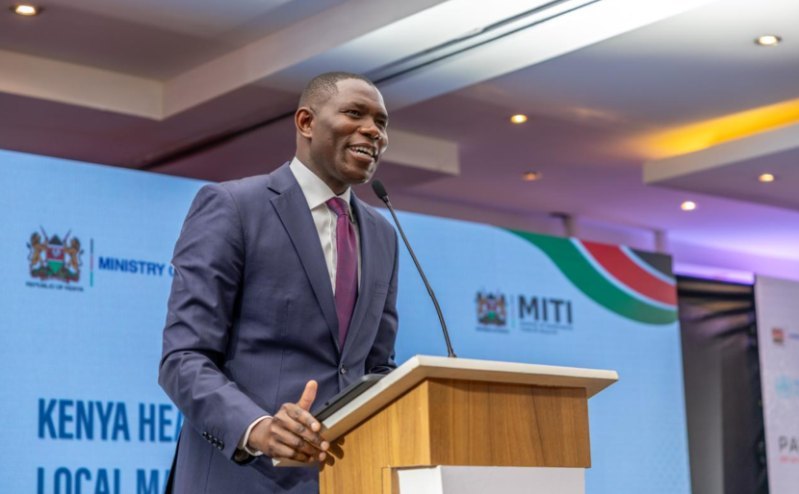 Medical Services PS Ouma Oluga at the launch of the Kenya Health Products and Technologies Local Manufacturing Strategy 2026–2030 in Nairobi.
![[PHOTOS] Raila Odinga Stadium construction enters home stretch](https://cdn.radioafrica.digital/image/2026/06/45f6990c-4882-4cd2-b83c-8fc730dcdce5.jpg)