Over 400 high school leavers, mostly girls, fight for 90 slots to train as morticians.
by The Star
Audio By Vocalize
Young women at the Chiromo Mortuary, which offers a three-month certificate course for new morticians. KMTC has been overwhelmed by applications
A career in the mortuary is definitely not for everyone. It is best suited for non-squeamish Kenyans willing to spend long hours with the dead, those who really want help grieving families.
And there are many of them, as the Kenya Medical Training College (KMTC) recently discovered.
The college has been forced to send regret emails to hundreds of high school leavers — mostly girls — who overwhelmingly applied for the new Diploma in Mortuary Science, set to begin this month. The diploma course takes three years.
It was feared it would become one of those orphan courses only attracting a few applicants. But KMTC chief executive officer Dr Kelly Oluoch said it has instantly become one of the college's most popular courses.
“We received 461 applications but we could only admit 96, who will join two KMTC campuses in Nairobi and Kisumu,” Dr Oluoch told The Star.
The majority of the applicants, 280, were girls; 181 were men. Most of the applicants were young people who completed the Kenya Certificate of Secondary Education last year.
“We could not pick many because they will use specialised equipment for training, which is quite expensive. But we will see how they will perform and then we can scale it up,” Dr Oluoch said.
The three-year course was only announced in January this year. It is the first such diploma in East and Central Africa. Those already with a certificate in the same course from other reputable institutions will join in year two.
Dr Oluoch said only 52 men and 44 women (total of 96) have been selected to study for the diploma.
Young female morticians in Kenya have worked hard to make mortuary work respectable — they are sensitive experts helping their community — through popular TikTok videos.
But while it is not a flashy career, morticians in top Kenyan hospitals earn more than secondary school teachers, who have bachelor's degrees.
For instance, Kenyatta National Hospital pays about Sh100,000 to certificate holders and about Sh35,000 to untrained morticians.
Morticians also say they make more money through tips from grieving families who ask for extra work such as lipstick on their loved ones, or shaving and styling of hair.
The majority are largely trained on the job, with the main entry qualification being “courage” to handle a dead body.
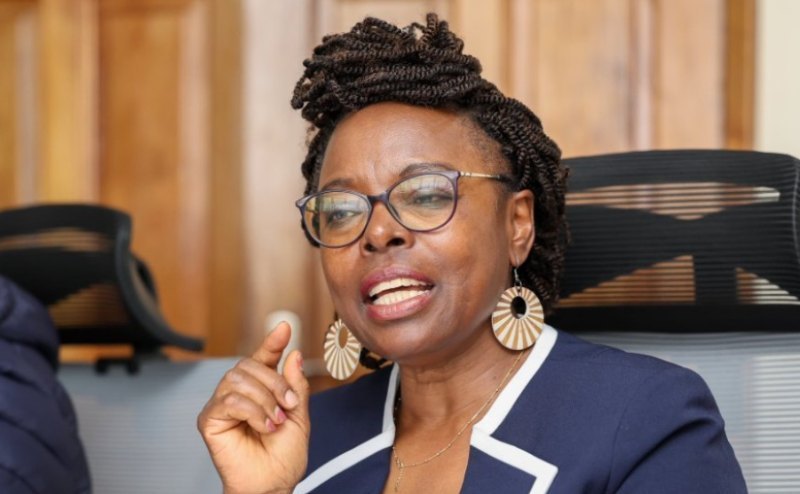
Dr Kelly Oluoch during a recent interview interview at his office
But Dr Oluoch says quacks dominate the field, giving the profession a bad name.
“This is a field being handled by quacks and unqualified people who are just courageous. It should be given honour, it’s a profession like any other," he said.
"With proper training, people can be proud to say, 'I work as a mortician',” he said. “But it’s currently shrouded in mystery, fear and false stories of bodies rising up at night.
"We want to remove this fear and say it’s a science like any other so there’s respectability. We also want proper regulation to avoid quacks.”
The new training will generally prepare KMTC students for careers as morticians or funeral directors.
Dr Oluoch noted in addition to studying the biology of dead bodies and their restoration, mortuary science students will learn grief counselling for bereaved families, and business management and administrative principles to operate funeral homes. They will also study law.
He said some of the students may end up as autopsy assistants who help pathologists determine what killed a person.
“The sample collection for pathology must be done professionally. Without competent people to take samples it’s challenging to know the cause of death,” he said.
Autopsies, when conducted well, result in one of the five different rulings for the manner of death: natural, accident, homicide, suicide, or undetermined.
“This will lead to continuous improvement of medical services to make medical decisions. [Court] cases can be lost because of poor or lack of assistance to pathologists,” Dr Oluoch said.
He said there is a big shortage of professionals trained in proper embalming and reconstruction of bodies.
“It’s a big gap. People who take loved ones to mortuaries complain of poor reconstruction after accidents. So we will train them on proper body reconstruction. Families want to bury properly constructed bodies using the original features of the dead. It could be the deceased was deformed in a fire accident, crash, drowning or battery cases.”
The University of Nairobi has a three-month certificate course for morticians at its Chiromo mortuary.
Kenyatta University also recently said it introduced a diploma course in mortuary science.
(Edited by V. Graham)
This is premium content
Subscribe to Continue Reading
Help us continue bringing you unbiased news, in-depth investigations, and diverse perspectives. Your subscription keeps our mission alive and empowers us to provide high-quality, trustworthy journalism. Join us today to make a difference!