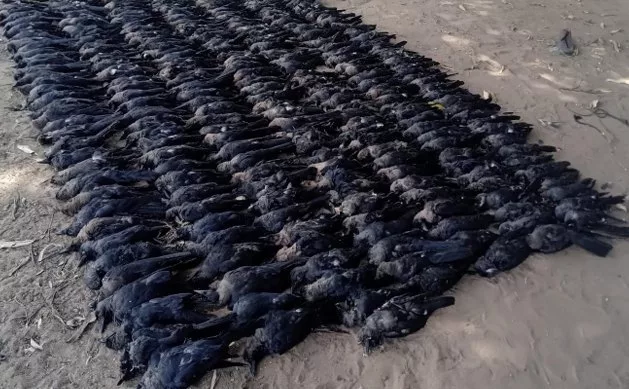
The report further showed that of the pesticides used in Kenya, 44 per cent or almost half of the total volume are already banned in the European Union.
This is due to their unacceptable risks to human health and the environment.
This is according to a report on Highly Hazardous Pesticides in Kenya that was released by the Route to Food Initiative (RTFI), a programme of the Heinrich Böll Foundation.
The report titled, Toxic Business; Highly Hazardous Pesticides in Kenya showed that the pesticide market in Kenya has experienced significant growth. This has led to concerns about the harmful effects of registered pesticides on human health and the environment.
Joachim Paul, director of Heinrich Böll Foundation, said a concerning 63 per cent of pesticide products are categorised as highly hazardous contributing to a staggering 76 per cent of the total pesticide volume used.
He added that accurate usage data is crucial to support the phasing out of Highly Hazardous Pesticides in Kenya. However, official data on national pesticide use is not publicly available.
“Empirical data is crucial to support the phasing out of Highly Hazardous Pesticides in Kenya. However, official data on national pesticide use is not publicly available. This report addresses this gap,” he said during the launch of the report.
The report revealed that pesticide residues exceeding limits have been found in Kenyan food, particularly in tomatoes and kale.
Limited progress in implementing stricter regulations and phasing out toxic pesticides has raised concerns about food safety and environmental impact.
Harun Warui, Lead Programme Coordinator, Food rights and Agroecology at Heinrich Böll Foundation and Coordinator of the Right to Food Initiative said immediate action is necessary to protect human health, the environment, and the right to healthy food in Kenya.
The Route to Food Initiative (RTFI), a programme of the Heinrich Böll Foundation in Kenya, obtained a pesticide dataset from a private market research company.
The analysis focused on Highly Hazardous Pesticides (HHPs) and provided insights into the most commonly used and most toxic pesticides, as well as the crops and companies involved.
This data underscores the need for immediate regulatory attention to prioritize substances that pose risks to the environment and human health.
In 2020, farmers in Kenya used a total of 310 pesticide products containing 151 active ingredients. A total volume of 3,068 tonnes of pesticide products was used to control insects, diseases, and weeds on 26 different crops.
Out of the 310 pesticide products used, 195 products or 63 per cent containing one or two active ingredients that are categorised as HHPs, accounting for 76 per cent of the total volume of pesticides used.
Warui indicated that farmers in Kenya predominantly use HHPs, despite their known detrimental effects on human health and the environment.
Notably, almost half (44 per cent) of the total volume of pesticides used in Kenya are already banned in Europe due to their unacceptable risk to human health and the environment.
The report comes following a recent announcement by Pest Control Products Board (PCPB) dated July 10, 2023, to review the status of some active ingredients on selected pesticides, considered (HHPs) for phased withdrawal by December 2024.
“We acknowledge and applaud PCPB’s move to withdraw seven active ingredients by December 2024. This is a step in right direction in prioritizing Kenya’s food safety. However, more needs to be done. Pesticides such as mancozeb/ metalaxyl-M, paraquat, mesotrione and imidacloprid still pose significant health and environment impacts and need to be withdrawn immediately,” said Warui.
The most toxic and most commonly used active ingredients in Kenya include chlorpyrifos, acetochlor, glyphosate, 2,4-D, mancozeb and chlorothalonil.
Active ingredients, such as bifenthrin, dichlorvos, diazinon, carbaryl, fipronil, thiamethoxam and carbendazim, have already been banned in Europe, highlighting the urgent need for regulatory measures in Kenya.
He emphasised the urgent need for immediate withdrawal due to their detrimental effects on human health and the environment.
“The report emphasises the need for immediate action to protect our health, environment, and the right to healthy food. Route to Food Initiative calls upon the Kenyan government, agrochemical companies, and civil society to work together to address these critical issues,” he said.