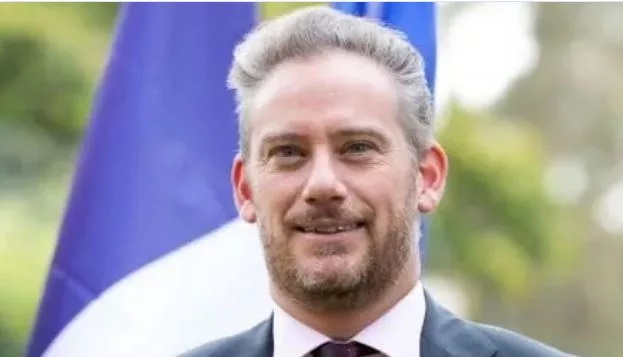
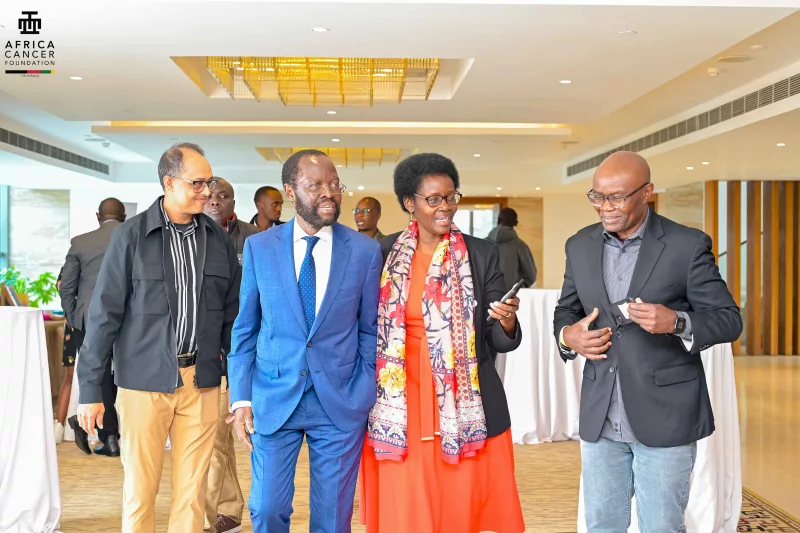
 Bob Madanji, Prof. Peter Anyang’ Nyong’o, ACF Chairperson, and Mrs. Dorothy Nyong’o, Managing Trustee, arrive for the Africa Cancer Foundation 15th anniversary celebration.
Kenya is currently grappling with a severe late-diagnosis crisis. Patients frequently wait for months just to confirm their cancer status.
Too often, the disease is caught when it is already advanced, not due to a lack of courage, but because citizens lack information, healthcare access, and the financial resources required to catch it early when it is most survivable.
This stark reality took centre stage during the Africa Cancer Foundation (ACF) 15th anniversary in Nairobi.
Addressing the gathering under the theme "Own Your Cancer Story," Kisumu Governor and ACF Chairperson Prof Peter Anyang' Nyong'o opened up about his own history as a prostate cancer survivor to highlight how a private crisis sparked a nationwide movement.
"Fifteen years ago, I sat in a doctor's office and heard words that changed the trajectory of my life: prostate cancer. It is a moment that strips you bare, confronting you with your own fragility," Prof. Nyong'o said.
"Cancer is no longer a rare disease or something that happens to other people in other countries. It is here. It is in our markets, our churches, our matatus, our county hospitals, our dance halls, and our nightclubs."
Historically, specialised oncology services were heavily concentrated in Nairobi, leaving rural populations stranded. Nyong'o noted that persistent advocacy by ACF has helped drive the expansion of regional cancer centres in Nakuru, Mombasa, and Garissa, with more coming up across the country.
"Once that door opened, others followed... because we now understand that when we decentralise cancer care, we do not simply reduce distance; we increase survival," Nyong'o reflected.
At the Jaramogi Oginga Odinga Teaching and Referral Hospital (JOOTRH), a new regional cancer centre was conceived with a dedicated bone marrow transplant unit at its core to manage blood disorders and haematological malignancies like leukaemias and lymphomas.
Furthermore, Kisumu County is preparing to pilot the innovative PanTum Detect multi-cancer early detection blood test. Run collaboratively with South Korean partners, this initiative can detect multiple cancers from a single blood draw.
Nyong'o announced that the official launch will take place during Africa’s Smart Cities Conference in Kisumu this August.
Despite these milestones, the oncology crisis is accelerating.
"When we founded this foundation, Kenya was recording about 37,000 new cancer cases a year. Today, that number is closer to 45,000, and in just two years from now, it is projected to rise to nearly 58,000," Nyong'o warned.
These figures reflect global data from the World Health Organization (WHO) and the International Agency for Research on Cancer (IARC), which rank cancer as the third leading cause of high mortality in Kenya, trailing only infectious and cardiovascular diseases.
Recent GLOBOCAN reports outline a devastating breakdown of annual incidence and mortality within the nation, showing that breast cancer accounts for 16.2 per cent of all diagnosed cases annually, followed closely by cervical cancer at 12 per cent, prostate cancer at 10 per cent, oesophageal cancer at 7.1 per cent, and colorectal cancer at 7 per cent.
Dr Gladwell Kiarie, Consultant Medical Oncologist and President of the Kenya Society of Haematology and Oncology, praised ACF for providing free breast, cervical, and prostate screenings to over 36,000 Kenyans across 27 counties. She lauded ACF’s "See and Treat" model, which acts as a vital "one-stop-shop" for cervical precancerous lesions.
"When you tell a woman in Kilifi or Samburu to come back tomorrow or next week to pick her results, and then to come back a week later to start treatment, they never do. They have no finances, and they have no understanding," Dr Kiarie explained.
She emphasised that late-stage diagnostic packages, which require molecular marker tests and complex imaging, cost upwards of Sh110,000 before treatment even begins. "I tell you, that package looks unachievable for the Kenyan patient. So, if 7 per cent of our patients are going to be in that stage where they require this, let us come together and contribute resources to give them a dignified existence."
To secure the foundation’s long-term independence, Nyong'o officially launched a permanent Endowment Fund targeting US$1 million. The anniversary also featured the rollout of ACF's "Clinic on Wheels," a mobile unit funded by the Tiba Foundation that offered free public screenings prior to the main programme. Nyong'o urged the audience to fund the next 15 years:
"Every shilling raised today becomes a screening for someone who has never had one. It becomes hope, delivered on time, to someone who, like I once did, is sitting in a silence too large to hold alone."