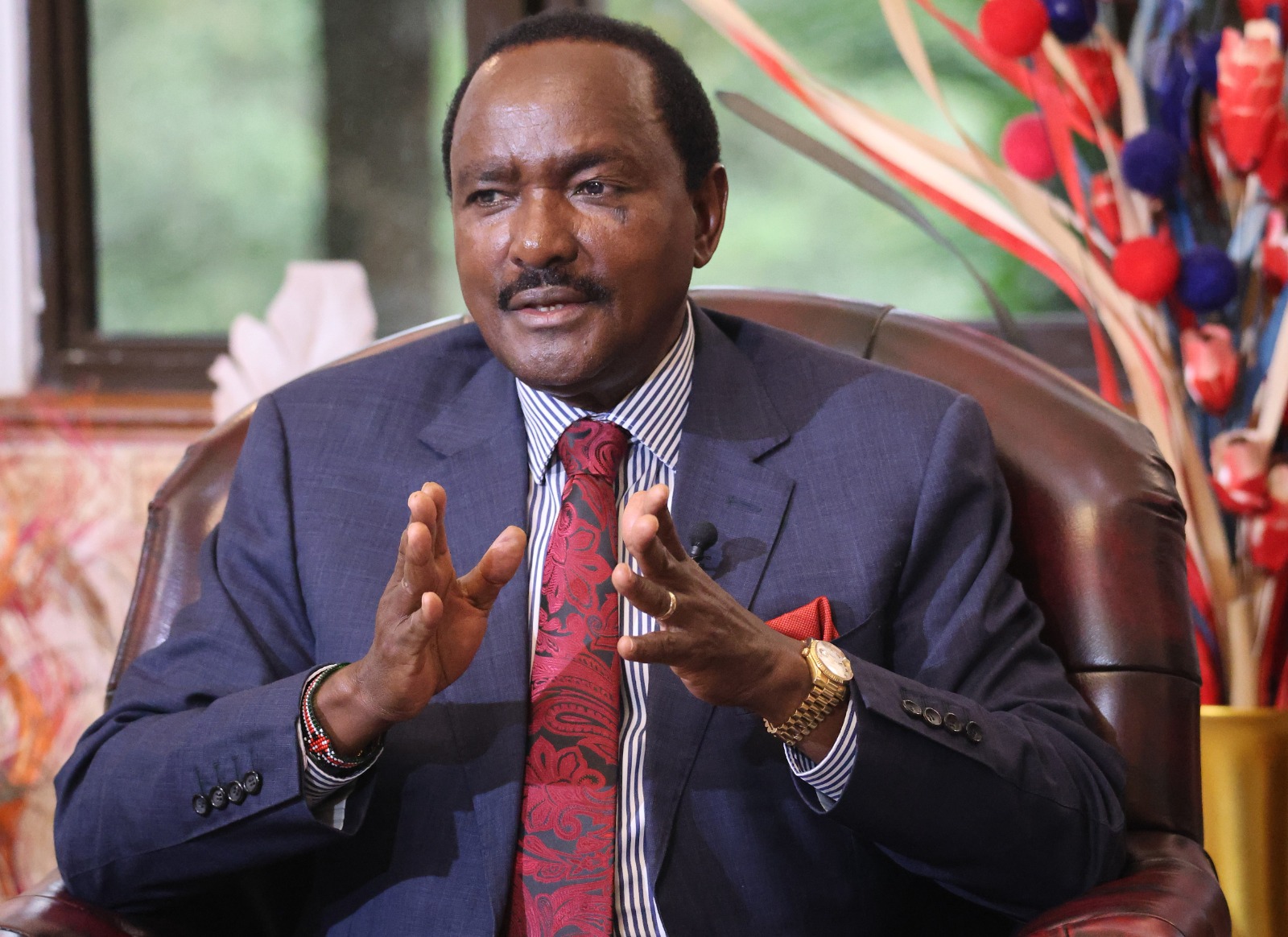
Kalonzo reminded the crowd that Charity Ngilu, during her time as Lands minister, had laid to rest the claims when she clarified his acquisition of the land had been above board as it was bought from some two private owners.
The Wiper leader has always been keen to build and retain the reputation of a national leader spotlessly clean from corruption, which has of course been a major problem in Kenya for decades.
Besides the 200-acre piece of land issue, Kalonzo does not have any other significant scandal linked to him.
At the time Sakaja was the chairman of The National Alliance party, he claimed to have been “the one who unearthed the Yatta land grabbing matter” and even claimed that Ngilu had been having a bad day when she came out to exonerate Kalonzo from the issue.
As politicians were entering the thick of the 2022 campaigns, then Deputy President William Ruto made the same claim against Kalonzo which invoked Kalonzo’s action of seeking exoneration by then Director of Criminal Investigations George Kinoti.
The DCI made it clear that the former vice president legally owns the property as the NYS was also categorical that it had no claim to make for the said land.
It was, therefore, strange a few days ago hearing Kalonzo reference the same matter at the very start of his speech. The issue can be considered to have been laid to rest, but of course the matter has been used against him politically many a time. However, this time round, he was the one stoking the flames.
Why would Kalonzo be focusing on a matter that has given him negative publicity? It is definitely poor strategy. He probably believes that his greatest strength as a potential opposition presidential candidate is creating the realisation of being a ‘Mr. Clean’.
The Wiper chief sounded defeatist really because he appeared to lack credible and strong basis to present to Kenyans as one seeking the opportunity to run their government in their trust. It is impossible to solve problems with the same approach employed in creating them.
Duale reveals in his book For the Record: The Inside Story of the Power of Politics, Lawmaking, and Leadership how in 2013 Uhuru and Ruto were shocked by Kalonzo’s offer to them to endorse him so that after 10 years serving prison terms (if convicted of their cases at the ICC), he would have served 10 years and would then leave power to them.
Assuming that Duale has no reason to conjure up such damning information against Kalonzo, it presents Kalonzo as self-righteous, self-indulged, selfish and lacking empathy.
Another serious downside the former VP is his weak national standing. When Kalonzo fell out with Raila in 2007, his party ODM-Kenya remained predominantly a party for Ukambani. He did not take away from Raila a good chunk of the political class.
Up to now, the Wiper Democratic Movement remains a party of the Kamba mostly, though with few elected and nominated legislators from elsewhere.
Kalonzo’s comment to a reporter a while back where he told him "your first name betrays you", still rings in the minds of the people of central Kenya.
Such comments rest deep in the minds of people in a country that has not yet recovered from ethnic division. It is going to take President Ruto hard work to ensure balanced development in order to keep making dents into the ethnically polarised system.
While Kalonzo’s party secretary general Robert Mbui sharply criticised Ruto’s appointments, which he claimed are dominated by members of the Ruto’s Kalenjin community, the Wiper leader will also have to demonstrate strength by recruiting into his fold political class from most of the four major tribes in Kenya.
Kenyans politics is not a cheap business as Kalonzo must focus on recruiting properly skilled and appropriately resourced. He definitely needs seasoned political advisers who know Kenya inside out and who can map out outreach plans which work.
Besides, he will also require people in government circles who understand details about strategies and political plans of President Ruto. Suffice to say, he will have to steal a big chunk of the political class in Ruto’s camp.
Kalonzo, or whoever will become Azimio’s presidential candidate for 2027, will have to spend his time on things that earn him tangible support translating to votes, but also men on the ground to work in the campaigns and elections.
Kenyans who work in politics, including the political class, don’t usually render their total support until they have an actual deal in place. This where Ruto beats Raila and other hands down as he is willing to spend his money to adequately oil his campaigns and manage men to ensure actual work is done.
Kalonzo is a natural speaker which is a great asset. He is able to move crowds, albeit most of the time the message is not well crafted. He would make a great president, but to win people’s attention and hearts, he must pass the right message which resonates.
While corruption has been a problem in Kenya, it did not stop Ruto in his tracks as, despite heavy criticism in that regard, the people powerfully voted for him, especially in central Kenya where former President Uhuru pitched against him.
Kalonzo is perceived to be a weak leader in some circles, especially among the political class. At some point he was branded a ‘water melon’ because of shifting positions or appearing to sit on the fence as important matters were discussed.
However, the former VP is also a strong leader who stands firm in his position against political adversaries and mostly gets his way, if Wiper itself is to be taken as an example.
Kalonzo has maintained his support of Ukambani despite many attempts to rock the boat. He overcame internal opposition from former Machakos senator Johnson Muthama in 2017, ejected him from the party and even made Muthama's former wife Machakos senator.
Despite tough negotiations last year, the former VP managed to have a deal crafted between Azimio and One Kenya Alliance. He rode on to powerfully overcome other contestants within Azimio in Ukambani to ensure a clean sweep of gubernatorial and senatorial positions and most of the MP slots in the 2022 general election.
Azimio appears to want to copy Ruto and Uhuru’s prayer campaign concept employed in 2013 when the International Criminal Court was pursuing them. It is a great excuse for political momentum building. This is because it creates a stealth subliminal entry of packaged political information into the predominantly Christian population in Kenya.
However, this is an old strategy and many Kenyans are tired of overplayed Christianity, especially following the Shakahola deaths. This concept will definitely come a cropper. Kalonzo and Azimio must become more creative, because, as they say in tennis, it is still ‘advantage Ruto’.