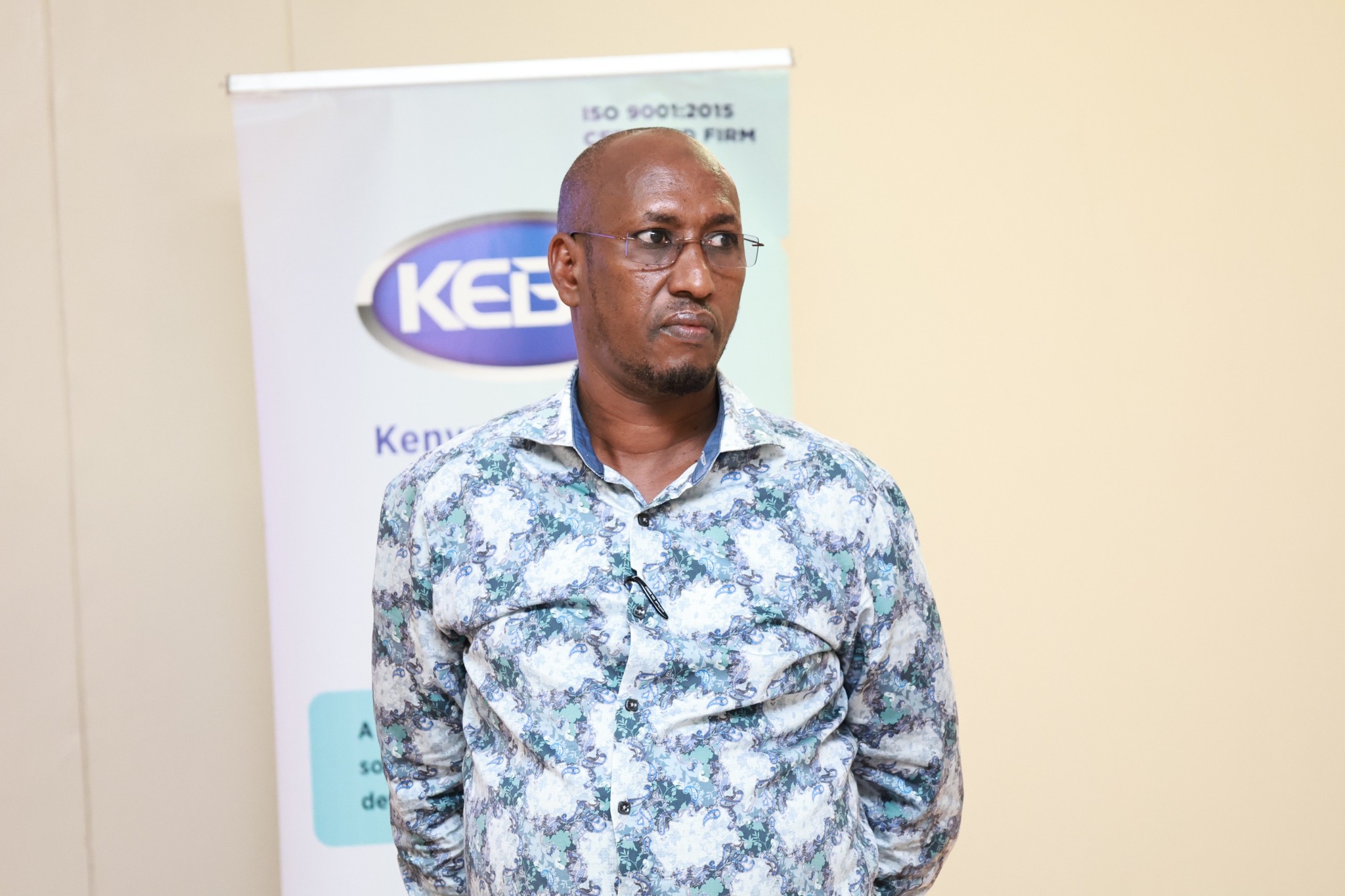
 KEBS North Eastern Regional Chief Manager Dr Abdikarim Abdow
addressing Garissa based journalist during a media engagement. /STEPHEN
ASTARIKO
KEBS North Eastern Regional Chief Manager Dr Abdikarim Abdow
addressing Garissa based journalist during a media engagement. /STEPHEN
ASTARIKOKenyans have been urged to ensure they consume only products bearing certified quality marks as a way of discouraging substandard goods.
The Kenya Bureau of Standards (KEBS) said going for only certified products ensures greater responsibility among residents.
The call came from Kebs regional chief manager for North Eastern region Abdikarim Abdow who cited growing concerns over the influx of substandard goods in the region.
Speaking during a media engagement in Garissa town, Abdow said the region’s proximity to neighbouring countries had made it vulnerable to smuggling of counterfeit and unsafe products, posing serious health risks to consumers.
“People need to be vigilant about the products they consume because some pose a danger to their health. They should liaise with KEBS officials whenever they encounter goods without the standard quality mark,” Abdow said.
He singled
out sugar as one of the products that has continuously been smuggled in the
country and which, when sampled, always fail to meet the required parameter
standards.
“Sugar is
one of the products that continues to be smuggled in the country from our neighbouring
country by unscrupulous business people. When we do random sampling of the sugar, they always never meet the
required standards. This is extremely worrying because people continue to
consume the product oblivious of the dangers that come with it,” he
said.
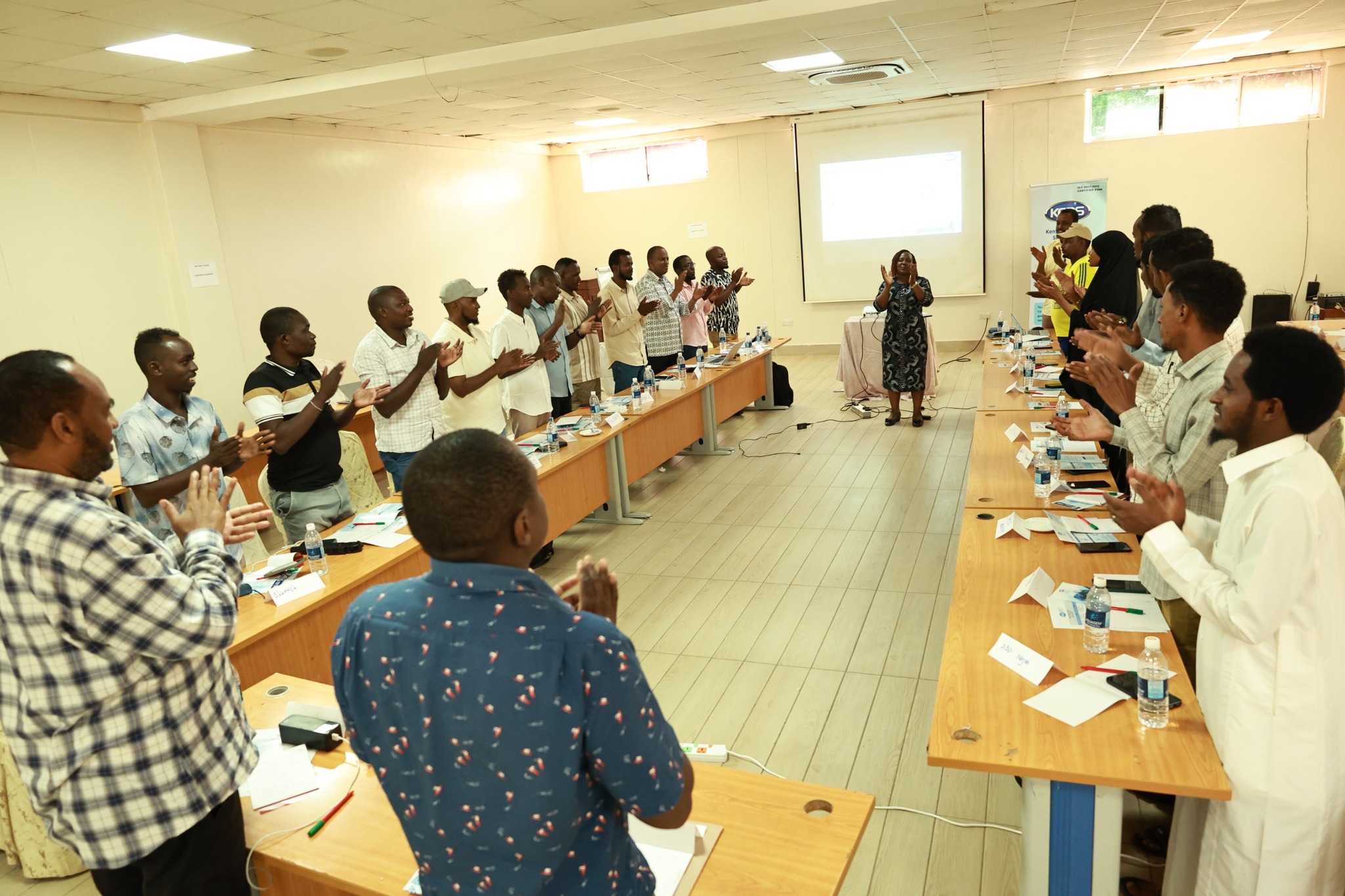 Garissa based journalists during the media engagement that
was organized by Kebs. /STEPHEN ASTARIKO
Garissa based journalists during the media engagement that
was organized by Kebs. /STEPHEN ASTARIKOAbdow called for closer collaboration between the media and Kebs in promoting consumer safety and exposing traders dealing in fake or uncertified products.
He said
the media plays a critical role in informing and educating the public on
important issues affecting everyday life.
By equipping journalists with accurate information on standards, quality
assurance, and consumer protection, the public receives reliable and timely
information.
“I want to
call on journalists across this region to remain proactive in informing the
public. They have a great role to play
in creating awareness. Many people, especially the rural folks, were still ignorant
of the dangers that come with consuming substandard goods," Abdow said.
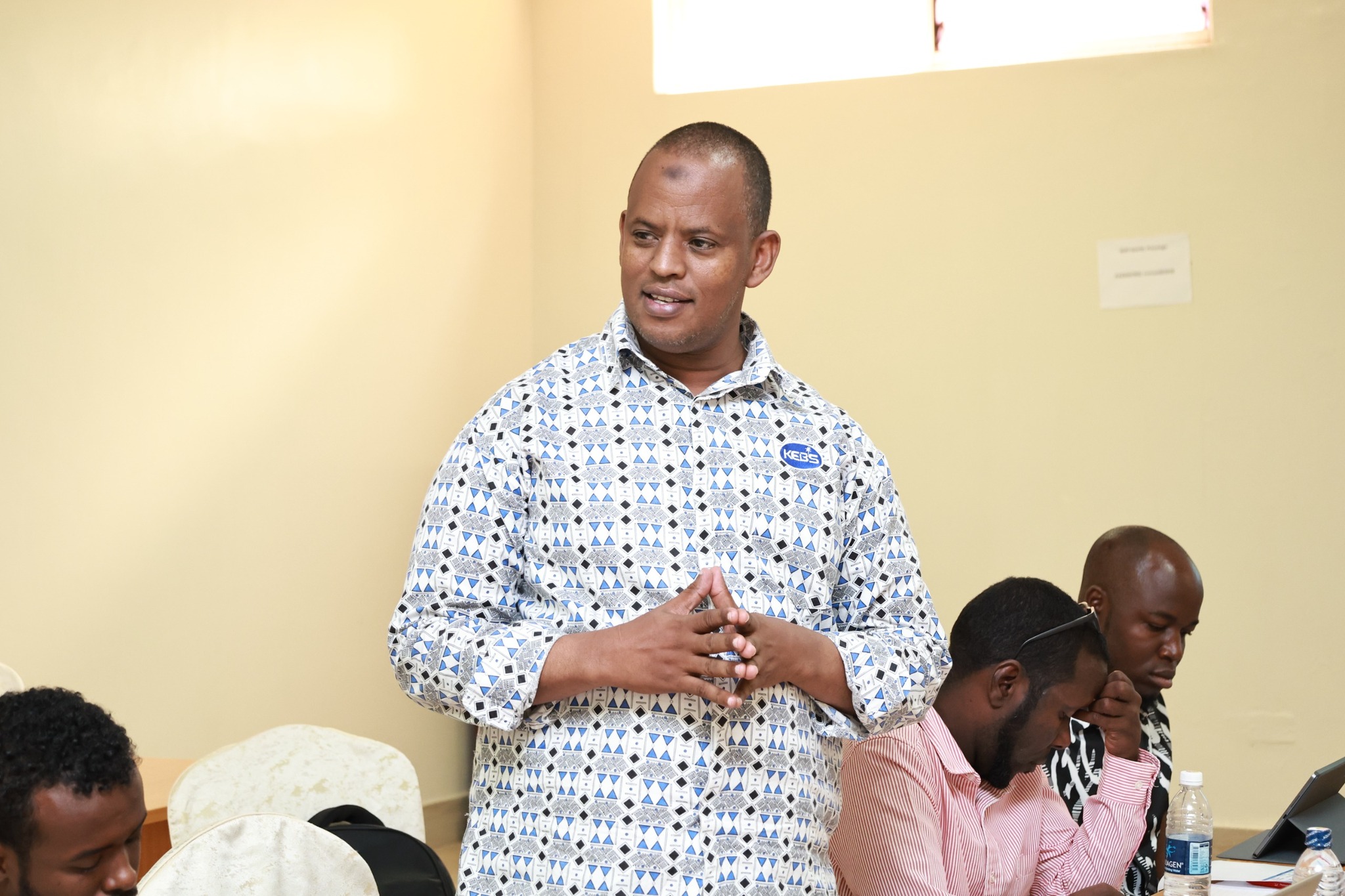 Yussuf Dayib, a Kebs officials speaking to journalists
during the engagement at a Garissa hotel. /STEPHEN ASTARIKO
Yussuf Dayib, a Kebs officials speaking to journalists
during the engagement at a Garissa hotel. /STEPHEN ASTARIKODuring the session, journalists were equipped with information on standards, quality assurance and consumer protection as part of efforts to strengthen public awareness and fight the spread of counterfeit goods.
Kebs also
encouraged members of the public to verify the authenticity of products through
its SMS verification platform. Consumers can confirm whether a product is
certified by sending the product permit number via SMS in the format “SM#Permit
Number” to 20023.
The agency further warned the public against fraudsters masquerading as Kebs officials to extort traders and residents.
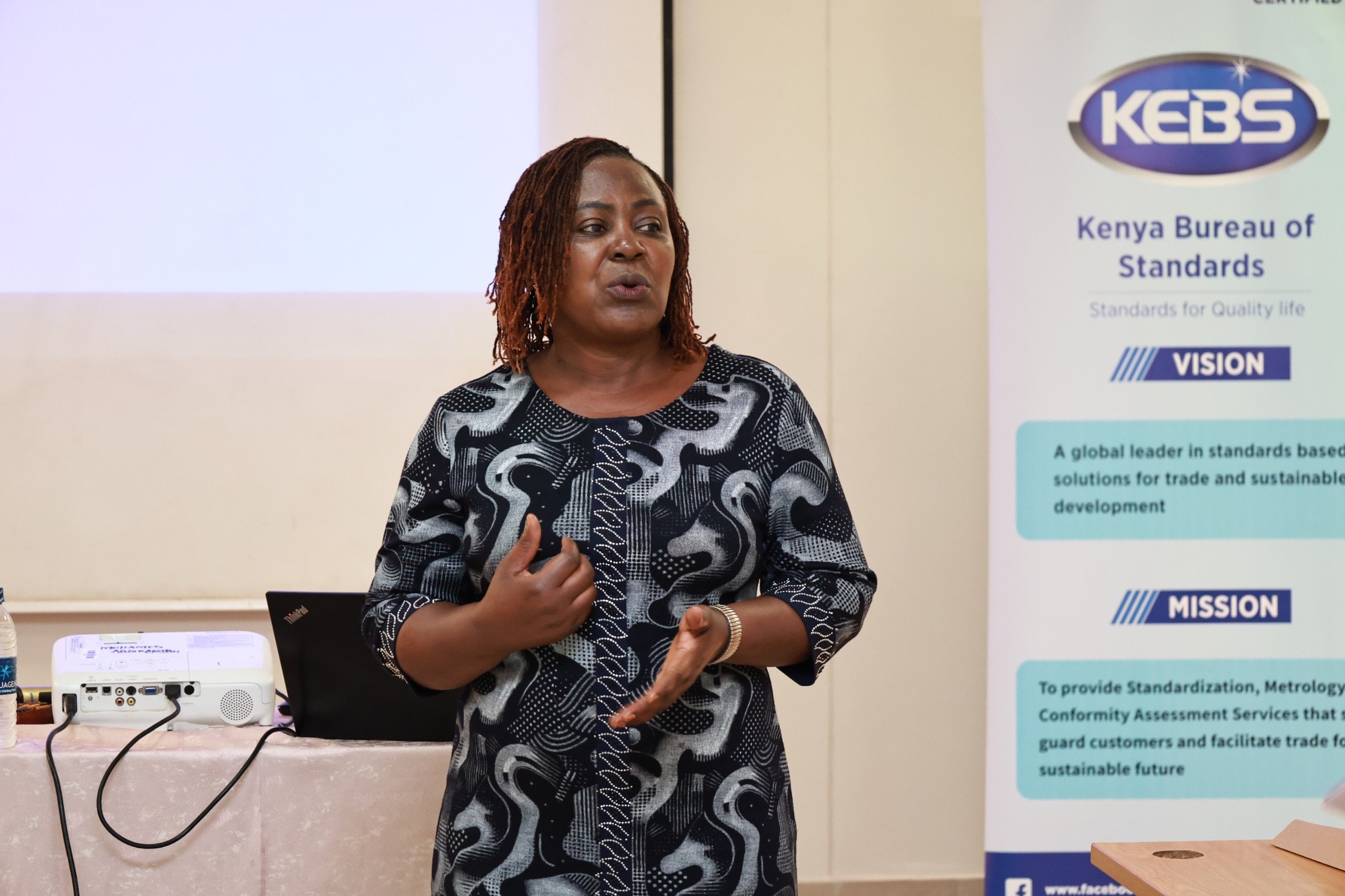 Verah Akomo, a Kebs official speaking during the media engagement
with Garissa-based journalists./STEPHEN ASTARIKO
Verah Akomo, a Kebs official speaking during the media engagement
with Garissa-based journalists./STEPHEN ASTARIKOIn mid last year, during a stakeholder engagement meeting in Garissa by the Border Management Secretariat and the Ministry of Agriculture, it was revealed that illegal import of sugar poses both security and economic challenges.
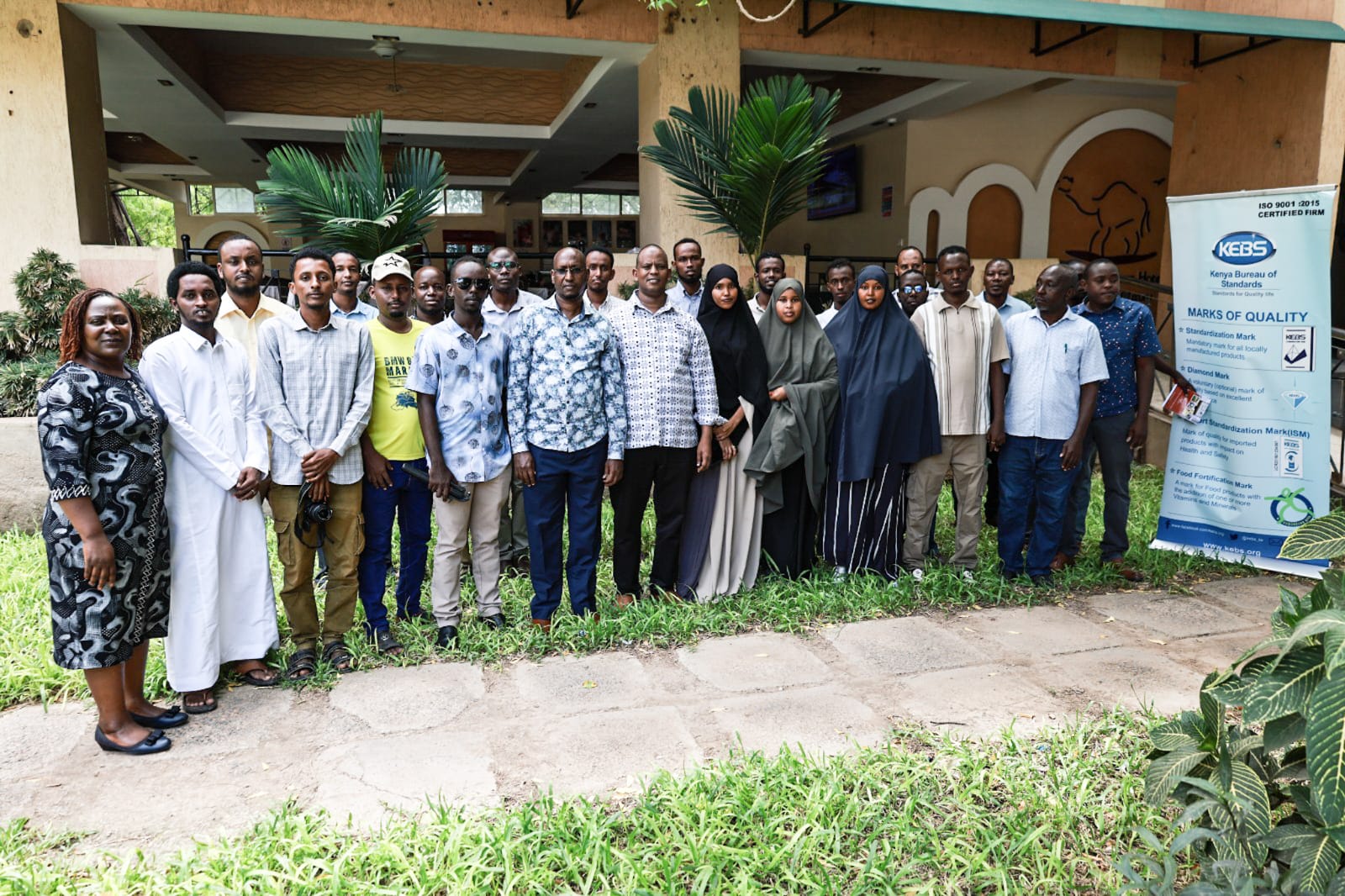 Garissa-based journalists pose for a group photo with
officials from the Kebs after media engagement. /STEPHEN ASTARIKO
Garissa-based journalists pose for a group photo with
officials from the Kebs after media engagement. /STEPHEN ASTARIKO
Up to 99 per cent of the sugar consumed in Northeastern is smuggled through Somalia.
Rashid Khator, secretary of administration in the Ministry of Agriculture said the government was investing to increase the production of local farmers yet smugglers were posing a challenge to small-scale farmers who were relying on local sugar firms to sell their produce.
Kennedy Nyaiyo, secretary of the Border Management Secretariat said sugar and other illegal products smuggled have been a big challenge to the Kenyan firms and efforts are being made to address the challenge.
Some of the cut lines used to smuggle illegal goods in Garissa are Amuma, Wellmarer, Hamey, Liboi, Sariraha, and Sinai.
Apart from sugar, other commodities identified for smuggling are rice, powdered milk, spaghetti, cooking oil, cosmetics, cigarettes, and vehicle spare parts.