All industries within the Nairobi Rivers Basin have been urged to adopt cleaner production technologies to protect the rivers and safeguard public health.
A commissioner with the Nairobi Rivers Commission, Loice Kipkiror, said the rivers are more than 50 per cent sewage.
"The stench from the rivers is overwhelming. The water in our rivers is dark," she said.
Kipkiror said the adoption of cleaner production technologies would help ensure the rivers are restored.
"We still have industries, residential areas and abattoirs along the Nairobi River corridors that have not adopted cleaner production technologies," she said.
Kipkiror said the adoption of cleaner production technologies would help ensure that food reaching Kenyan tables is safe for human consumption.
She warned that food finding its way onto people's tables was contaminated with heavy metals.
Kipkiror said the commission has embarked on reclaiming all riparian areas as part of the government's efforts to restore and regenerate the river basin.
"Those who have encroached on the riparian areas must leave so that we can reclaim our rivers. The rivers must flow," she said.
Kipkiror also urged Nairobi residents to segregate waste at source, adding the move would reduce pollution entering the rivers.
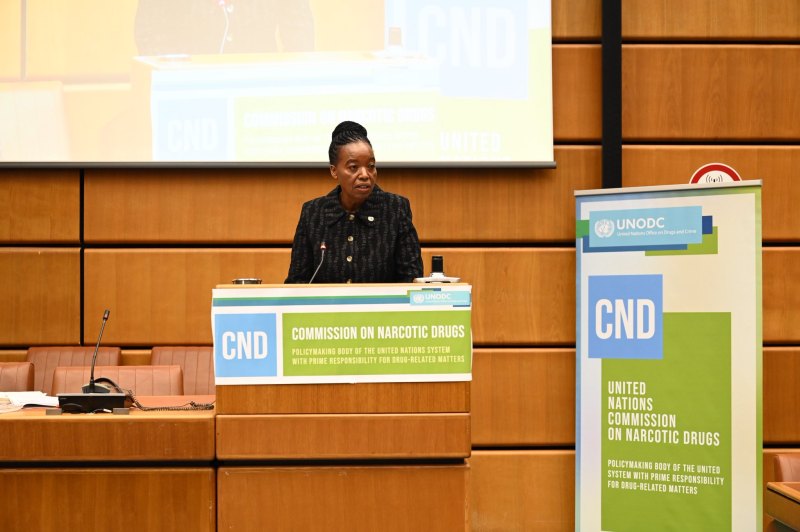
She was among the speakers at the Resource Efficient and Cleaner Production Awards 2026 at Ole Sereni Hotel in Nairobi.
The awards celebrate industries and institutions that have demonstrated leadership in reducing pollution, improving operational efficiency, conserving natural resources and strengthening competitiveness.
They also recognise their contribution to the restoration of the Nairobi Rivers Basin.
The awards, hosted by the Kenya National Cleaner Production Centre (KNCPC), recognise a simple but powerful principle: environmental stewardship and business performance can go hand in hand.
The principle demonstrates that every cubic metre of water saved, every kilowatt-hour of energy conserved, every tonne of waste avoided and every emission reduced strengthens the transition of Kenyan industry towards a resilient, circular and green economy.
The awards recognise excellence in resource efficiency and cleaner production.
They celebrate industries that have excelled in a programme being implemented within the Nairobi Rivers Basin.
The award categories include water use management, waste management, energy management, solid waste management, greenhouse gas emissions management, environmental compliance, gender equity and social inclusion, industrial symbiosis and overall resource efficiency and cleaner production excellence.
Certificates of recognition were awarded to all participating industries.
It is estimated there are 4,000 facilities along the Nairobi Rivers Basin.
Under the awards programme, 225 enterprises were mapped, while 155 participants were trained.
Nema director of environmental compliance David Ong'are said partnership and collaboration are key to addressing environmental challenges.
Ong'are said the approach would ensure that available resources are utilised in a manner that does not compromise sustainable development.
The awards also showcased how cleaner production supports pollution prevention, cost reduction, productivity and competitiveness.
They further promoted the scaling up of resource efficiency, cleaner technologies, wastewater management, industrial symbiosis and circular manufacturing across Kenya.
The awards brought together industry leaders, government institutions, regulators, private sector associations, development partners and technical partners to celebrate progress in resource efficiency, cleaner production and circular manufacturing in the Nairobi Rivers Basin.
The Nairobi Rivers Commission has already made significant progress in the clean-up exercise.
Parks, roads, pedestrian pavements and outdoor sports facilities, alongside a 72-kilometre trunk sewer system, are 55 per cent complete.
The Kariobangi Waste Water Treatment Plant, with a capacity of 60,000 cubic metres, is 25 per cent complete, while catchment restoration and protection works stand at 40 per cent.
Flood control and stormwater management works are 45 per cent complete, while rehabilitation of the Dandora dumpsite has reached 55 per cent.
Transport infrastructure, including footpaths and cycle lanes, is 28 per cent complete, while development of urban landscaped recreation facilities stands at 45 per cent.
Support infrastructure, including service buildings, is 25 per cent complete, while social and affordable housing and market development along the river corridor are 35 per cent complete.
The government is set to provide alternative land to mechanics currently operating in the Grogan area to allow redevelopment of the river corridor to proceed without disruption.
The Nairobi Rivers regeneration programme is being implemented under a broader government-led concept developed by a special task force working with China Energy Engineering Corporation on design and planning.
The first phase of the catalytic project was approved on 18 September 2024 following consultations with ministries, departments and agencies.
The programme, led by the Ministry of Defence, covers 27.2 kilometres of the Nairobi Rivers Basin and focuses on restoring the river ecosystem while addressing urban challenges such as pollution and flooding.
Key interventions include the construction of more than 54 kilometres of new trunk sewer lines stretching from Naivasha Road to Dandora Falls, aimed at reducing the flow of untreated waste into the river system.
The plan also includes dredging, widening and rehabilitation of the Nairobi, Ngong and Mathare rivers.
Urban regeneration components include the construction of affordable housing units, the development of modern markets, and the creation of pedestrian walkways, cycle lanes and landscaped riverbanks designed to enhance recreation and environmental quality.
![[PHOTOS] The new Ngong –Naivasha Road viaduct](https://cdn.radioafrica.digital/image/2026/06/64d4f771-4432-4aee-ba3c-2f304c4436ec.jpg)