Nairobi City County has intensified its waste management operations, increasing daily garbage collection from about 1,000 tonnes to more than 4,000 tonnes as part of an ambitious citywide clean-up campaign aimed at restoring cleanliness across the capital.
The county, working in partnership with private sector players, including Zoomlion, has expanded its fleet to more than 100 garbage collection trucks operating day and night.
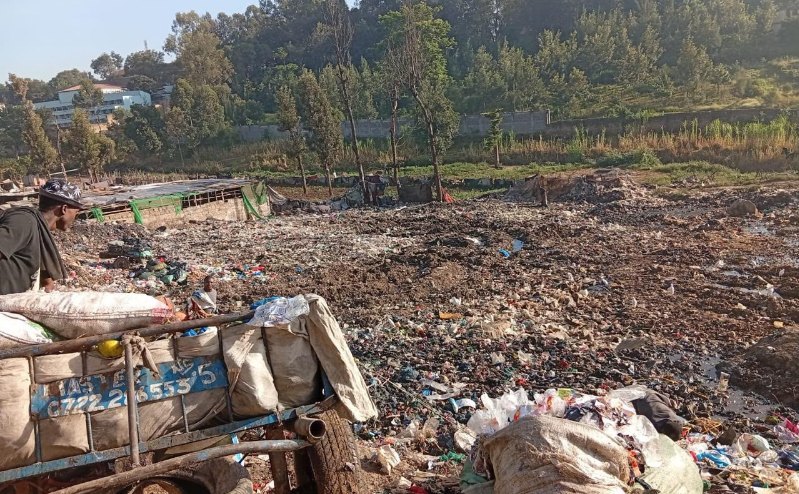
The enhanced capacity has enabled the clearance of dozens of illegal dumping sites and long-standing waste accumulation points across Nairobi’s 17 sub-counties.
Governor Johnson Sakaja said Nairobi’s status as Kenya’s capital and economic hub, with a daytime population approaching seven million people, requires a robust and coordinated waste collection system.
“Since the commencement of the citywide clean-up campaign in April 2026, we have successfully cleared more than 40 major waste collection points and illegal dumping sites across various sub-counties,” Sakaja said.
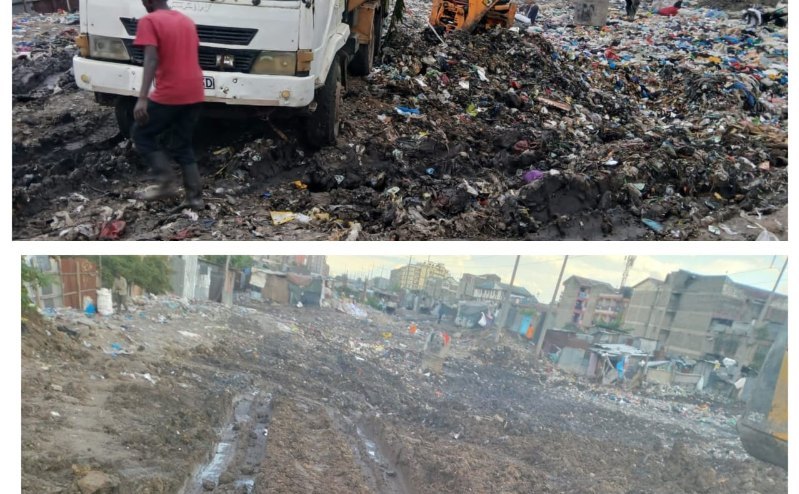
Embakasi West, Tena.
Powerline Collection Point.
Before and After./HANDOUT
“During peak operations, we can collect up to 6,000 tonnes of waste daily compared to the 1,000 tonnes previously collected. This coordinated waste collection programme will continue as we work towards a cleaner and healthier city,” she said.
The clean-up campaign has transformed several areas previously overwhelmed by garbage.
In Embakasi West Sub-County, major waste accumulation sites were cleared at G7 Mowlem, Powerline in Umoja and KCC Mowlem.
Kasarani recorded some of the largest clean-up operations, with waste removed from St Francis Collection Point, Gituamba Collection Point, Mawe Mbili Collection Point and Kamulu 26 Collection Point. A total of 679 truckloads of waste were removed from the four sites.
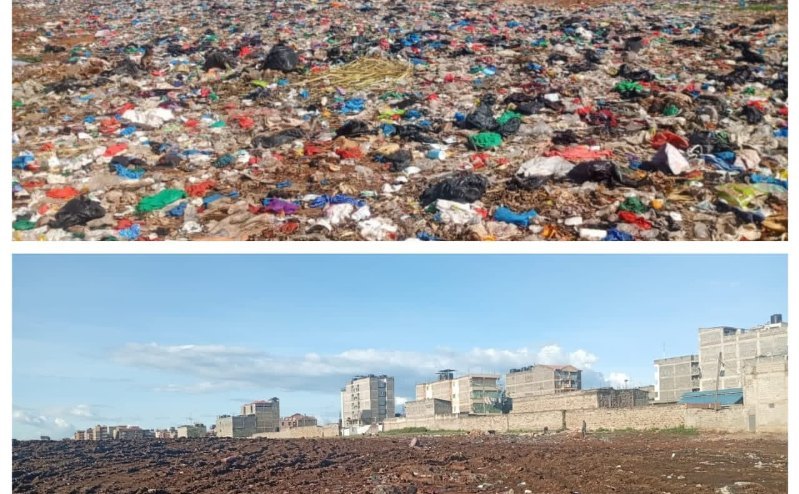
Kasarani Gituamba Collection Point.
Before and After./HANDOUT
In Dagoretti North, the waste collection site along Gitanga Road has been cleared several times and is currently under continuous maintenance.
Kibra also benefited from the exercise, with six major collection points, including Othaya Market, Kianda 42, Toi Market and Kamukunji Grounds, now receiving routine waste collection services.
Other major clean-up operations were undertaken along Moyale Road and Kinyango Slums in Kamukunji Sub-County, as well as Mathare North Area 3, Mathare Area 1, Ngomongo and Korogocho Market in Ruaraka.
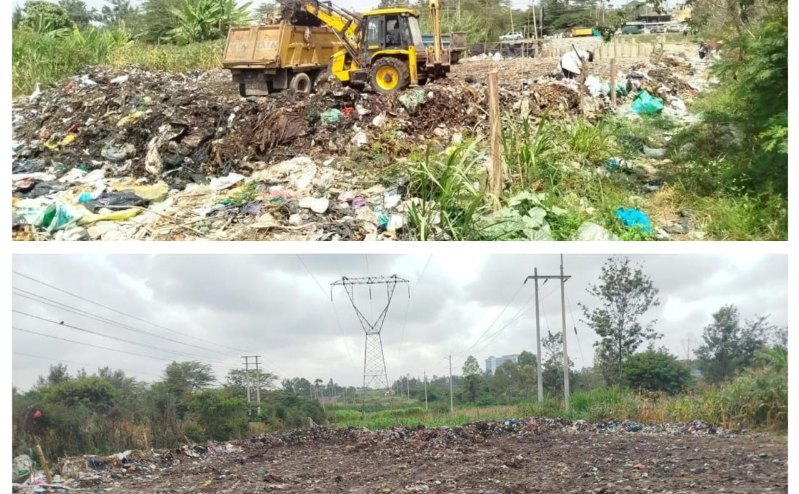
Kasarani, Mawe Mbili Collection Point Before and After./HANDOUT
In Embakasi East, large-scale waste clearance operations were undertaken in Kianda and Mihango, with approximately 1,170 truckloads of waste removed.
Embakasi South also underwent extensive clean-up operations at Kware Bridge, Embakasi Girls Collection Point and Zone 48 in Mukuru.
The county continues to monitor and regularly service major markets, including Muthurwa and Wakulima markets, to maintain sanitary conditions for traders and residents.
The project complements recent reforms, including the recruitment of 4,000 Green Army workers on permanent and pensionable terms.
As part of the integrated solid waste management system, the county also plans to establish a material recovery processing facility and four-tonne waste transfer infrastructure to promote sustainable waste management through circular economy approaches.
The county government said it remains committed to delivering a clean, healthy and environmentally sustainable city while modernising waste management systems, improving collection efficiency, eliminating illegal dumping and strengthening environmental conservation.
Residents have been urged to support the initiative by using designated waste collection points, avoiding illegal dumping, segregating waste at source where possible and working with the county government to keep neighbourhoods clean.
The county said the intensified clean-up programme will continue across all 17 sub-counties, alongside sustained maintenance operations to ensure cleared sites do not revert to their previous state.
Service providers across the waste management value chain are also expected to benefit from a more coordinated system of collection, transportation and disposal as Nairobi moves towards a more efficient and sustainable waste management model.
![[PHOTOS] Raila Odinga Stadium construction enters home stretch](https://cdn.radioafrica.digital/image/2026/06/45f6990c-4882-4cd2-b83c-8fc730dcdce5.jpg)