MCAs open public hearings on Ruto–Sakaja Sh80bn deal
Supporters say the pact will fast-track projects and services and inject much-needed funding into the city.
by JULIUS OTIENO
Audio By Vocalize
The agreement was signed by Prime Cabinet Secretary Musalia Mudavadi on behalf of the National Government and Governor Sakaja on behalf of the County Government at State House
Nairobi MCAs have begun public hearings on the Sh80 billion
cooperation agreement between the national government and City Hall.
The move comes as sharp divisions emerge over its legality, timing,
and implications for devolution.
The deal, signed last week by President William Ruto and
Governor Johnson Sakaja, seeks to unlock joint implementation of major
infrastructure projects in the capital.
The agreement covers water, sewerage, roads, housing,
transport, street lighting, and solid waste management.
Supporters say the pact will fast-track projects and
services and inject much-needed funding into the city. Critics warn it risks
undermining county autonomy and sidestepping constitutional requirements on
public participation.
At the heart of the dispute is whether public participation
should have been conducted before or after the signing of the agreement. Also
in question is which institution will exercise oversight over the billions of
shillings to be spent on devolved functions.
On Friday, the assembly approved the formation of a
21-member ad hoc committee to scrutinise the 13-page document and conduct
public hearings across the city within 11 days.
The committee, chaired by Speaker Ken Ng’ondi, is expected
to clarify the assembly’s oversight role, interrogate the legal framework of
the agreement, and assess its implications for the 2026–27 budget-making
process.
Under the pact, MCAs are required to conduct public
participation within 14 days of signing before the deal comes into force.
The document also states that the assembly will retain
oversight over the funds, even as implementation is coordinated through
intergovernmental structures.
An intergovernmental committee, chaired by Prime Cabinet
Secretary Musalia Mudavadi and deputised by Sakaja, will oversee the rollout of
the programme.
A separate implementation committee, chaired by the
governor, will bring together principal secretaries, county executives and
chief officers.
Majority leader Peter Imwatok urged MCAs to back the
process, arguing that the agreement would accelerate service delivery.
“This is the best thing for our city to fast-track
development. I witnessed the signing and I urge members to understand it so we
can work together,” he said.
Minority leader Anthony Kiragu echoed the sentiment, saying
the additional Sh80 billion could transform Nairobi if properly utilised.
However, the hearings have opened amid mounting legal and
political questions.
Nairobi Senator Edwin Sifuna has criticised the process,
arguing that the agreement acknowledges that no public participation was
conducted before signing.
“The so-called cooperation agreement admits there was no
public participation — a violation of the constitution too egregious to
ignore,” he said.
Constitutional lawyers and legislators have weighed in.
Advocate Paul Aol told the Star that while public
participation is a constitutional requirement, cooperation between the two
levels of government is already provided for and may not necessarily require
direct engagement with the public at the initial stage.
He cited the precedent of the Nairobi Metropolitan Services
(NMS), where participation was largely limited to elected representatives.
“The baseline is public interest. Nairobians need services.
If the national government is providing resources to deliver those services, it
would be difficult for a court to fault the arrangement,” he said.
Mathare MP Antony Oluoch and Ruaraka MP TJ Kajwang’, both
constitutional lawyers, argued that the constitution must be read holistically.
They pointed to provisions requiring cooperation between
national and county governments, saying the framework used by Ruto and Sakaja
is already anchored in law.
“This is not a handover of functions; it is cooperation. The
constitution uses mandatory language that the two levels of government shall
cooperate,” Oluoch said.
Kajwang’ added that public participation should not be
treated as a ritualistic box-ticking exercise but assessed based on reasonableness
and context.
“To the extent that Nairobi’s leadership has been involved
and consultations undertaken within relevant sectors, the threshold can be said
to have been met,” he said.
Lawyer Willis Otieno said the agreement raises fundamental constitutional
questions about the steady transfer of county functions to the national
government.
“If devolution responsibilities are being recentralised,
would it not be more honest to formally restructure the system rather than
maintain a symbolic county authority?” he posed.
However, both Ruto and Sakaja have dismissed claims that
functions have been transferred, insisting that the two levels are only
cooperating.
Governor Sakaja said Nairobi’s current financing model is
inadequate for a city of more than four million people and that the partnership
will unlock funding and speed up stalled projects.
A significant portion of the investment will go to water and
sewerage.
The national government plans to spend Sh2.1 billion to
upgrade the Ng’ethu treatment plant, which currently loses about 50,000 cubic
metres of water daily, and Sh3 billion on the Gigiri–Shauri Moyo evacuation
corridor to stabilise supply.
Additional funding is being mobilised for the Maragua IV and
Northern Collector II projects to secure long-term water availability for
Nairobi and neighbouring counties.
Under the Nairobi River Regeneration Programme, Sh9 billion
has been earmarked for two 27-kilometre trunk sewer lines along the river
corridor, alongside a new Sh6 billion treatment plant with a capacity of 60,000
cubic metres per day, expected to serve the city for at least 40 years.
Another Sh3 billion will go towards last-mile sewer
connections, with Sh15 billion set aside for long-term expansion.
On roads and bridges, Sh8.7 billion has been allocated,
including Sh2 billion to complete Phase One Kenya Urban Roads Authority
projects and Sh1.7 billion for a 59-kilometre road package starting in April
2026.
A further Sh5 billion is planned for Phase Three later in
the financial year.
The programme also includes a Sh5 billion ward-based
mobility and safety initiative, supplemented by Sh3.7 billion from the county
and Sh1 billion for drainage works to address perennial flooding.
Street lighting will be expanded through completion of 10,000
existing units and installation of 40,000 new ones, many powered by solar
energy to cut electricity costs and improve security.
As public hearings begin, MCAs face the delicate task of
balancing urgent service delivery needs with constitutional safeguards on
devolution, public participation and oversight.
The outcome will determine not only whether the agreement
proceeds but also set a precedent for how intergovernmental cooperation on
devolved functions is structured in future.
INSTANT ANALYSIS
Nairobi MCAs have launched public hearings on the Sh80
billion cooperation deal between President William Ruto and Governor Johnson
Sakaja amid legal and political disputes over public participation and
oversight. Supporters argue the pact will fast-track infrastructure projects
and unlock funding, while critics warn it could weaken devolution and blur
accountability, recalling the Nairobi Metropolitan Services precedent. The
process tests constitutional thresholds on intergovernmental cooperation,
public involvement and Assembly oversight. The MCAs’ findings are likely to
shape future national–county partnerships and determine whether promised
service gains outweigh governance risks.


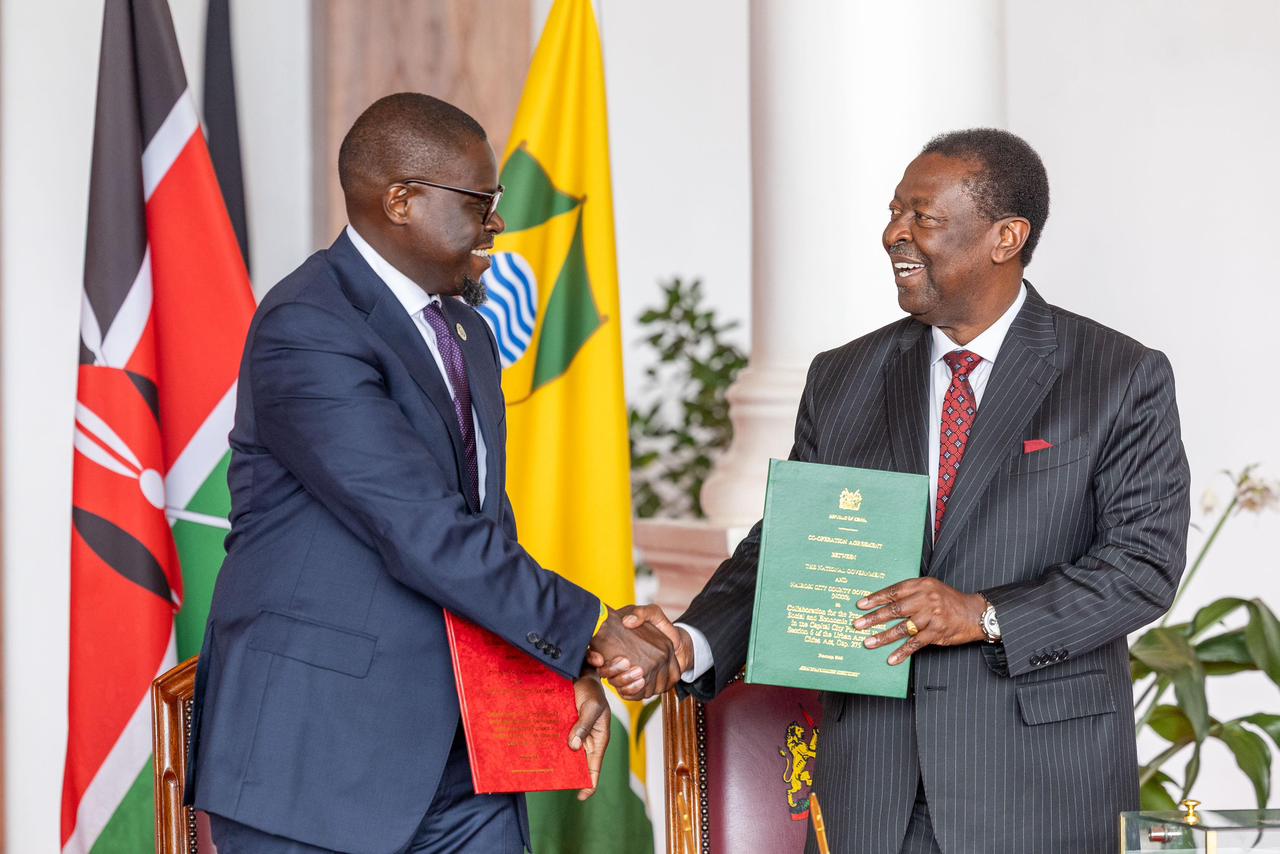 The agreement was signed by Prime Cabinet Secretary Musalia Mudavadi on behalf of the National Government and Governor Sakaja on behalf of the County Government at State House