NACADA and health experts in Garissa have raised alarm over abuse of
skin-lightening creams and chemicals.
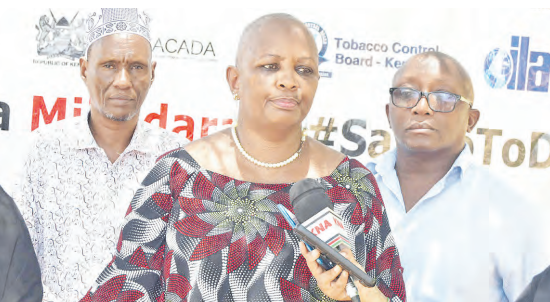
Non-communicable disease coordinator Nurta Mohamed said the
drugs and chemicals are causing
serious side effects on abusers and
should be controlled before they get
out of hand.
She spoke during a Drug and Substance Abuse Sensitisation campaign
organised by the Ministry of Health.
Mohamed said girls as young as
12 are already applying the creams
and are using the pills.
“Our women are currently abusing
the skin-lightening creams. I don’t
know where they got this notion of
trying to change their skin colour. We
need to be contented with how God
created us,” she said.
National Authority for the Campaign Against Alcohol and Drug
Abuse vice chairperson Ann Mathu
said the board has noted the abuse
with a lot of concern.
“We have heard it from health professionals that some of these drugs
are causing infertility in women and
also affecting the kidneys. A lot of
CSs are now happening in hospitals
and women are having complications
because of change of the body chemistry,” she said.
In Garissa, the product is known as
‘qasqas’ and it is a mixture of many
creams.
“We also have another drug called
dexamethasone; the local name here is isqarhis. These young girls are taking these drugs without knowing the
serious side effects,” Mohamed said.
She said some of the drugs contain
mercury, hydroquinones and lead,
which can cause kidney problems.
“Currently, there are so many
young girls on kidney dialysis, which
is directly linked to the chemicals
and drugs they use. Some also cause
hormonal imbalance and child birth
problems,” Mohamed said.
She urged community leaders to
conduct public awareness and sensitisation campaigns in schools and
the community on the dangers of the
drugs.
Mathu blamed the porous borders
for the influx of the drugs and urged
the board to collaborate with the
police to arrest the situation.
Hassan Abdi, a religious leader
who admitted that the skin lightening problem is slowly spreading, said
partners must work together to arrest
the situation.
“As religious leaders we thought
bhang, miraa and other drugs were
the main vices in our society but now
we have a new problem to deal with
and is proving to be very difficult,”
he said.
“We will pass the message in
mosques, public meetings and through radio talk shows because
we cannot sit and watch our women suffer.”