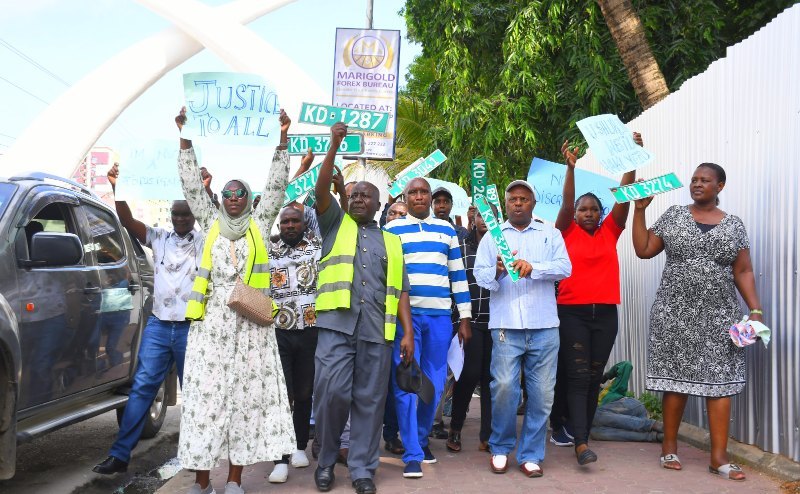
Car dealers in Mombasa have raised concerns over recent changes introduced by the National Transport and Safety Authority (NTSA).
They say the new measures governing the use of Dealer Registration (KD) number plates have disrupted operations and affected the motor vehicle trade.
Under the umbrella of the Independent Car Dealers Association, the traders are now seeking urgent consultations with NTSA to address challenges arising from the enforcement of Section 24 of the Traffic Act and adjustments made to the authority’s digital system.
NTSA began enforcing the provisions in April as part of efforts to curb the misuse of KD number plates.
The law regulates the use of a dealer’s general licence and limits the circumstances under which KD plates can be used.
The regulations prohibit the use of dealer plates for carrying passengers or goods for commercial purposes and restrict their use to activities such as vehicle inspections, testing, demonstrations, exportation to East African countries, and the transfer of vehicles between dealers, manufacturers and purchasers.
On Monday, dealers staged a peaceful demonstration on Moi Avenue in Mombasa, saying the implementation of the regulations and changes to NTSA’s system have created bottlenecks they say are affecting businesses in a sector that contributes significantly to government revenue and youth employment.
Independent Car Dealers Association chairman Mathew Katili questioned how the government intends to achieve its projected Sh4.82 trillion revenue target in the 2026-27 financial year while introducing measures that, according to dealers, hinder business growth and investment.
Katili said KD number plates are a critical tool for vehicle dealers, enabling the movement of imported vehicles from the Port of Mombasa, Container Freight Stations (CFS) and storage yards to showrooms and customers.
“The requirement for vehicles to be fully registered before they can leave CFS facilities has increased operational costs and slowed down delivery timelines, making it difficult for businesses to operate efficiently,” he said.
While supporting the use of customs entry numbers in generating movement registers, Katili argued that the process should not be tied exclusively to specific importers.
He said many importers are not licensed vehicle dealers and therefore cannot access NTSA’s portal to generate movement permits, creating delays in vehicle release and delivery.
“Making it mandatory to match customs entry details with a dealer’s licence introduces unnecessary bureaucracy, particularly for imported vehicles that have already been registered in customers’ names,” he added.
Another dealer, Jacob Mutinda, said the challenges began after NTSA introduced system changes in April requiring customs import entry details when applying for vehicle movement registration.
“Once a vehicle has been allocated a registration number, the owner cannot use a KD plate to transport it because they are not licensed dealers. This has complicated the movement of vehicles across the country,” Mutinda said.
Issac Omollo claimed that some dealers are being arrested despite having paid for KD number plates and complying with licensing requirements.
The association’s vice chairperson, Joseph Kamiti, said the restrictions have affected both dealers and their customers, and called on NTSA to engage stakeholders to find a practical solution that balances compliance with business needs.