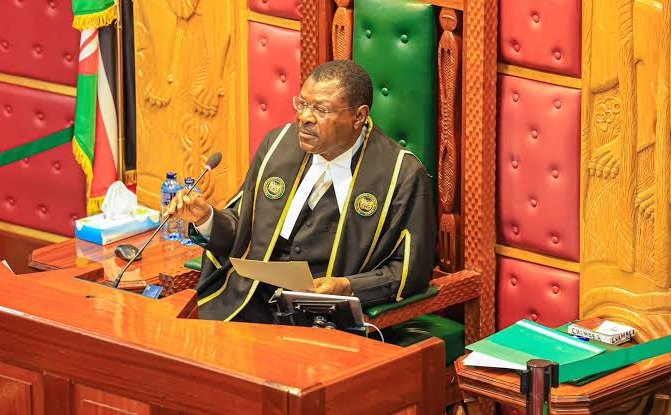
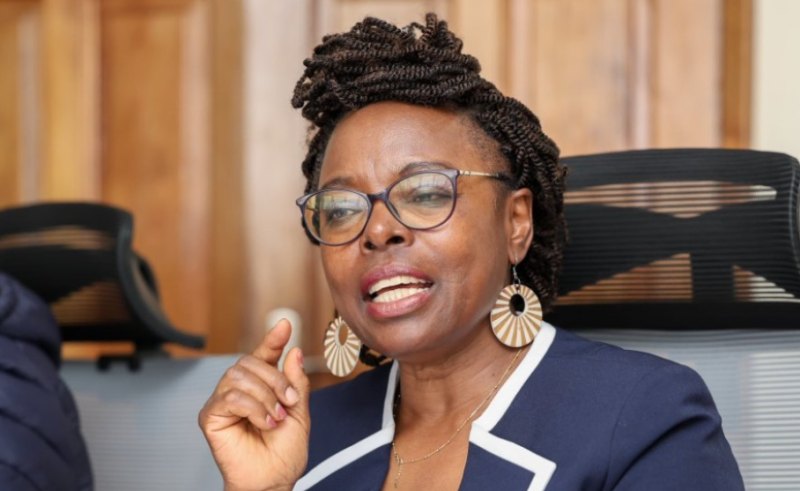
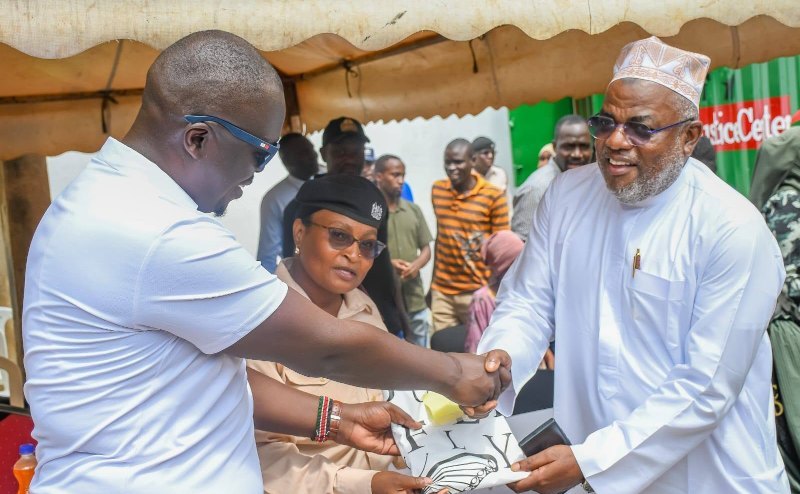
 IJM’s Aggrey Juma and Momabasa Senator Mohamed Faki at the Uhaki na Usawa Organization’s office launch in Kwa Hola on Friday / BRIAN OTIENO
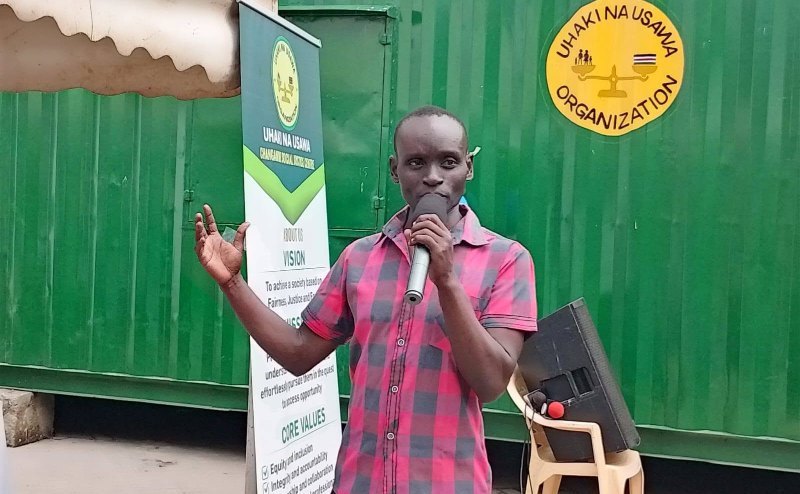 Uhaki Na Usawa Organization EXECUTIVE DIRECTOR Salim Suleiman at the organization’s office launch in Kwa Hola on Friday / BRIAN OTIENO
Poverty is the main catalyst for gender-based violence in Changamwe, the Uhaki Na Usawa Organization has said.
The organisation's executive director Salim Suleiman, on Saturday said about 15 cases are reported each week.
Suleiman also said many cases go unreported because of shame.
“In most cases, victims of GBV do not come out to report for one reason or another. Please do not suffer in silence. Come out and report,” he said.
He spoke at the Kwa Hola Chief’s office during the launch of the organisation’s new container office, donated by the International Justice Mission.
Authorities in the area said many cases go unreported, meaning the actual number is likely higher than the 15 reported each week.
Changamwe deputy subcounty police commander Nelly Pendo said the cases are rampant and there is a need for more societal dialogue.
“We have rampant cases of children and women experiencing violence, children being defiled and women being raped.
“The cases were very many and we tried addressing them by talking to residents until they reduced, but we must not stop engaging in dialogue,” Pendo said.
IJM senior manager Aggrey Juma said they have donated 94 such container offices across the country because, in many cases, authorities meant to help address such issues are not readily available.
“The people we thought would help us address such cases are not doing so. Some are elected leaders, but when they are called to such meetings, they are not available,” Juma said, adding that such cases require deeper dialogue.
He said there are many cases of femicide because perpetrators have identified loopholes that allow them to escape punishment after committing such atrocities.
He said 534 children have been reported missing so far this year.
“We must stand firm to ensure the problems we face in Changamwe are resolved. We cannot solve them unless we are united,” Juma said.
He said some of the cases stem from challenges facing the country, but the government is focused on taxing Kenyans instead of providing solutions to the problems raised.
“We have offices like this to ask the difficult questions because many residents have no voice. They want to speak out, but they do not know where to channel their grievances,” Juma said.
Muhuri Director Khelef Khalifa said communities need people to help amplify their voices so that their grievances can be heard.
He noted that defilement and GBV cases are usually rampant in areas where poverty is widespread.
Mombasa Senator Mohamed Faki said Uhaki Na Usawa organisation has greatly helped the Changamwe community, especially in addressing human rights violations.
He said IJM has recognised the need for such container offices across the country, but urged the organisation to donate five more offices to the other five subcounties in Mombasa: Nyali, Jomvu, Mvita, Kisauni and Likoni.
“GBV cases, police brutality and other human rights violations are rampant in Mombasa county,” the senator said.
He said some police officers are tarnishing the image of the police service through human rights violations committed with impunity.
Independent Police Oversight Authority Coast coordinator Hussein Aden said police should not clash with residents, adding that the law must be adhered to for peace to prevail.
He said leaders must also be accountable to the people they lead, arguing that leadership should remain faithful to the oath of office.
“You can escape the scrutiny of the people, but you cannot escape the scrutiny of God, who gave you the opportunity to lead,” Aden said.
INSTANT ANALYSIS
Gender-based violence remains a critical concern in Changamwe. Incidents range from domestic assaults to fatal cases, reflecting a broader rise in violence against women and femicide across the county. Community-based organisations, youth advocates and local authorities are increasingly mobilising to strengthen response systems and support survivors.