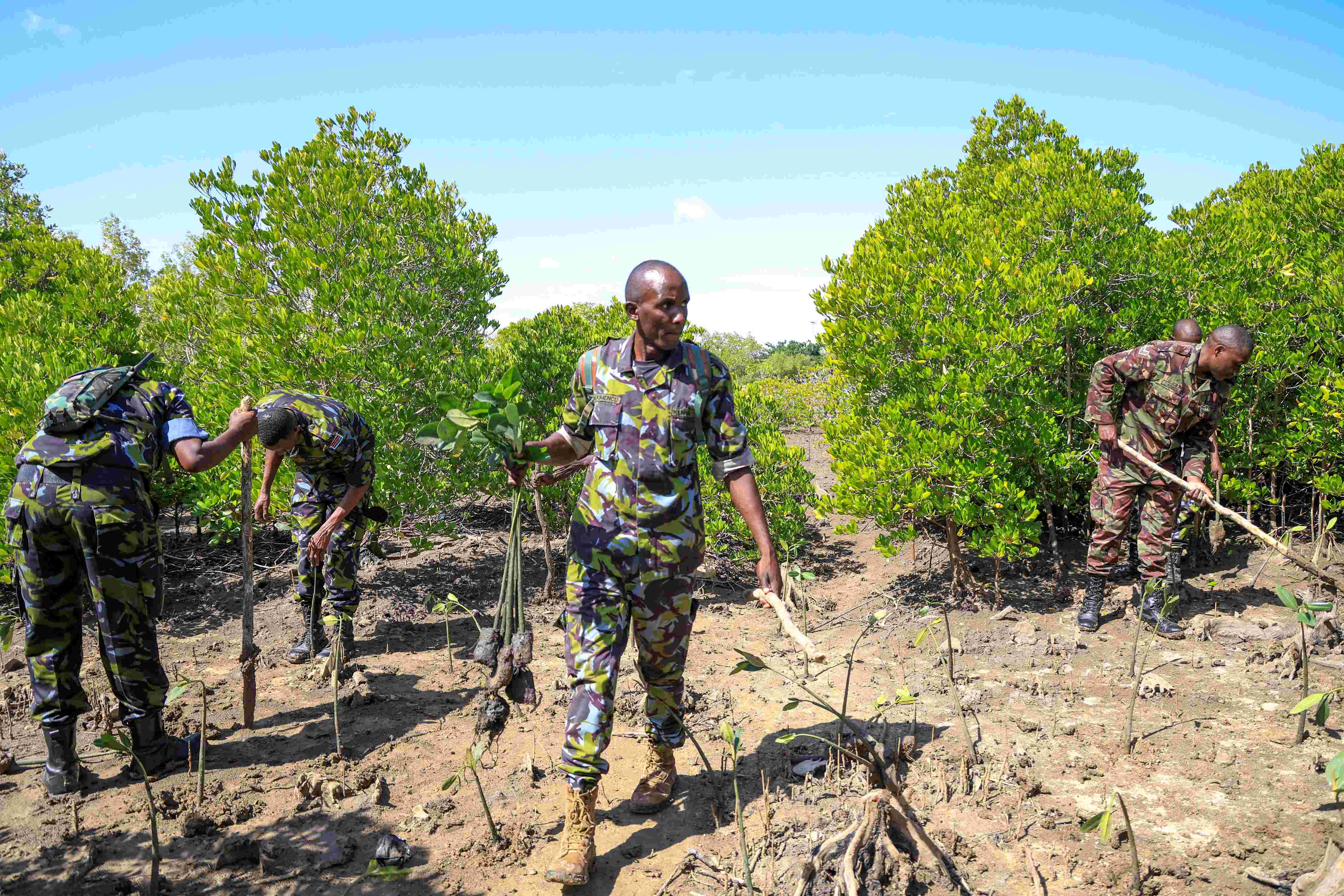
 KDF soldiers plant mangrove trees at the Tsunza
ecosystem in Kwale county on Saturday /BRIAN OTIENO
KDF soldiers plant mangrove trees at the Tsunza
ecosystem in Kwale county on Saturday /BRIAN OTIENO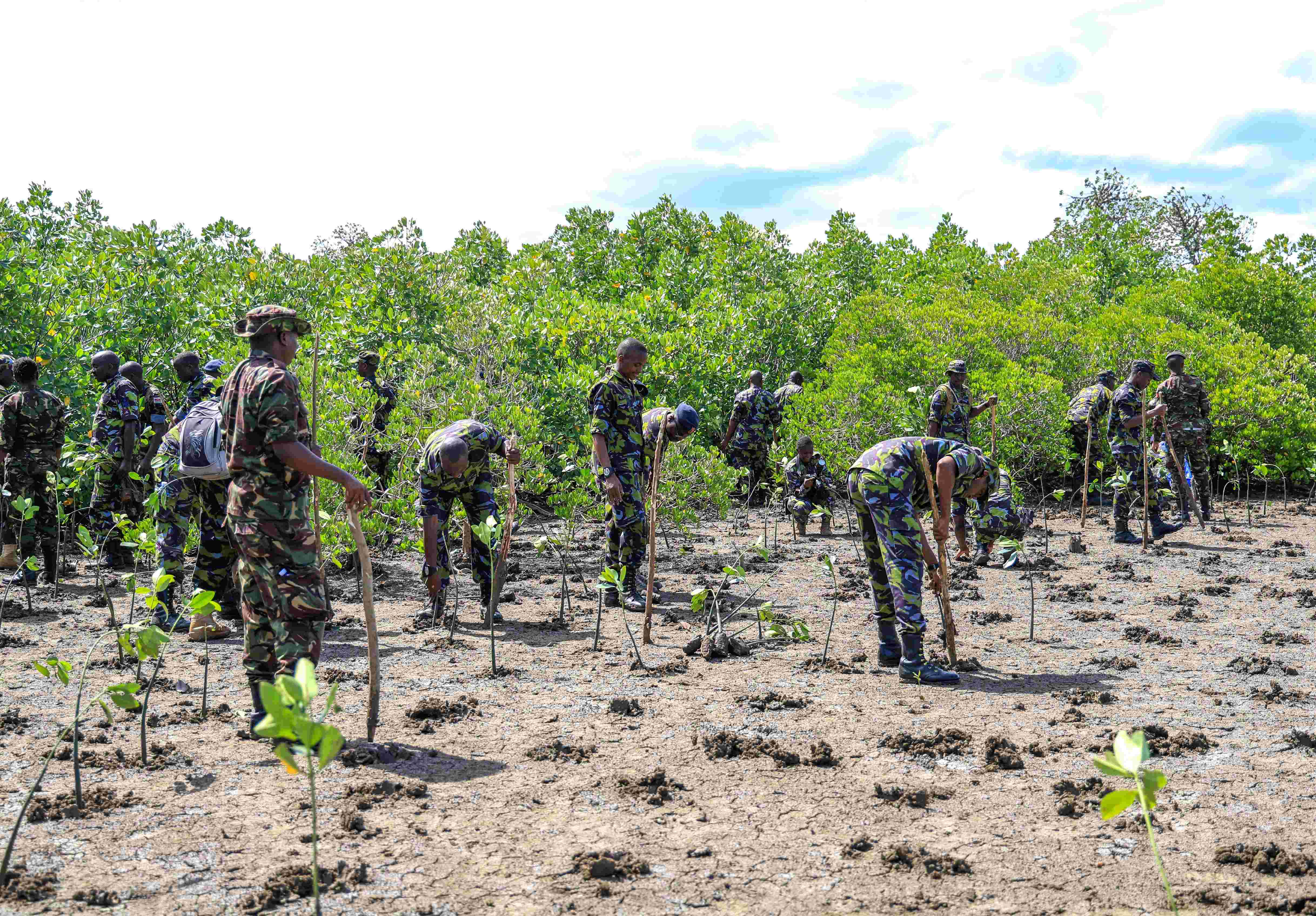 KDF soldiers plant mangrove trees at the Tsunza
ecosystem in Kwale county on Saturday /BRIAN OTIENO
KDF soldiers plant mangrove trees at the Tsunza
ecosystem in Kwale county on Saturday /BRIAN OTIENO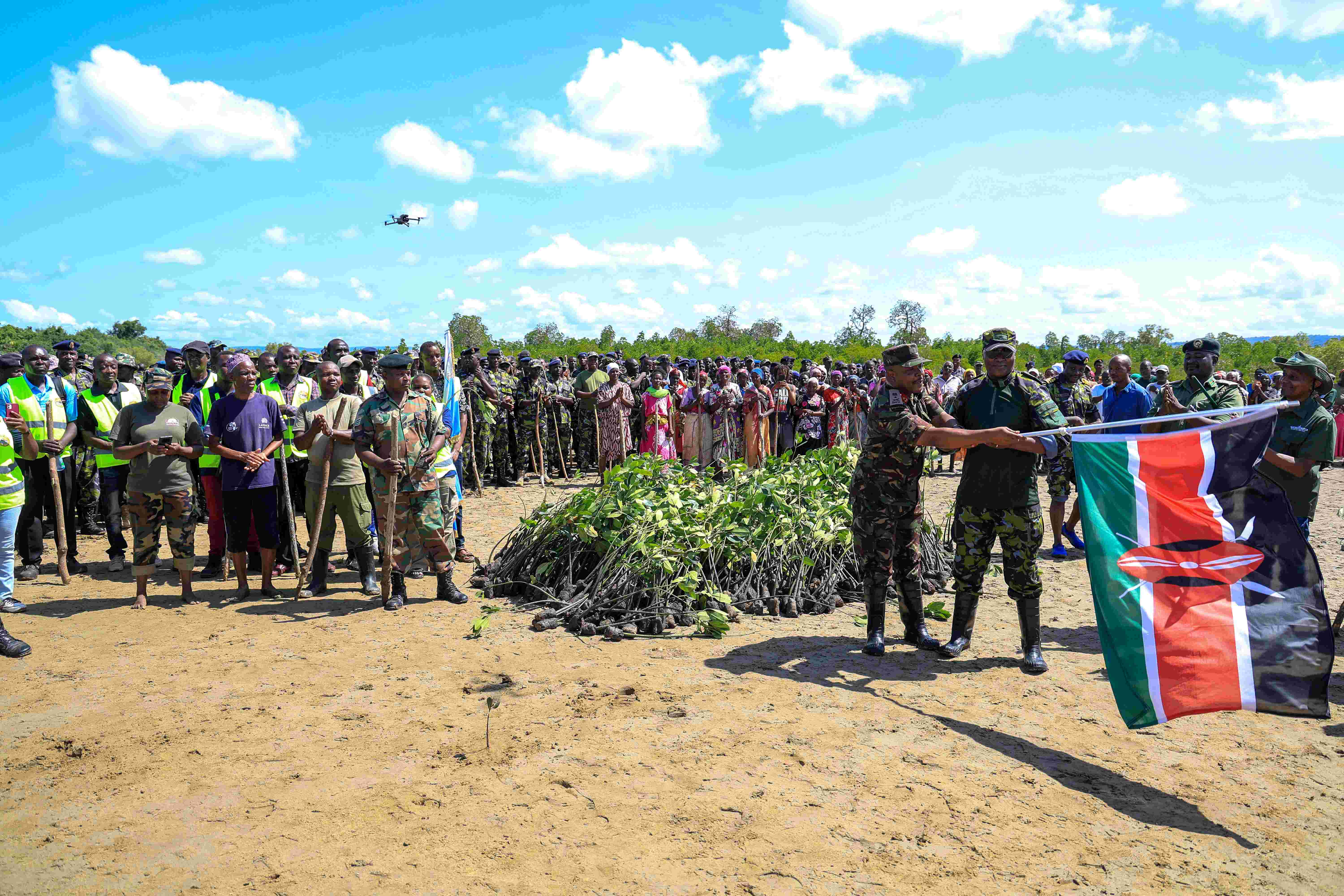 KDF flag off planting of record 150,000 mangrove
trees on Saturday at the Tsunza ecosystem in Kwale county /BRIAN OTIENO
KDF flag off planting of record 150,000 mangrove
trees on Saturday at the Tsunza ecosystem in Kwale county /BRIAN OTIENOThe Kenya Defence Forces on Saturday planted 150,000 mangrove trees in Tsunza, Kwale county, barely a week after planting 10,000 trees in the same area, in what organisers described as an unprecedented conservation effort.
The exercise brought together several stakeholders, including Furaha and Baraka Farms, the Kenya National Highways Authority, Mwatsumbo Community Forest Association, the Kwale government and Equity Bank, which sponsored the initiative.
Kenya Navy Chief of Naval Medical Services Brigadier Justino Muinde, representing Kenya Navy Commander Major General Paul Owuor, said the maritime ecosystem remains a critical resource for coastal communities.
Muinde said that under President William Ruto’s national landscape and ecosystem restoration campaign, the Defence ministry had been tasked with growing more than 500 million trees, contributing about three per cent of the national target of 15 billion trees.
Through the Environmental Soldier Programme, Muinde said KDF had planted more than 80 million trees in military camps and ecological zones such as Tsunza, Mwache and Bonje mangrove forests.
“Protecting the environment is protecting life itself,” he said.
Muinde described mangroves as critical in protecting shorelines against erosion, buffering communities from storms and sustaining fish breeding grounds that support local livelihoods.
“When mangroves thrive, the people also thrive. Conservation along the Dongo Kundu bypass is not just about protecting trees, but safeguarding livelihoods and strengthening resilience against climate change,” he said.
He urged communities to embrace alternative tree species such as casuarina for timber and poles to reduce pressure on mangrove forests.
Furaha and Baraka Farms chief executive Daniel Mwero said the group had received 1,300 hectares (3,212 acres) from the Kenya Forest Service for reforestation, with the land capable of supporting about 13 million trees.
Mwero said the initiative was also helping to uplift local communities economically by creating income opportunities through seedling production.
“Of the 17 Sustainable Development Goals, about nine are being achieved here,” he said.
He said Equity Bank had partnered with the organisation to plant 26 million trees as part of a target of 35 million trees by 2032.
Equity Bank representative Paul Mulwa said all Coast region branches were involved in tree-planting activities and had supplied all 150,000 mangrove seedlings used during the exercise.
Kwale ecosystem conservator Elvis Fondo said the county has a tree cover of 13.9 per cent, far below the 30 per cent target envisioned under President Ruto’s 15 billion trees campaign by 2032.
Fondo said Kwale has 8,400 hectares (20,756 acres) of mangrove forests stretching from Vanga to Mwache and described the ecosystem as highly fragile but vital in protecting coastal communities from strong ocean waves and soil erosion.
Kenya National Highways Authority representative Vincent Ahono said the agency had planted nearly 50,000 mangrove trees within a year as part of efforts to integrate environmental conservation into infrastructure projects.
Tsunza assistant chief Ngao Karimbo warned that rampant destruction of mangroves had exposed communities to climate-related risks.
“These trees shield us from many dangers. We have been spared major disasters because of them,” he said.
Instant analysis
The large-scale mangrove planting exercise in Kwale reflects Kenya’s growing shift towards climate-focused development and environmental restoration. Beyond meeting President William Ruto’s ambitious tree-planting targets, the initiative highlights the increasing role of security agencies, private companies and local communities in conservation efforts. Mangroves are critical for coastal protection, fisheries and climate resilience, making their restoration economically and environmentally significant. However, the success of such campaigns will depend less on planting numbers and more on long-term survival rates, community ownership and enforcement against illegal logging. The project also shows how environmental conservation is increasingly being linked to livelihoods, tourism and poverty reduction.