In fact, over 31 per cent of plastic waste generated in Taita Taveta county is discharged into the Indian Ocean through municipal drainage channels.
This translates to 1,037 tonnes of plastic waste per year, according to a solid waste audit conducted by UN-Habitat in the county’s four main municipalities of Mwatate, Taveta, Voi and Wundanyi.
Taita Taveta is one of the six counties located in the coastal region of Kenya.
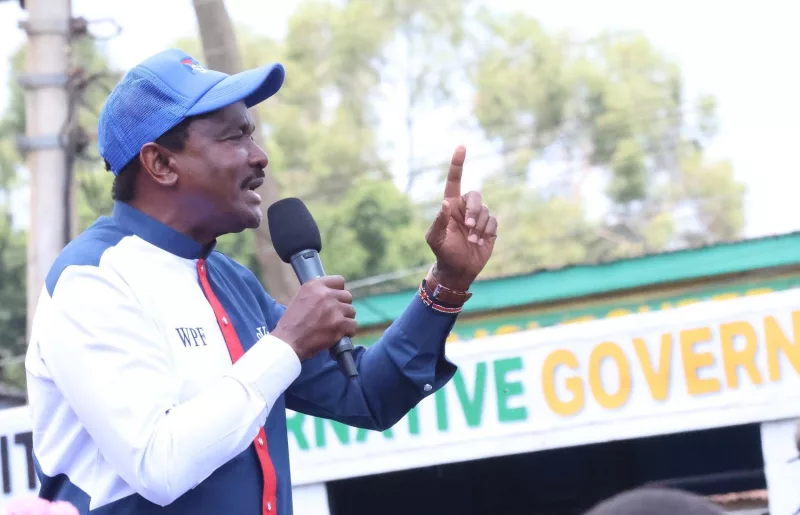
The report was launched by Governor Andrew Mwadime during an event attended by county staff, community leaders, private sector stakeholders, and county administrators, elected leaders, local community-based organisations, waste collectors and youth recycling groups.
This comes even as scientists warn that the amount of plastic in the ocean is expected to double in the next 15 years, and by 2050 there could be more plastic than fish in the sea (by weight).
In his remarks, Mwadime said Taita Taveta is working towards creating jobs through recycling and waste recovery and fighting plastic pollution.
He urged stakeholders including development partners to continue supporting his administration to achieve this objective.
“Our county is going to be one that others can learn from in terms of solid waste management, jobs creation for youth and women and sustainable blue economy. We have little resources to do this hence our appeal for the good will and support of development partners to enable us achieves this mission,” said the governor.
Although waste generation is low in Kenya compared to the global average, 73 per cent of all plastic waste in the Kenya is not collected resulting in 37,000 tonnes of plastic leaking to the ocean every year, causing entanglement of fish and death of marine species due to plastic ingestion negatively affecting the blue economy.
Given that plastics have negative impacts on marine and aquatic life, counties are expected to develop strategies for dealing with environmental impacts of plastic pollution including degradation of marine and freshwater ecosystems.
The audit was conducted within the Go Blue Project that is funded by the European Union and implemented by United Nations Human Settlements Programme (UN-Habitat) and United Nations Environment Programme (UNEP) in collaboration with the Jumuiya ya Kaunti Za Pwani secretariat (JKP).
UN-Habitat Urban Planner Jeremiah Ougo who attended the launch said in addition to the waste audit, the Go Blue Project is supporting the county to develop a Solid Waste Management Strategy that enables the county government to effectively address the municipal waste challenges identified in the audit report as well as upgrading and equipping the waste Material Recovery Facility in the county in order to promote waste recovery and create livelihood opportunities for local communities.
The Urban Planner added that the Go Blue Project is also establishing a GIS based data centre in the county to facilitate better decision making and service delivery by the county government.
The Ministry of Environment banned the use of plastic carrier bags through a gazette notice of February 27, 2017.
The ban came into effect in August of that year.
Those found with banned plastics risk paying a fine of between Sh2 million and Sh4 million, or a jail term of between one and two years, or both.
Before 2017, about 100 million plastic bags were used in Kenyan supermarkets every year, with severe consequences to the environment.
UNEP says at least 11 million tonnes of plastic are dumped into water bodies every year.
This is the equivalent of one garbage truck being dumped every minute.
Plastics are ingested through seafood, drinks, and even common salt; they penetrate the skin and are inhaled when suspended in the air.
In 2022, UN member states arrived at a resolution seeking to have a solution on plastics.
The resolution was hailed as the biggest moment for the environment since the Paris Agreement.
During the fifth session of the United Nations Environment Assembly (UNEA-5.2), a resolution was adopted to develop a legally binding instrument on plastic pollution.
The Intergovernmental Negotiating Committee is considering how to promote sustainable production and consumption of plastics from product design to environmentally sound waste management through resource efficiency and circular economic approaches.
-Edited by SKanyara