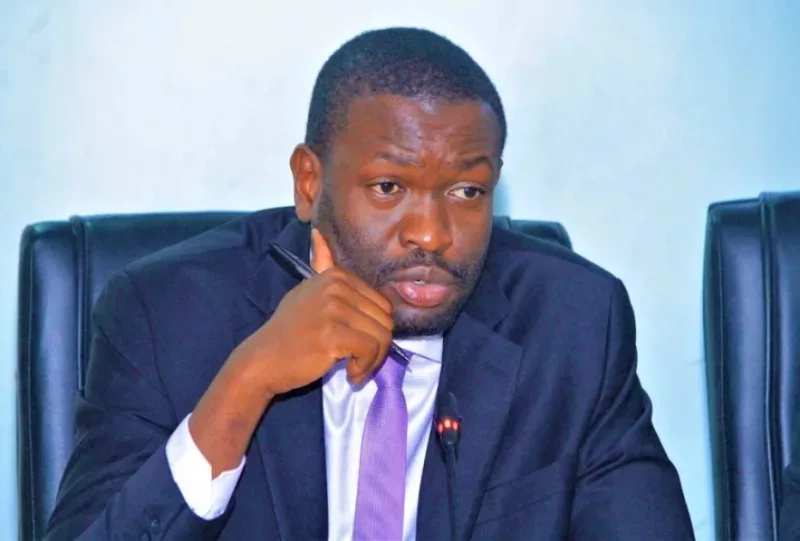
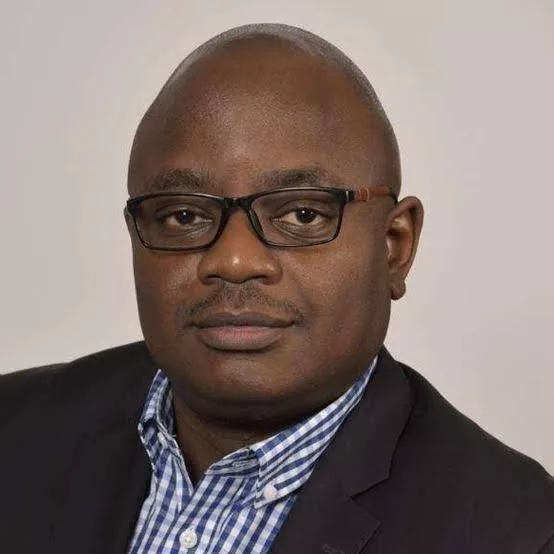
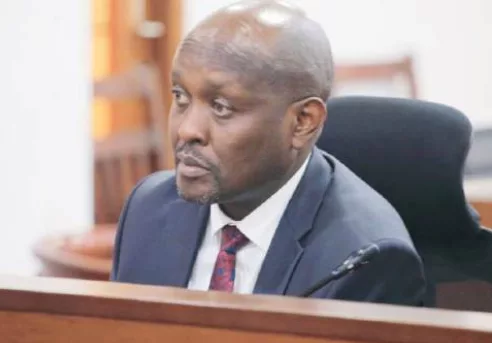
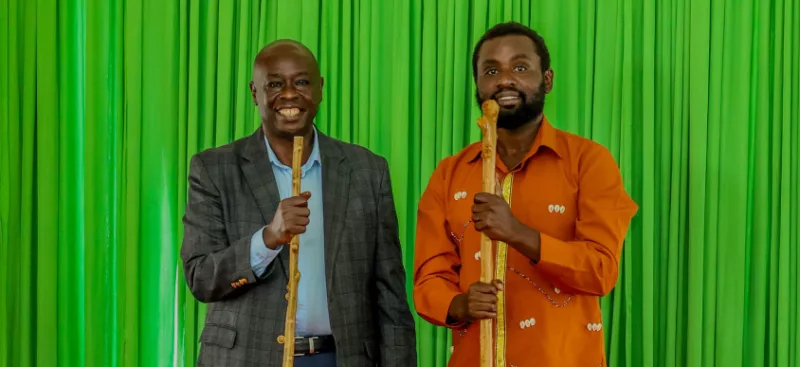
While declaring the presidential results on August 15, Chebukati exposed the behind-the-scenes intrigues that nearly marred the country's fifth transition of power.
Chebukati, 60, would later claim the country's top security agents and political operatives had visited him the night before in what he described as an attempt to have him alter the presidential results.
Despite the pressure from the country's National Security Advisory Council to 'moderate' the presidential results for a possible run-off in the event President William Ruto had won, Chebukati stood firm against the push.
It turned out the Independent Electoral and Boundaries Commission had been split down the middle over Ruto's narrow victory against veteran opposition chief Raila Odinga. Four commissioners disowned the presidential results and said they had not been properly involved.
A litigation and dispute resolution legal expert and a former Saboti parliamentary candidate, Chebukati walked down the Bomas of Kenya auditorium staircase, affirming his respect for the Constitution.
“I swore to defend the Constitution and the rule of law …,” Chebukati said at the chaotic Bomas auditorium as he released the presidential results.
“That’s why I stand before you today despite intimidation and harassment. I have a duty to serve this country and in accordance with the Constitution.”
Speaking to the moments that preceded the announcement, Chebukati had claimed that two of his commissioners, Boya Molu and Abdi Guliye, and IEBC Chief Executive officer Hussein Marjan had been attacked and injured in the melee.
“We have staff who have been profiled and others have been arbitrarily arrested,” Chebukati said as he tried to paint a picture of the events preceding the announcement.
Prior to the declaration of the presidential results, there was a security stand-off as Azimio la Umoja One Kenya agents and MPs-elect virtually took charge of the auditorium as security officials watched helplessly.
It appeared to be a tactic to stall the announcement of president-elect.
The IEBC chairman who is exiting the commission in January 2023, becomes the first IEBC boss to complete his six-year non-renewable term at the helm of the electoral commission.
The Issack Hassan IEBC,which was installed in November 2011, was pushed out of office in October 2016 as the political class insisted on radical electoral reforms ahead of the 2017 polls.
Aware of what had befallen his predecessors — including Samuel Kivuitu who in 2008 admitted publicly he did not know whether President Mwai Kibaki won the 2007 polls — Chebukati decided to take charge of the results management process.
Initially, Chebukati had urged presidential candidates to ensure hey had agents in more than 46,000 pollings stations across the country, affirming the results announced at the stations would be final.
Chebukati also heavily relied on the transmission of Forms 34A through the results management system, whose direct upload to the portal, analysts said, made the exercise foolproof.
When the presidential petition challenging the declaration of Ruto as the fifth president was thrown out by the Supreme Court, Chebukati affirmed his respect for constitutionalism.
He had gone through baptism by fire in the political crucible.
“I now rest assured that we all in IEBC have been vindicated. I have been vindicated, too. My patriotism and love for my country remains unbowed,” the IEBC chairman said.
In a previous interview, Chebukati said that he exits the stage happy that the electoral process in Kenya has come of age and it is a case study for many on how to conduct a free, fair, transparent and credible election that meets the democratic aspirations of the people.
“The rule of law and love for constitutionalism is [at the core] of my professional soul. I stand proud of us at the IEBC — regardless of the politics in it,” Chebukati said.
The chairman had maintained that the commission had robust and transparent election infrastructure that ensured votes cast in the August poll were counted, electronically transmitted, verified, tallied, announced and declared.
Chebukati a vampire?
Some of Azimio’s requests in its petition at the apex court were that Chebukati be declared to have acted as rogue chairman, be removed from his position and be banned from ever holding public office.
When the Azimio petition challenging the results was filed at the Supreme Court, it was not mostly about the IEBC as an institution but was framed against Chebukati.
The litigants pursued the narrative that Chebukati was a dictator, a vampire, a murderer of the Azimo win and a saboteur of the people’s will.
But the Martha Koome-led Judiciary ruled that it had no jurisdiction to declare Chebukati unfit to hold public office or to hound him out of office.
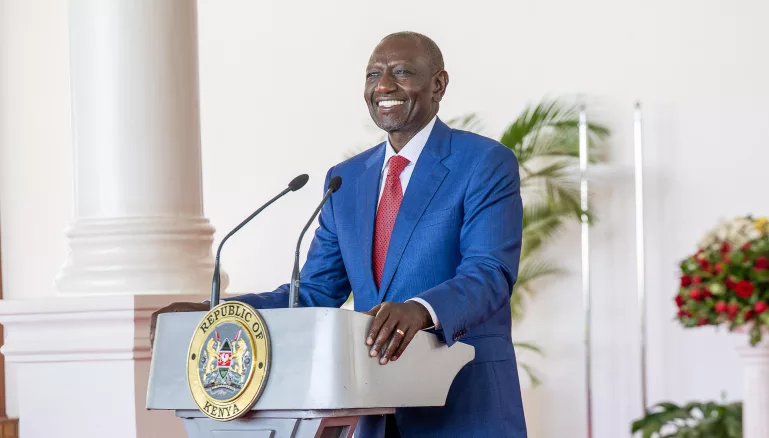
Ruto, who was declared the winner, the then president-elect, praised the confidence and bold persona of the IEBC chairman throughout the electoral process.
Speaking at the Bomas of Kenya when he was handed a victory certificate, Ruto said the IEBC boss had persevered a to get Kenya where it is today.
“The hero of this election is the IEBC led by Wafula Chebukati. I say this with conviction that the IEBC amazed all of us. With the results in the public portal, all the servers were opened and for everybody, all you needed, is a simple calculator and you would have the results,” Ruto said at the time.
He praised Chebukati for his efforts to make the elections transparent.
“I want to say without any fear of contradiction that one Wafula Chebukati is our hero. Soft-spoken but firm. I want to tell you, Mr Chairman, we are very proud that without informing any of us, you put all the results from all the polling stations on a public portal where every Kenyan could access them,” Ruto said.
Raila's charged supporters at the Bomas auditorium were resolute that they wanted to prevent Chebukati from declaring the results.
But Chebukati was determined to declare them. And he did, announcing that Ruto had won the contest with 7,176,141 votes (50.49 percent) against Raila’s 6,942,930 (48.85 percent).
At the time of the declaration of the presidential results, some of Raila's agents had taken over the Bomas auditorium and were chaotically pushing Chebukati not to declare the presidential results.
Separately, as security was being beefed up at Bomas, four breakaway commissioners called a press conference at Serena Hotel to denounce the results t be announced by Chebukati.
The commissioners led by vice chairperson Juliana Cherera said the results declared by Chebukati were opaque and illegal as they did not have the approval of the commission.
“We cannot take ownership of the results that will be announced because of the opaque nature of how the last phase has been handled,” Cherera told journalists, some 14 kilometres from the National Tallying Centre.
The tribunal investigating the conduct of Cherera, and commissioners Justus Nyang’aya, Francis Wanderi, and Irene Masit has heard that the four were booked at a high-end apartment after they disowned results.
Cherera, Nyang’aya, and Wanderi have since quit their posts, with Masit demanding a stop to the tribunal proceedings until a case she has filed in court is heard and determined.
Chebukati studied law at the University of Nairobi and the Kenya School of Law, and received an MBA from Jomo Kenyatta University of Agriculture and Technology.
As he battled the battery of accusers, it was lost on his opponents that Chebukati has practised law in Kenya for 30 years, specialising in litigation and dispute resolution, company mergers and acquisitions, and maritime, conveyance and labour cases.
He founded the Nairobi-based Cootow & Associates Advocates law firm in 2006. He is also a member of the Law Society of Kenya, the Institute of Certified Secretaries (ICS), and the International Commission of Jurists (ICJ).
(Edited by V. Graham)