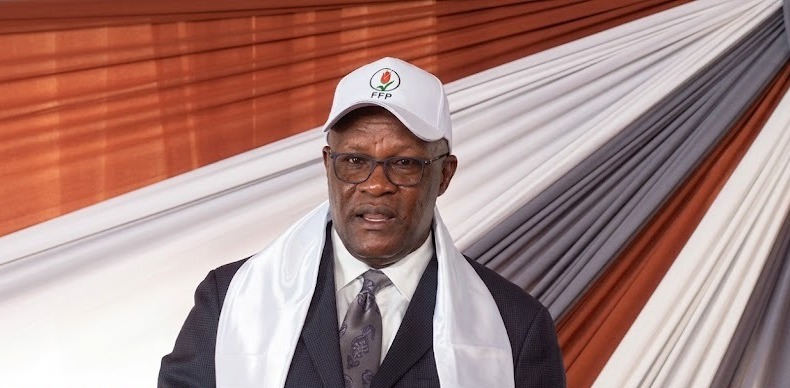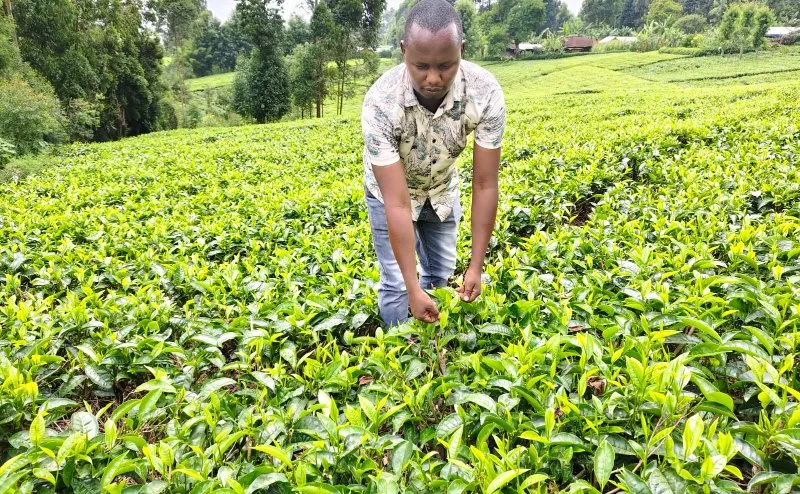
Tea farmers earned Sh13 billion from tea sales in June after 46.52 million kilogrammes of tea were traded at the Mombasa Tea Auction.
A report released by the Tea Board of Kenya (TBK) shows the commodity fetched an average price of $2.27 (Sh293.40) per kilogramme, up from $2.01 (Sh271.40) recorded during the same period last year.
The month coincided with the onset of summer in the Northern Hemisphere, including Europe and North America, a period that traditionally records lower tea consumption due to warmer temperatures. The season runs until September.
Despite the seasonal decline in demand, tea prices remained firm as production in most Kenyan tea-growing regions also declined because of colder weather, helping to balance supply and demand at the auction.
TBK chief executive officer Willy Mutai said the average tea absorption rate at the auction stood at 85 per cent in June, compared with 56 per cent during the same period last year and 45 per cent in 2024.
"Despite selling our teas to over 90 markets, we rely heavily on 10 markets that account for more than 80 per cent of our exports. Any disruptions in those countries directly affect our tea exports," he said.
Mutai cited Pakistan, Kenya's largest tea market, which has faced foreign exchange shortages in recent years, making it difficult for buyers to import Kenyan tea.
He said government intervention helped persuade the Pakistani authorities to classify tea as an essential commodity, safeguarding exports to a country that consumes about 360 million kilogrammes of tea annually.
Mutai said the conflict in Sudan, diplomatic tensions involving Kenya, Sudan and Iran and shipping disruptions in the Red Sea had also affected tea exports.
"Last year, most shipments to the European Union had to avoid the Red Sea due to attacks on commercial vessels and instead use the Cape of Good Hope, extending transit time by between 10 and 14 days. All these factors affect the auction," he said.
Mutai said some tea factories occasionally withdraw tea from the auction when bids fall below their reserve prices, only to re-offer it about three weeks later. Such teas often attract lower bids when they return to the market.
"Tea prices are purely based on quality. Buyers taste the teas and decide which ones they prefer and the prices they are willing to pay," he said.
"Tea has a shelf life of up to three years, but the fresher it is, the higher the prices it attracts."
He said only about 1.7 million kilogrammes remained unsold during the final auction of June and would be re-offered in the third week of July.
Other tea stocks currently in warehouses are fresh consignments awaiting cataloguing before sale.
Mutai also dismissed claims the tea levy has suppressed sales, insisting Kenyan tea continues to outperform that of neighbouring countries, with 84 per cent of all teas sold at the auction.
Although Rwanda's tea generally commands higher prices due to its premium quality, it represents less than 10 per cent of all teas sold at the auction, while teas from Uganda and Tanzania are largely used for blending.
"We have not seen a situation where our absorption rate is going down while our neighbouring countries' rates are increasing," Mutai said.
He explained that the levy is paid by consumers rather than farmers and finances research, infrastructure development, market stabilisation and other industry programmes.
According to Mutai, more than 49 tea varieties, including purple tea, have been developed to address agronomic challenges and respond to changing consumer preferences.
He said ongoing investment in research is aimed at improving tea quality, controlling pests and diseases and diversifying tea into pharmaceutical, cosmetic and culinary products.
"The focus is on ensuring Kenya's tea remains competitive in quality, availability and pricing at the Mombasa Tea Auction," he said.
Kenya remains the world's largest exporter of black tea, commanding about 30 per cent of the global export market.
Mutai attributed Kenya's strong position to consistent quality, year-round availability and pesticide-free production, factors that continue to make local tea attractive to international buyers.
He said the average export price for local tea remains competitive compared with teas from Sri Lanka, India and China, while the 0.8 per cent tea levy has only a minimal effect on export prices.
The industry is also expanding into new markets, including China, West Africa, Russia, North America and other parts of Asia.
Last year, Kenya exported tea worth Sh186 billion.
Instant analysis
A report released by the Tea Board of Kenya (TBK) shows the commodity fetched an average price of $2.27 (Sh293.40) per kilogramme, up from $2.01 (Sh271.40) recorded during the same period last year. TBK chief executive officer Willy Mutai dismissed claims the tea levy has suppressed sales, insisting that Kenyan tea continues to outperform that of neighbouring countries, with 84 per cent of all teas sold at the auction.