THE Central Bank of Kenya (CBK)
has inspected 30 banks in plans to
ensure they reduce their lending rates
in line with the lowered Central Bank
Rate (CBR).
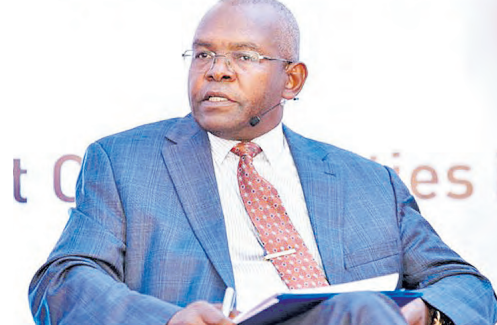
Speaking during the post-Monetary Policy Committee (MPC) session
with journalists on Wednesday, CBK
governor Kamau Thugge said the regulator is keen to ensure credit supply
to the private sector and families to
spur economic development.
“We have so far conducted onsite
inspections for 30 lenders out of 38.
We anticipate concluding this exercise
by June. Those found to be maintaining excessive lending rates despite
lower costs of funds will face severe
penalties, including fines amounting
to three times their unjust gains,”
Thugge said.
The regulator is concerned that
the economy is not benefiting from eased monetary policies, with lending to the private sector still subdued,
stifling expansion of businesses and
job creation.
Although the base lending rate
has been dropping since August last
year, commercial bank lending to the
private sector has stagnated, only recording a modest growth of 0.2 per
cent in March 2025 from a contraction of 1.3 percent in February.
Average commercial banks’ lending rates declined to 15.8 percent in
March 2025, from 16.4 percent in
February and 17.2 percent in November 2024.
On Wednesday, the MPC further
slashed the base-lending rate by 75
basis points to 10 per cent, with the
regulator expecting banks to pass
benefits to borrowers.
This is yet another steep cut after
another 50 basis points cut in February in addition to lowering the Cash
Reserve Ratio (CRR) to 3.25 per cent
in a move aimed at boosting private sector credit and lowering the cost
of borrowing.
The CBR was previously cut thrice
between August and December 2024
while the CRR was last revised at
the onset of the Covid pandemic in
March 2020, from 5.25 per cent to
4.25 per cent.
In an evening statement to media
houses, CBK attributed the decision
to low inflation, shilling stability and
trends in the global economy where
other jurisdictions are lowering the
cost of credit.
“The Monetary Policy Committee
(MPC) will closely monitor the impact of the policy measures as well as
developments in both the local and
global economy and stand ready to
take further action as necessary in
line with its mandate,” CBK said.
The number of borrows defaulting
on loans is rising despite easing loan
rates and inflation, a matter that has
caught the attention of the regulator.
The latest data from CBK shows
that the ratio of gross non-performing loans (NPLs) to gross loans stood
at 17.2 per cent in February 2025
compared to 16.4 percent in December 2024.
Increases in NPLs were noted in
real estate, personal and household trade, building and construction, and
manufacturing sectors.
Even so, banks have continued to
make adequate provisions for the
NPLs.
The apex bank praised measures
taken to cushion the shilling from
global volatiles, with the local currency holding steady against the greenback.
Yesterday, it traded 129.65
against the US dollar.
It attributes this to narrowing
current account deficit which hit 3.1
per cent of GDP in the 12 months
to February 2025 compared to 3.3
per cent of GDP in a similar period
in 2024, reflecting improved exports
of goods and services and resilient diaspora remittance inflows, and lower
oil imports.
Goods exports increased by 13.1
per cent, due to higher domestic exports, particularly agricultural commodities, and re-exports.
Goods imports rose by 10.6 percent, reflecting increases in intermediate and capital goods imports.
Services receipts increased by 14
per cent, mainly, supported by increased receipts from transport and
travel services while diaspora remittances increased by 14.5 per cent in
the 12 months to February 2025.