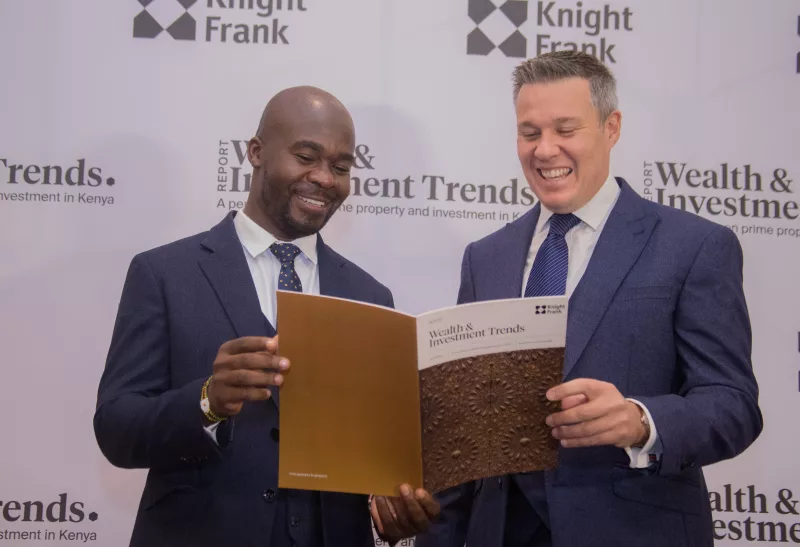
 Boniface Abudho, Research Analyst, Knight Frank Africa & Mark Dunford, CEO, Knight Frank Kenya
No Kenyan is worth more than $1 billion ( Sh130 billion) in the latest wealth and investment report by global real estate consultants Knight Frank.
This is a drop compared to 2025, when the country reported two individuals who had crossed the ultra-wealthy class.
The report, however, shows that six per cent of wealth managers managed portfolios worth between $501 million (Sh64.7 billion) and $1 billion (Sh129.2 billion), regarded as ultra-high-net-worth individuals (UHNWIs).
"A year earlier, the same proportion reported managing portfolios exceeding $1 billion, pointing to a recalibration at the very top of Kenya's wealth pyramid rather than an outright collapse in wealth."
It paints a far more optimistic picture for Kenya's wider affluent population, with 7,200 US-dollar millionaires and around 16 centi-millionaires with a net worth of more than $100 million (Sh12.9 billion).
Almost 44 per cent of wealth managers reported that their high-net-worth individual (HNWI) client base grew by between 11 per cent and 20 per cent between 2025 and 2026.
The report says the findings reflect the continued scarcity of ultra-high-net-worth individuals (UHNWIs) in Kenya, where extreme wealth remains concentrated among a small group.
The decline comes amid changing investment preferences as affluent Kenyans move away from concentrating wealth in luxury residential property and increasingly channel capital into sectors offering stronger long-term returns, recurring income, and greater resilience.
According to Knight Frank, wealthy investors are reshaping their portfolios by increasing allocations to data centres, logistics facilities, Real Estate Investment Trusts (REITs), renewable energy projects and professionally managed rental housing, while reducing the share of wealth tied up in primary and secondary homes.
"The modern investor is looking beyond conventional asset classes. There is growing interest in investments that combine income, resilience and long-term growth. This reflects a more sophisticated approach to wealth creation," said Knight Frank Kenya chief executive Mark Dunford.
The report attributes the investment shift to structural changes in Kenya's economy.
Rapid digitalisation is driving demand for data centres to support cloud computing and artificial intelligence infrastructure, while urbanisation, expanding transport networks and rising regional trade are boosting the attractiveness of logistics assets.
“Professionally managed rental housing is also emerging as a preferred investment as demand for quality rental accommodation rises in major urban centres.”
Knight Frank Africa Research analyst Boniface Abudho said wealthy investors are not abandoning real estate but are becoming more selective.
"Investors are diversifying rather than abandoning property. Capital is moving towards sectors supported by structural trends that are expected to shape the economy for many years," he said.
This marks a significant improvement from last year, when more than half of respondents recorded growth of less than 10 per cent, suggesting that wealth creation has accelerated across a broader segment of affluent Kenyans.
A further 31 per cent of respondents reported HNWI growth of up to 10 per cent, reinforcing the report's conclusion that wealth accumulation remains on an upward trajectory despite global economic uncertainties.
Knight Frank says the shift from predominantly single-digit growth in 2025 to stronger double-digit expansion this year signals improving momentum in high-value wealth creation.
Art, watches, classic cars, jewellery, and wine continue to attract growing interest from Kenyan HNWIs with assets valued between $5 million (Sh646 million) and $500 million (Sh64.6 billion).
According to the report, most HNWIs allocate less than 10 per cent of their portfolios to luxury investments.
"Ownership enjoyment increasingly complements investment returns as a key motivation."
Investor confidence also remains resilient.
More than half, representing 54 per cent, expect their wealth to rise modestly during 2026, while 25 per cent anticipate growth exceeding 10 per cent.
Only four per cent expect their wealth to decline slightly, while eight per cent foresee a significant reduction, highlighting limited downside expectations despite geopolitical tensions and global market volatility.
The report attributes the positive outlook partly to Kenya's improving macroeconomic environment.
Since mid-2024, the Kenyan shilling has remained relatively stable at about Sh129 to the US dollar, supported by strong diaspora remittances, record foreign exchange reserves and increased capital inflows following recent Eurobond issuances.
The exchange rate stability has eased imported inflation, improved business planning and restored investor confidence across key sectors of the economy.
Knight Frank also found that Kenya's wealthy remain firmly committed to the local economy despite increasing global mobility among affluent individuals.
Half of the respondents said fewer than 10 per cent of their wealthy clients intend to seek second citizenship or alternative residency, while 38 per cent reported that none of their clients are pursuing another passport.
The findings mirror last year's survey and suggest sustained confidence in Kenya's long-term economic prospects.
According to the report, affluent Kenyans continue to maintain significant investments in real estate, agriculture, technology and privately owned businesses, with Kenya's position as East Africa's commercial and financial hub providing strong incentives to remain invested locally.
Beyond financial considerations, family ties, community connections and established business networks continue to anchor wealthy individuals in the country.
Dunford said Kenya continues to offer attractive investment opportunities, although investors are becoming more deliberate in where they deploy their capital.
"The difference today is that investors are becoming more deliberate in where they deploy capital," he said.
Abudho added that the findings reflect the evolution of Kenya's wealth market.
"The findings show a market that is maturing. Investors are building portfolios that are diversified, future-focused and aligned to long-term economic transformation," he said.